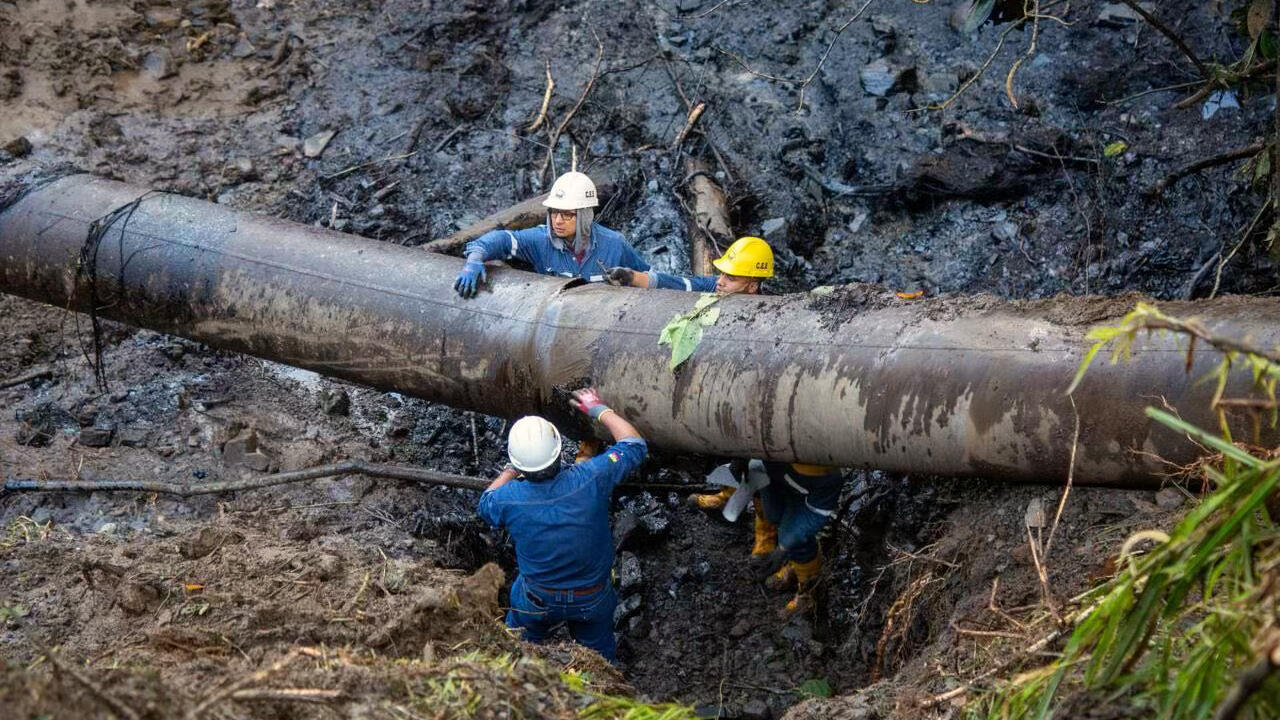
Guirim Excavation Mishap Causes Pipeline Leak, Triggers Major Water Waste
A major water pipeline burst in Guirim on Tuesday resulted in the loss of thousands of litres of treated water, highlighting recurring issues of civic mismanagement and unregulated excavation. According to local accounts, the damage was allegedly caused by an excavator operating near the site. The incident not only disrupted water supply but also posed safety risks on the road, fuelling demands for stricter coordination between infrastructure agencies and private contractors during road or utility-related work.
The pipeline rupture led to an intense water surge across a key road stretch in Guirim, inundating the area and creating slippery, hazardous conditions for motorists—particularly two-wheeler riders navigating through the gushing water. While the source of the leak has yet to be officially confirmed, residents and eyewitnesses claim that a JCB machine working nearby likely struck the pipeline during excavation. Authorities, though yet to issue a formal statement, are reportedly taking steps to stem the leak and initiate repair work. Civic experts noted that such accidents have become increasingly frequent due to inadequate pre-work site assessments and lack of inter-agency coordination. Water conservation advocates have raised concerns about the sheer scale of the wastage, especially in a state already facing seasonal stress on water resources. The incident once again underscores the vulnerability of urban utility systems to unplanned development activity.
While emergency crews were deployed to contain the leak, local residents expressed frustration over repeated disruptions caused by careless construction practices. Calls are growing louder for comprehensive audits of underground utility layouts before permitting any heavy-duty excavation in urban areas. Technical experts suggest implementing a mandatory digital utility mapping system that allows contractors to visualise water lines, electric cables, and sewage channels before deploying excavation equipment. Additionally, civic planners recommend incorporating smart monitoring valves into the city’s water pipeline network to allow for automatic flow shutdowns in the event of sudden pressure drops or breaches. In Guirim’s case, the absence of such contingency infrastructure led to uncontrolled water flow, resulting in significant wastage. Authorities have also been urged to fast-track the adoption of trenchless technology, which reduces the need for open-digging and safeguards vital underground assets. Until such measures are implemented, citizens may continue bearing the brunt of civic oversight lapses.
The Guirim pipeline burst serves as a critical reminder of the urgent need for cohesive urban infrastructure governance. Experts stress that a combination of smart planning, robust inter-departmental coordination, and contractor accountability is essential to prevent avoidable disruptions and resource wastage. With water increasingly becoming a precious and limited commodity, even brief lapses in safety and protocol can have long-term ecological and social costs. As the state grapples with infrastructure pressures, the focus must shift toward sustainable, damage-preventive practices that protect both civic assets and public safety.