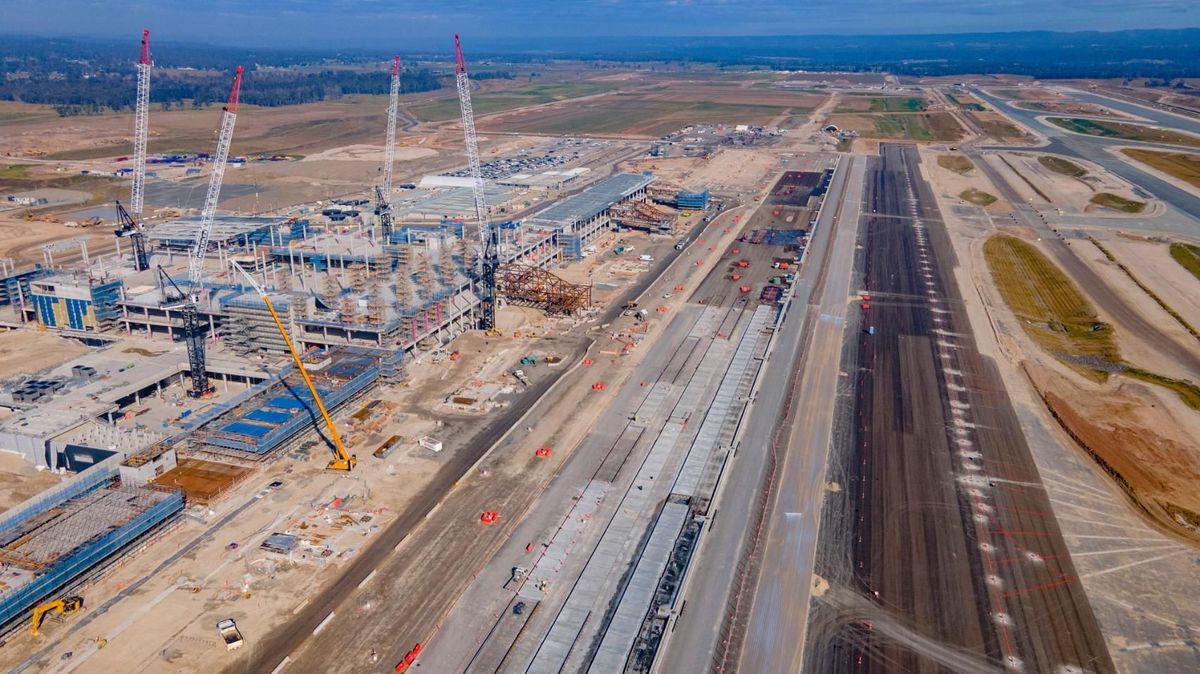
Construction has finally begun on a long-pending 270-crore infrastructure intervention poised to transform Western Uttar Pradesh’s highway network and enable smoother access to Noida International Airport.
The National Highways Authority of India (NHAI) has commenced work on a strategically planned interchange connecting the Yamuna Expressway with the Eastern Peripheral Expressway (EPE), after securing the green signal from the Uttar Pradesh government. The project is expected to significantly improve vehicular movement across industrial and urban corridors while reducing emissions caused by congestion and detours. Located near Jaganpur-Afzalpur, approximately 10 kilometres from the Yamuna Expressway’s entry point, the upcoming 11-kilometre interchange will feature four loops and four ramps designed to facilitate uninterrupted transitions between the two key expressways. In its current state, commuters have no option but to endure a 15-20 kilometre detour via congested city arteries such as Pari Chowk in Greater Noida. With the new link operational, seamless connectivity will be established for cities including Agra, Mathura, Ghaziabad, Hapur, and Meerut—freeing up traffic load from urban bottlenecks and fostering time-efficient, greener mobility.
The Yamuna Expressway Industrial Development Authority (YEIDA), which owns the 60 hectares of land allocated for the project, has handed over operational responsibility to NHAI, which will also manage tolling and maintenance. This critical connector comes alongside another ambitious infrastructure push aimed at integrating Noida International Airport into a larger, future-ready mobility ecosystem. YEIDA has formally cleared a 74.3-kilometre expressway project linking the airport directly to the Ganga Expressway at Siyana in Bulandshahr district. Estimated to cost ₹4,000 crore, this corridor will start at Sector 21—slated as the proposed Film City location—and will cut across BB Nagar, Aurangabad, and Bulandshahr’s growing urban pockets. UPEIDA (Uttar Pradesh Expressways Industrial Development Authority) has been entrusted with execution of this greenfield project, which will intersect the Yamuna Expressway at the 24.8-kilometre mark and meet the Ganga Expressway at 44.3 kilometres. Land acquisition for the project is expected to begin across 54 villages in Gautam Budh Nagar and Bulandshahr, signalling the start of a crucial phase of regional transformation.
The twin infrastructure moves align with Uttar Pradesh’s broader ambition of positioning Noida Airport as a multi-modal transport hub serving both national and international corridors. The upcoming airport has already been linked via planning to the Delhi-Mumbai Expressway, and once the Ganga Expressway link becomes operational, an indirect but uninterrupted corridor will exist between Ganga Expressway and the Delhi-Mumbai Expressway through Noida. This strategic integration stands to benefit freight movement, logistics hubs, and commuters while easing pressure on the overburdened NCR transit systems.
Moreover, the new expressway will thread through multiple industrial zones including YEIDA sectors 28, 29, 32, and 33—zones earmarked for commercial and manufacturing expansion catering to both global and domestic investors. Officials have identified 13 clusters to catalyse industrial growth, aimed at making the region a magnet for clean industry and smart infrastructure. With reduced vehicular idling, shortened routes, and decongestion of urban nodes, both expressway projects are expected to contribute to Uttar Pradesh’s vision of a climate-resilient, equitable, and economically vibrant urban future.
While construction timelines and land acquisitions remain challenges to be navigated, the momentum gained through these recent approvals marks a decisive shift toward more sustainable and integrated regional planning. The potential to alleviate travel time, reduce fuel consumption, and bring high-speed road connectivity to previously underserved rural and peri-urban belts cannot be overstated. These initiatives, once complete, may well emerge as defining pillars of India’s next-generation infrastructure blueprint.