


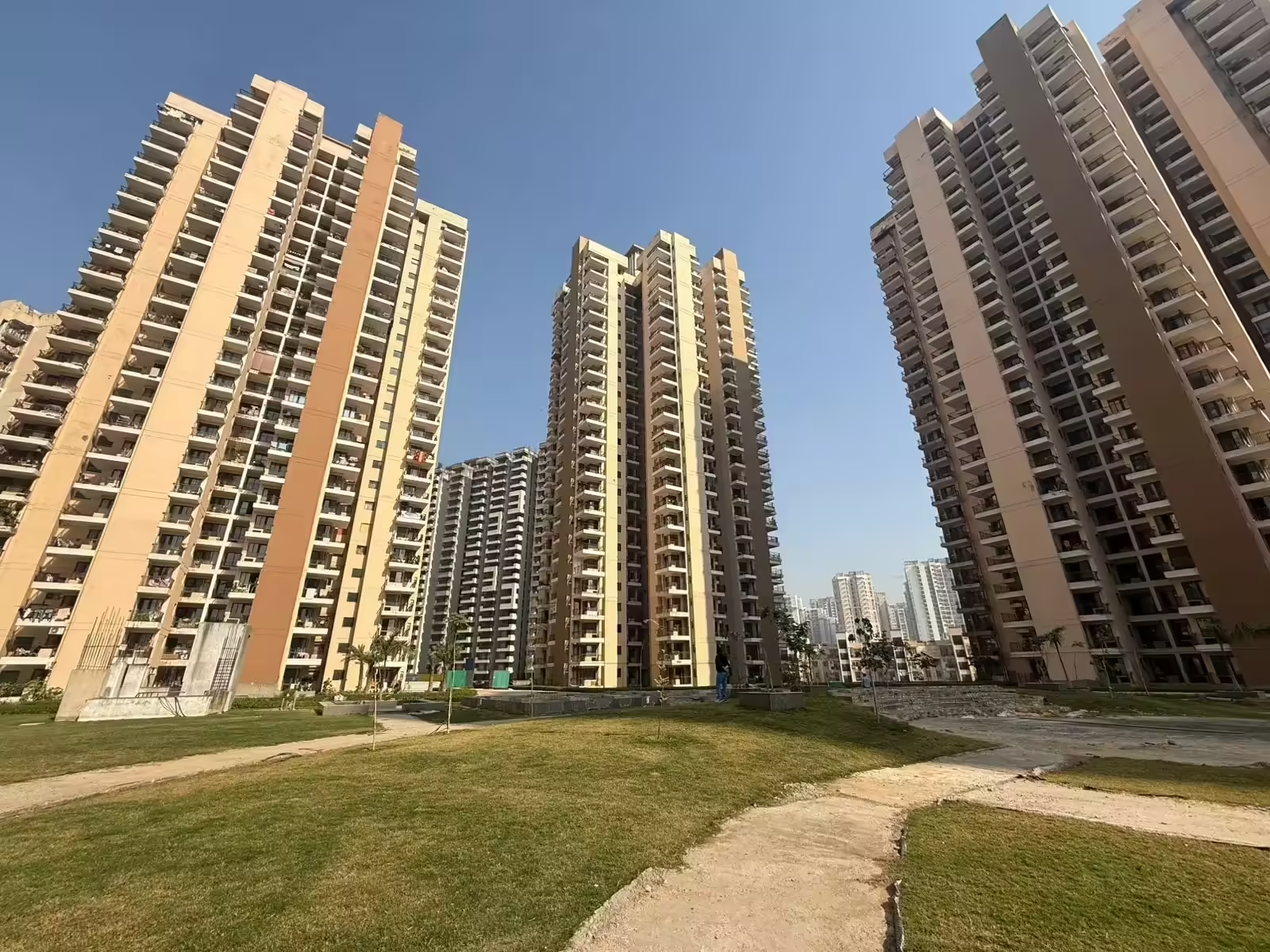
A prolonged housing deadlock in Greater Noida West has moved towards resolution, with 1,716 families set to receive possession of homes that had remained inaccessible for years. The development follows the clearance of long-pending statutory dues, allowing property registrations to restart and bringing relief to homebuyers caught between regulatory disputes and delayed real estate delivery.
The project, located in a high-density residential pocket of Greater Noida West, had secured its completion certificate several years ago but remained locked in administrative uncertainty. Disagreements between the developer and the local development authority over outstanding payments had effectively frozen registrations, leaving buyers unable to legally occupy or transfer their homes despite construction being completed. Urban housing experts note that such cases have become emblematic of structural challenges in India’s suburban housing markets, where rapid expansion has often outpaced regulatory coordination. For affected families, the delay translated into prolonged rental expenses, stalled housing loans, and social uncertainty pressures that disproportionately affect middle-income households. The breakthrough came after the developer settled dues amounting to Rs 25.63 crore, covering both principal obligations and associated charges. Senior officials familiar with the process indicated that the resolution was facilitated through a state-backed mechanism aimed at unblocking stalled real estate projects. This framework allows for recalibration of penalties and interest, enabling authorities to recover legitimate dues while ensuring that completed housing stock is not indefinitely locked out of the market.
The Greater Noida West resolution is being viewed by planners as a test case for balancing institutional accountability with homebuyer protection. While regulatory oversight remains critical to ensure orderly urban development, prolonged disputes can undermine trust in formal housing markets and slow the absorption of existing stock. In this instance, the reopening of registrations is expected to stabilise local housing demand and restore financial closure for hundreds of households. Beyond individual buyers, the development carries wider urban implications. Unoccupied yet completed housing places stress on city systems, from inefficient land use to delayed integration of residents into neighbourhood economies. Unlocking such projects contributes to more compact, resource-efficient urban growth, reducing pressure for outward sprawl and fresh land acquisition. Industry analysts suggest that the Greater Noida West outcome underscores the need for early dispute resolution mechanisms and transparent escrow-based financial management in real estate projects. Ensuring that statutory payments, construction milestones, and buyer interests remain aligned is increasingly seen as essential for climate-resilient and inclusive urban expansion.
As registrations resume, attention now shifts to how quickly possession processes can be completed and basic civic services integrated. For policymakers, the episode reinforces a critical lesson: timely institutional coordination can prevent housing supply from becoming trapped in procedural limbo, allowing cities to grow in a manner that is both economically efficient and socially equitable.
Also Read: Gurugram Southern Peripheral Road Redefines Housing Demand
Greater Noida West Sees Long Stalled Homes Released
