


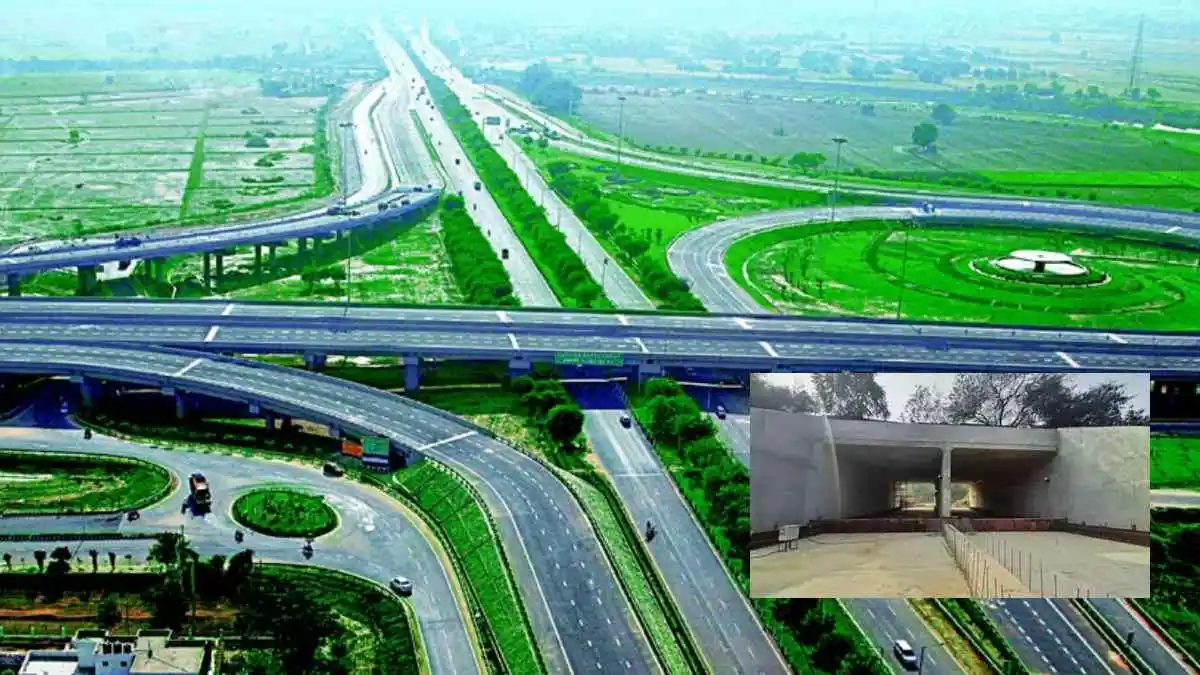
Greater Noida Industrial Development Authority has invoked the urgency clause under the Land Acquisition Act to take possession of four hectares of privately held land owned by a prominent media company.
The land acquisition aims to fast-track the completion of a vital 1.5-kilometre arterial road that has remained incomplete for nearly 15 years, stalling regional connectivity and urban development. The proposed road is intended to directly link LG Chowk on Kasna Road to Knowledge Park 3, an emerging educational and industrial hub in Greater Noida. This stretch is considered a critical urban link in the region’s master mobility plan. While three lanes of the road from Knowledge Park to LG Chowk have already been built, the remaining half has been in limbo due to disputes over land ownership and usage rights.
Officials from the development authority confirmed that they would proceed under Section 17 of the Land Acquisition Act, citing urgent public need. This provision empowers the state to acquire land without following the conventional procedural delays, provided the project serves immediate public interest. Authorities argue that the imminent launch of the Noida International Airport and the exponential rise in vehicular traffic warrant immediate intervention to ease congestion and streamline intercity traffic. “The road needs to be built without further delay. Once operational, it will not only ease traffic from Greater Noida and Noida but also improve access towards the Yamuna Expressway and the upcoming airport,” an official from the development authority said. The road is expected to function as a key decongestion corridor, with potential to reduce pressure on internal roads and promote smoother east-west transit across the city.
The land in question is part of an 80-hectare parcel purchased by the media company from local farmers in 1987, well before the establishment of the Greater Noida Authority in 1992. While the authority intends to acquire all 80 hectares for integrated development plans, the landowner has agreed to part with only four hectares for the road, while seeking permission to retain the remaining land for industrial use. However, Greater Noida’s town planning regulations stipulate that any land use or construction activity must be sanctioned by the authority, especially for commercial or industrial development. The authority maintains that the landowner’s request to retain the bulk of the parcel without aligning with approved development plans could set an unsustainable precedent.
According to development officials, the cost of land has been valued at ₹3,100 per square metre. The authority plans to deposit the requisite compensation amount with the additional district magistrate’s office at the earliest to formalise the acquisition process. Once the land is acquired, construction on the unfinished road segment is expected to be completed within two to three months, with an overall project outlay of ₹31 crore. Infrastructure experts suggest that delays in such critical urban projects can be detrimental not just to connectivity but also to sustainable city growth. “In rapidly urbanising areas like Greater Noida, infrastructure must outpace population and vehicle growth. Delays in key projects affect carbon emissions, traffic density, and quality of life,” said a transport planning expert.
The prolonged delay has already caused ripple effects in the region’s urban development pipeline. Local commuters and residents have raised concerns about deteriorating traffic conditions, missed economic opportunities, and uneven infrastructure distribution. With only half the road functional, bottlenecks at LG Chowk and surrounding intersections remain a daily challenge for thousands of commuters. While the media company has expressed willingness to hand over the required four hectares, it insists that its historic ownership of the remaining land justifies a review of its industrial use application. A company spokesperson stated, “We are open to relinquishing the road portion, but we seek a fair resolution for the remaining land, which we acquired before the formation of the current urban governance framework.”
However, planning officials assert that urban development cannot be dictated by pre-regulatory landholding patterns alone. “Our priority is to ensure balanced growth based on approved master plans and sustainability. Any exception could hinder equitable infrastructure planning for the broader region,” a senior official said. xThe Greater Noida region, a key node in the Delhi-NCR urban belt, is undergoing rapid transformation. With the upcoming Noida airport expected to generate significant economic activity and real estate interest, infrastructure bottlenecks could undercut the city’s growth potential. The completion of this long-stalled road is expected to significantly boost last-mile connectivity to educational institutions, business parks, and future transit-oriented developments.
While the conflict between the private landowner and public authority reflects broader tensions in India’s urban land governance, the outcome of this case may shape future land acquisition strategies, especially in the context of sustainable and inclusive urban planning. In the larger interest of balanced infrastructure growth, the decision to invoke the urgency clause—though controversial—appears to be driven by necessity. With adequate compensation and legal due process in place, city stakeholders hope the road project will finally cross the finish line, unlocking much-needed mobility for Greater Noida’s growing population.
Also Read : Maharashtra NH848 Expansion to Boost Connectivity
