


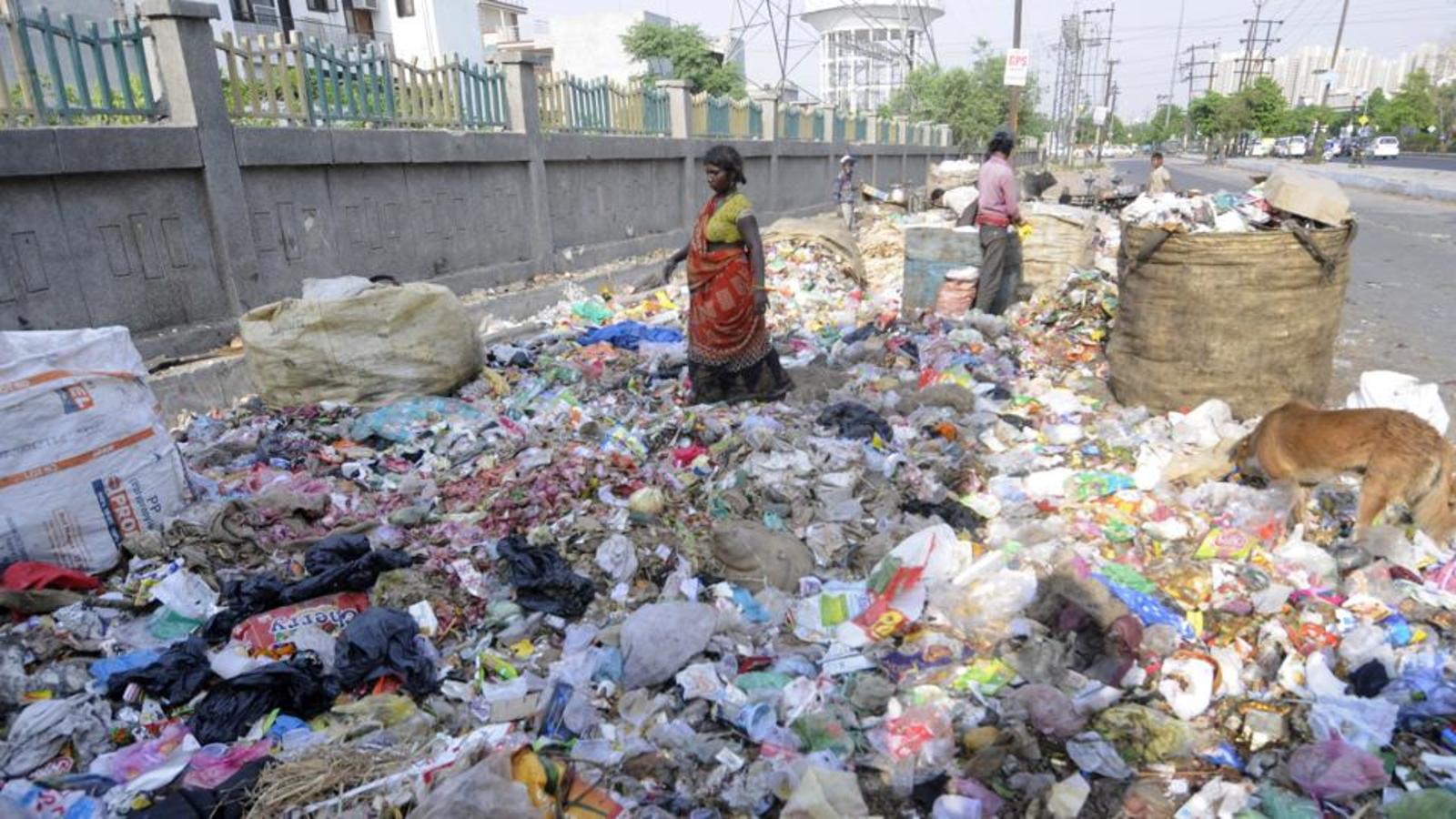
Greater Noida has formally launched a doorstep waste collection and segregation programme in Badalpur, signaling a strategic shift in how the region manages its growing municipal solid waste challenge.
The initiative, unveiled this week by the Greater Noida Industrial Development Authority (GNIDA) in collaboration with a civil society partner, aims to curb open dumping in peri-urban pockets and strengthen community participation in waste sorting and recycling. This programme is being rolled out against a backdrop of persistent sanitation concerns in Greater Noida’s expanding residential and village clusters, where vacant lots and drains have frequently become informal dumping grounds. Urban planners say unmanaged waste not only burdens landfill capacity but also exacerbates public health and environmental risks, particularly during monsoon seasons when stagnation and vector proliferation can intensify. Under the new system, household refuse in Badalpur is being collected directly at the source, with separate streams for wet and dry waste.
Dry recyclables are transported to a local Material Recovery Facility (MRF) for sorting and recycling, while biodegradable organic matter is managed through separate processing routes. GNIDA officials describe the approach as a critical step toward decentralised waste management, helping to ease pressure on distant landfill sites and align with broader zero-waste goals. Implementation teams are also conducting door-to-door outreach to educate residents on the importance of correctly separating waste at the household level. A senior civic official noted that this behavioural shift is essential to reduce mixed waste streams that complicate both recycling and disposal, lowering operational inefficiencies and costs. Experts observing the move point out that peri-urban areas often lack the infrastructure and institutional support available in inner-city sectors. The Badalpur programme could serve as a model for other villages and satellite settlements within the National Capital Region where rapid development has outpaced civic services.
Urban development specialists have emphasised that inclusive waste systems must consider the livelihoods of informal waste workers, accessibility for all residents and the need for robust enforcement of waste segregation norms. In recent years, GNIDA has faced vocal feedback from resident groups over inconsistent waste collection and the quality of services provided by contractors, highlighting the importance of accountability and service quality in municipal solid waste systems. The current effort thus intersects with broader expectations for reliable, climate-responsive sanitation infrastructure across the region. While the Badalpur rollout addresses immediate dumping concerns, long-term impact will depend on ongoing community adoption, investment in processing facilities and integration with regulatory frameworks that incentivise segregation and penalise open dumping. Authorities are expected to monitor results closely, with potential scaling up to neighbouring peri-urban localities if this pilot reduces refuse volumes and enhances recycling rates.
The initiative underscores an evolving urban governance approach in Greater Noida — balancing rapid expansion with sustainable, people-centric services that strengthen environmental outcomes and quality of life for diverse communities.
Also Read: Noida Real Estate Draws Rs 1500 Crore Investment
