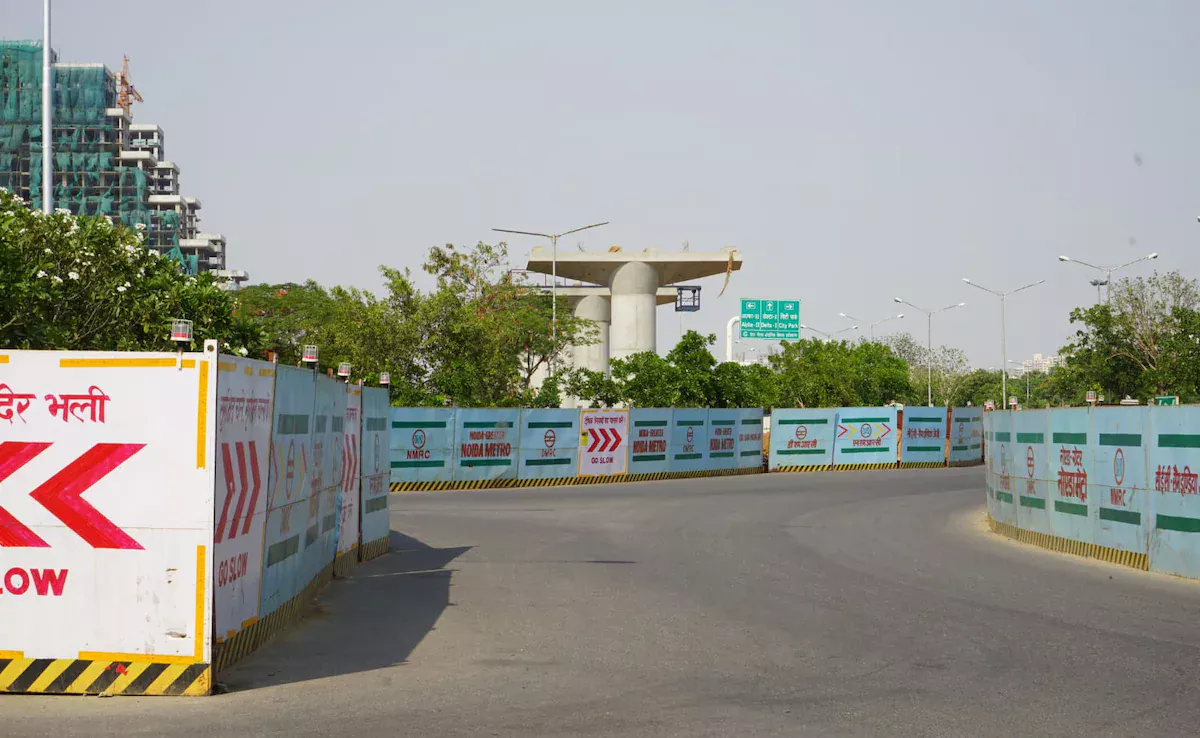
Greater Noida Infrastructure Safety Under Scrutiny
Greater Noida — A series of unfilled and poorly barricaded excavations across Greater Noida’s expanding urban corridors have emerged as a persistent public safety hazard, culminating in multiple tragic fatalities and renewed scrutiny of civic maintenance practices.
The spate of incidents spotlights how rapid infrastructure development without assured site safety protocols can escalate everyday risks for residents, commuters and construction workers alike. In separate episodes over recent weeks, at least three individuals — including a 25-year-old man riding a two-wheeler — fell into uncovered pits dug for sewer, stormwater and utility works. One victim died instantly after his vehicle plunged into a water-filled excavation, while others survived with serious injuries. In many cases, local residents reported that excavation sites remained open for days, without adequate barricades, warning lights or diversion signage, despite alerts to municipal work units.
Greater Noida’s extraordinary pace of infrastructure expansion — including road widening, utility network upgrades and drainage upgrades — has been accompanied by a proliferation of trenches and cuttings across arterial and neighbourhood streets. While such works are essential to modernise ageing systems and prepare for future growth, they also introduce safety risks if site management, public signage and engineering controls are insufficient. Urban safety specialists emphasise that dug-up pits should be treated as high-risk zones requiring continuous hazard control measures, particularly in mixed traffic environments where pedestrians, cyclists and motorcyclists are vulnerable. Residents lament that several excavations dug weeks earlier remain unfilled even as monsoon rains worsened ground conditions, leading to hidden water hazards and slippery embankments. “It’s only a matter of time before something worse happens,” said a resident of Sector 1, mirroring concerns from multiple sectors where work sites intersect with daily commuter routes. These patterns echo challenges seen in other fast-growing urban belts where civil works progress faster than site safety enforcement.
Noida Authority officials acknowledge the incidents and maintain that safety directives have been issued to all work circles responsible for implementation. The authority points to its recent restructuring of civic units — merging traffic, public health and site operations into work circle responsibilities — as an attempt to eliminate silos and improve responsiveness. Nonetheless, the persistence of open pit hazards has fuelled criticism that integration alone is insufficient without robust performance monitoring and real-time accountability. Civil engineering and urban planning experts say that effective excavation safety requires systematised procedures: marked barriers, reflective signage, real-time digital monitoring of site status, and guaranteed filling of pits within stipulated timelines. They add that integrating these requirements into contractor performance contracts, with financial penalties for non-compliance, is standard practice in many global cities and could reduce fatalities in Indian urban contexts.
For families affected and communities navigating dense infrastructure works, the priority is clear: ordinary residents should not bear the risk of cages, trenches and open pits that result from essential urban upgrades. As Greater Noida’s civic machinery seeks to balance development momentum with public safety, embedding safety-by-design standards into project planning and execution will be central to safeguarding lives — and the city’s broader liveability.