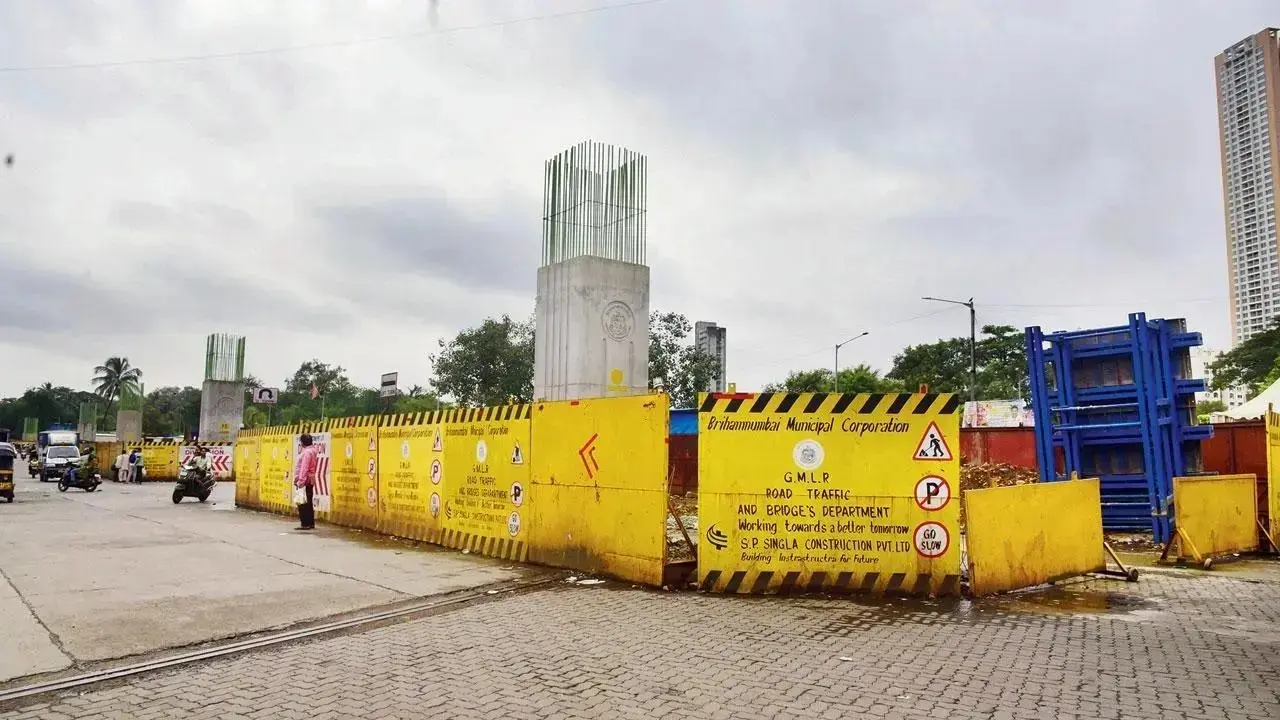
Mumbai’s long-awaited east–west road connectivity is set to receive a significant upgrade as a critical elevated corridor under the Goregaon–Mulund Link Road (GMLR) project approaches completion. The flyover connecting the Dindoshi Court precinct with the Film City area in Goregaon has entered its final construction phase and is expected to open to traffic by the end of May. For daily commuters navigating congested suburban routes, the development signals tangible progress in easing cross-city travel.
The flyover forms a vital segment of the broader GMLR project, designed to bridge the persistent mobility gap between Mumbai’s western and eastern suburbs. Urban planners have long identified the absence of seamless east–west links as a structural weakness in the city’s transport network, contributing to longer travel times, higher fuel consumption, and increased vehicular emissions. The nearing completion of this corridor marks a step toward addressing that imbalance. Project officials indicate that roughly three-quarters of the construction work has been completed, with nearly all planned support pillars already erected. Structural work on a majority of the elevated spans is also finished, while the remaining sections are being executed in parallel to meet pre-monsoon deadlines. The alignment has been designed to negotiate dense urban conditions, including a sharp directional turn and gradual descent near major landmarks, reflecting the engineering complexity involved.
This flyover is part of Phase 3A of the GMLR programme, which includes an elevated rotary intended to improve traffic distribution at key junctions. Construction has been undertaken simultaneously on the Goregaon and Mulund ends, allowing work fronts to progress in tandem. According to civic officials overseeing the project, schedules have been tightly coordinated to ensure deck slabs, approach roads, and safety installations are completed without compromising structural standards. Beyond congestion relief, the project carries broader urban implications. By shortening travel distances and reducing idling time, the corridor is expected to lower vehicular emissions along one of Mumbai’s most heavily used suburban routes. Transport experts note that such infrastructure, when integrated with public transport planning, can support the city’s transition toward more climate-resilient mobility systems.
The timing of the opening is also significant. Completing major structural work before the onset of monsoon reduces construction risks and limits disruption during the rainy season, when road conditions typically worsen across the city. Additional manpower and machinery have been deployed to maintain momentum and meet safety benchmarks. As Mumbai continues to invest in large-scale road, metro, and multimodal projects, the GMLR flyover represents more than a single piece of infrastructure. It reflects the city’s ongoing effort to balance growth with liveability—where improved connectivity supports economic activity while creating the conditions for a more efficient, people-focused urban future.
Goregaon Mulund Link Flyover Nears Opening