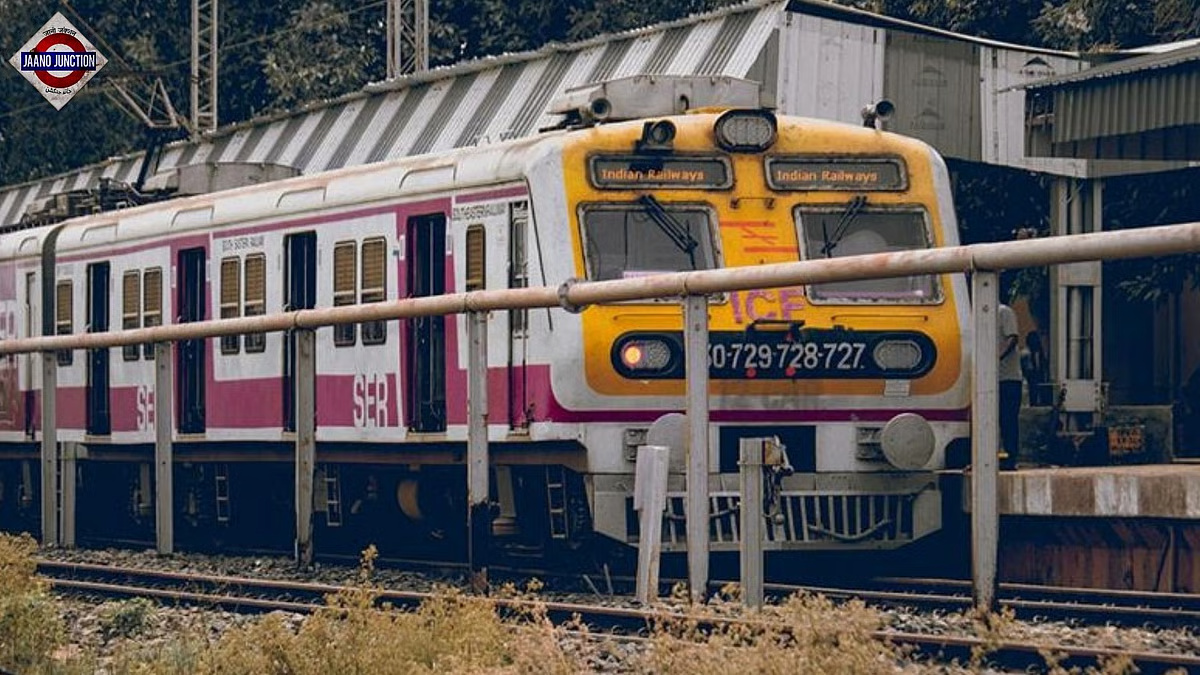
Mumbai’s suburban rail network is set to undergo a significant operational disruption as local train services on a key harbour corridor are expected to be suspended for an extended period to facilitate major track expansion works. The temporary shutdown, planned for approximately three months, is aimed at accelerating the construction of additional railway lines critical to easing long-term congestion on the city’s western suburban system.
The affected stretch connects a major western suburb to the city’s primary business district, currently handling dozens of daily services and serving a substantial share of office-goers, students, and informal workers. Urban transport planners say the disruption will impact travel patterns across the metropolitan region, particularly for commuters who rely on direct harbour line connectivity to South Mumbai. Railway officials familiar with the project said the suspension is necessary to clear space for the fifth and sixth railway lines being added between Mumbai Central and Borivali. This corridor is among the most saturated sections of the suburban network, carrying a mix of long-distance, suburban, and freight traffic. The additional tracks are expected to segregate services more efficiently, improving punctuality and capacity once completed.
At present, nearly 90 local train services operate daily on the affected route, with more than 100 services running on the adjacent corridor connecting Bandra to the city centre. During the shutdown period, only limited services may operate on alternative sections, forcing commuters to shift to the Western Line, road-based transport, or interchange stations such as Bandra. Transport analysts warn this could place added pressure on already crowded trains and arterial roads. From an economic standpoint, the disruption underscores the cost of upgrading infrastructure in dense, built-out cities. Mumbai’s rail network carries over seven million passengers daily, making even short-term changes highly consequential. However, planners argue that phased inconvenience is unavoidable if the city is to modernise its transit backbone and support future growth driven by housing expansion, metro rail integration, and commercial redevelopment.
Environmental experts also note that while temporary service suspensions can push commuters towards private vehicles, the long-term benefits of added rail capacity outweigh short-term emissions increases. Expanded suburban rail infrastructure is central to reducing car dependence, lowering per-capita transport emissions, and supporting climate-resilient urban mobility. Railway authorities are expected to announce mitigation measures, including revised timetables, increased services on parallel routes, and coordination with civic agencies to manage last-mile connectivity. Commuter groups have called for clear communication and advance notice to minimise disruption, particularly for shift workers and those with limited travel alternatives.
As Mumbai continues to densify, the episode highlights a broader challenge facing Indian cities: upgrading essential infrastructure without paralysing daily life. The success of this project will ultimately be judged not just by faster trains, but by how effectively the transition is managed for the millions who depend on public transport every day.
Goregaon CSMT Harbour Line Faces Three Month Shutdown