


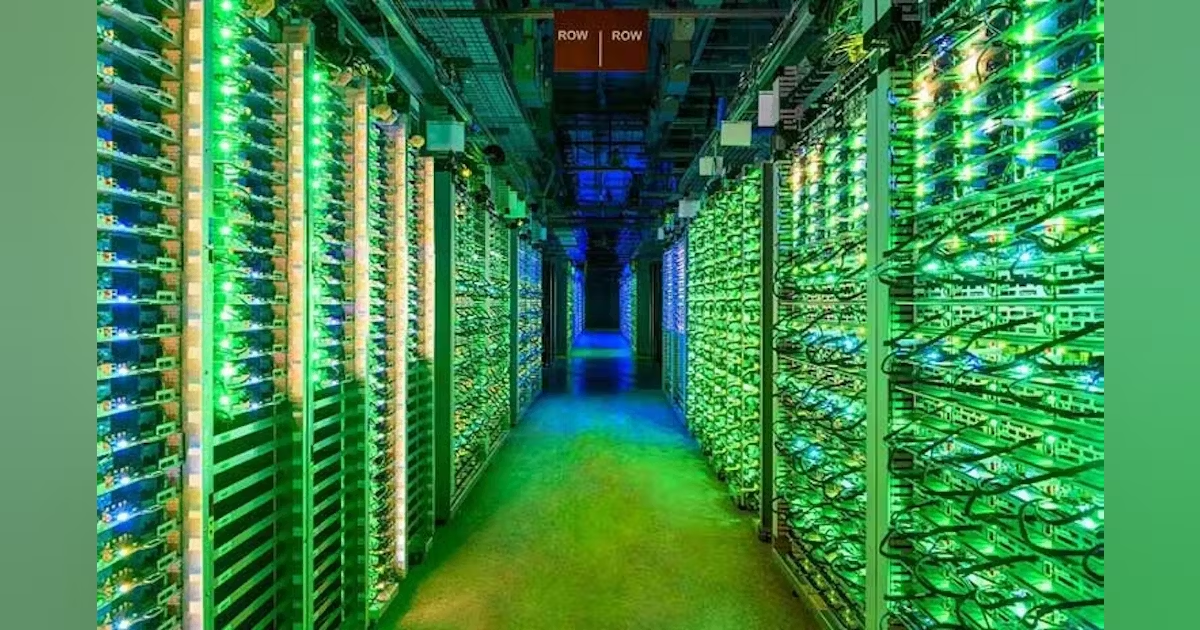
Gamuda Bhd, a leading Malaysian infrastructure company, has secured a high-stakes contract worth over RM1 billion (approximately USD 220 million) from Pearl Computing Malaysia Sdn Bhd, a fully owned Google subsidiary.
The deal marks a pivotal moment in Malaysia’s emergence as a regional digital infrastructure powerhouse.As part of the agreement, Gamuda will transfer 389 acres of land in Negeri Sembilan to Pearl Computing for approximately RM455 million (USD 100.1 million). The land will host a state-of-the-art data centre equipped with a 65-million-litre-capacity water treatment facility and an innovative off-river storage system. These infrastructure features reflect an emphasis on sustainable water management in the face of growing climate challenges.The facility is a cornerstone of Google’s wider USD 2 billion commitment to Malaysia’s digital future. By 2030, this initiative is projected to unlock USD 3.2 billion in economic activity and generate up to 26,500 jobs, positioning Malaysia as a central node in Southeast Asia’s expanding data economy.
In recent years, the Malaysian government has actively attracted such investments through tax incentives, streamlined approval processes, and subsidies. These policies have catalysed the development of nearly 50 new data centres, strengthening the nation’s digital economy, which already contributes about 25% to its GDP.Yet, the rapid proliferation of data centres is not without consequence. Forecasts suggest that Malaysia’s data centre industry could consume around 35 billion litres of water annually by 2027—primarily for cooling systems. On the energy front, a typical 100 MW data centre can use as much electricity as 45,000 households, and national demand is expected to exceed 850 MW this year alone.
With more than 95% of Malaysia’s electricity in 2022 derived from non-renewable sources, the environmental toll of such large-scale projects is under increasing scrutiny. Residents in data-heavy localities have reported frequent water shortages and power disruptions, spotlighting the urgent need to upgrade infrastructure and rethink energy distribution.The government has responded with renewed vigour, launching policies such as the Green Investment Strategy and the Renewable Energy Roadmap to support eco-friendly development. These initiatives aim to reconcile economic aspirations with the imperatives of sustainability and climate resilience.
As Malaysia courts global tech giants, balancing environmental stewardship with economic ambition has never been more critical. The Google-Gamuda partnership exemplifies both the promise and the pressure of digital transformation in a developing economy.The success of this venture—and others that follow—will hinge not only on engineering excellence but also on whether Malaysia can ensure equitable resource access, reduce dependence on fossil fuels, and embed sustainability into its urban and industrial frameworks. While the economic gains are compelling, the long-term future rests on Malaysia’s ability to grow green.
Also Read : Meghalaya to return Rs 209 crore for scrapped railway land acquisition
Google picks Gamuda for $220 million data centre
