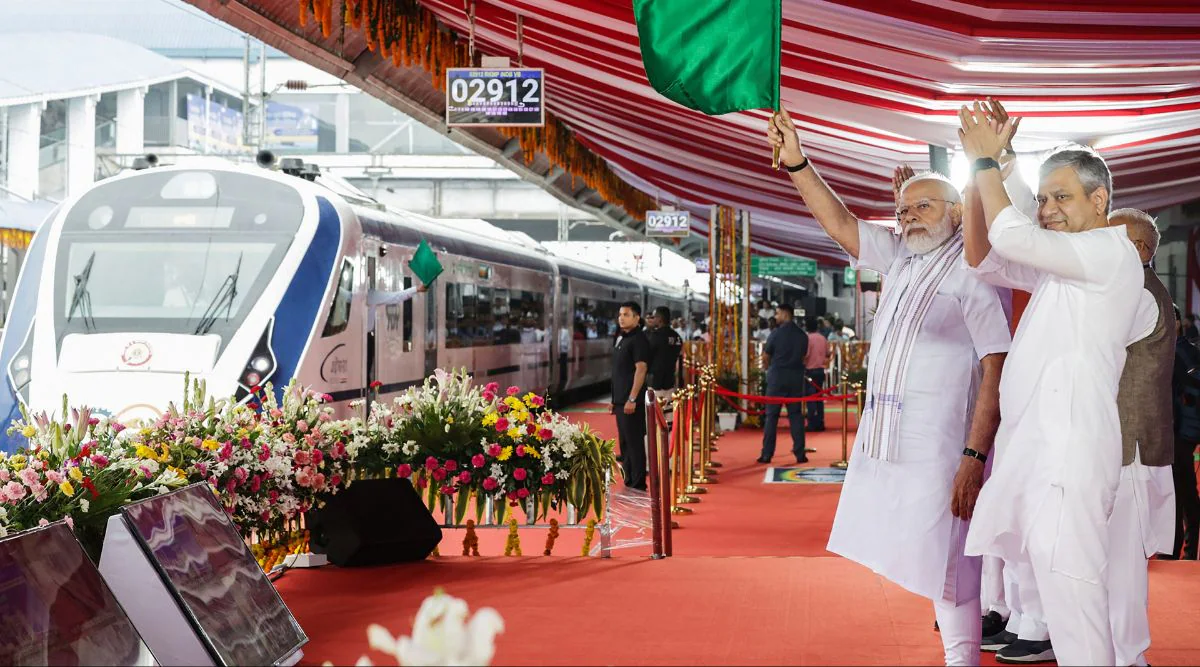
Goa could soon see a premium semi high speed rail connection to Bengaluru as railway authorities evaluate a proposal to introduce the Bengaluru Goa Vande Bharat service between Yeswanthpur and Madgaon, a move that may reshape intercity travel into the coastal state. The proposal, currently under review by the Railway Board, positions Madgaon as the Goa terminal for the new service. If cleared, the train would operate six days a week, departing Bengaluru in the morning and reaching Goa by evening.
For a state heavily dependent on tourism and service sector activity, faster and more predictable rail access from one of India’s largest technology hubs could carry economic significance. At present, conventional express trains between the two regions take around 15 hours to cover nearly 700 kilometres. The proposed service is expected to reduce that duration by several hours. However, the Western Ghats terrain a UNESCO-recognised biodiversity hotspot presents operational limitations. In steep ghat sections, trains typically operate at sharply reduced speeds for safety, often close to 30 kmph.
Despite the advanced design of Vande Bharat trainsets, capable of much higher cruising speeds on straight corridors, the average pace on this alignment may remain below 50 kmph. Railway engineers indicate that track curvature, gradients and signalling constraints will continue to influence journey time. Two trainsets may be required to maintain consistent operations due to the long turnaround cycle between Goa and Bengaluru. For Goa, the implications extend beyond convenience. Improved rail connectivity from Bengaluru a city with strong outbound leisure demand could stabilise seasonal tourism flows and diversify visitor segments. Hospitality operators and urban planners in the state note that enhanced rail services may encourage short-stay travellers who prefer low-carbon transport over domestic flights.
There is also a sustainability dimension. Electrified rail corridors offer lower per-passenger emissions compared to highway traffic along the NH 48 and coastal road networks. As Goa navigates the balance between tourism-led growth and ecological preservation, a shift toward rail-based mobility aligns with broader climate resilience goals. The proposed halts at intermediate stations such as Hassan and Sakleshpur could also strengthen hinterland connectivity, indirectly benefiting Goa’s supply chains for hospitality and food services. However, infrastructure experts caution that meaningful travel time reductions will require continued investment in track modernisation and advanced signalling across the ghat stretch.
The Railway Board is expected to finalise decisions on scheduling and stoppages after operational reviews. If approved, the Bengaluru Goa Vande Bharat would represent a strategic mobility upgrade for the state one that ties economic opportunity to infrastructure readiness. For Goa, the proposal underscores a critical reality: connectivity improvements can drive growth, but long-term gains depend on aligning transport expansion with environmental safeguards and corridor resilience.
Goa Tourism Corridor May Gain Vande Bharat