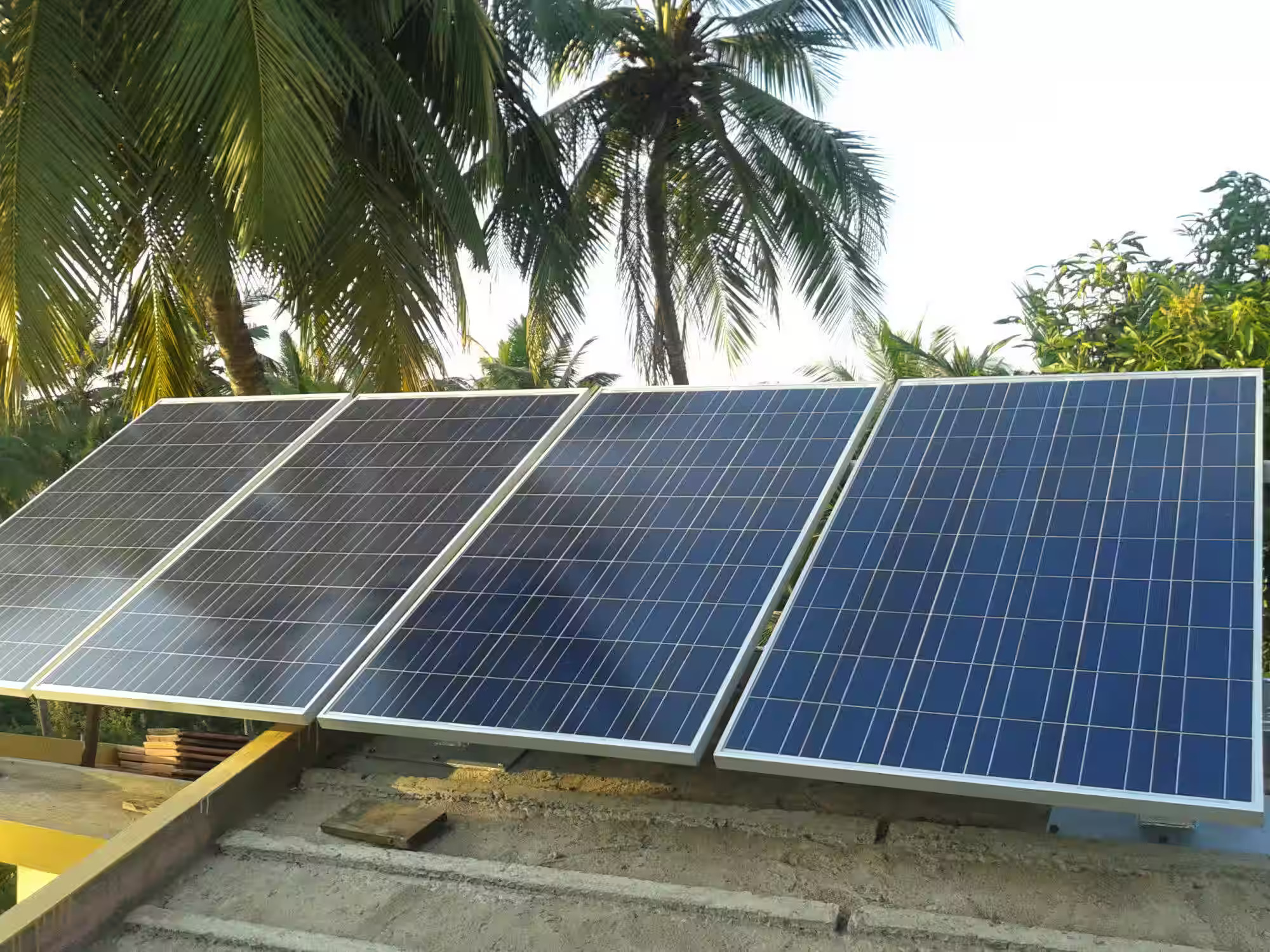
Goa Solar Push Aims For ₹325 Crore Green Energy Surge By 2027
Goa’s solar energy landscape is undergoing a remarkable transformation, with projections indicating a business turnover of ₹325 crore by 2027—nearly nine times its current scale. This rapid growth, driven by state and central government policies, is expected to generate over 9,000 jobs while significantly boosting clean energy capacity. Industry experts attribute the momentum to increased consumer interest, expanded subsidies, and targeted initiatives under the Surya Ghar Yojana and Goa’s ambitious solar roadmap aimed at making the state self-reliant in renewable energy.
The state’s current installed solar capacity stands at 12 MW, with 2 MW under development. Officials anticipate scaling this to 65 MW within the next three years, a fivefold increase that could dramatically reduce Goa’s dependence on conventional energy sources. Behind this surge is a steady rise in consumer investment, expected to grow from ₹18 crore to ₹162 crore by 2027. With this, Goa positions itself as a national model for decentralised, rooftop-driven energy systems that reduce grid loads and improve climate resilience in urban areas. Parallel to capacity expansion, the sector is poised to become a key employment generator. Direct jobs in solar installation, maintenance, and operations are projected to increase from 750 to 2,250, while indirect opportunities in supply chains, training, and retail could reach 6,750.
Experts also highlight a threefold growth in solar entrepreneurship—from 45 to 135 ventures—as a major win for local economic development and gender-inclusive livelihoods. This emerging green workforce supports Goa’s broader ambitions to transition towards net-zero carbon energy systems without compromising on economic equity. Financial incentives have played a vital role in catalysing this shift. The central government has already disbursed ₹13.5 crore through state channels and another ₹5.37 crore directly to residents adopting solar solutions. This subsidy push is backed by a sharp projected increase in GST collections from the sector, growing from ₹4.48 crore now to ₹39 crore by 2027. Experts say this uptick in fiscal returns demonstrates how renewable energy adoption can fuel both economic growth and public revenue without placing strain on the environment.
As Goa steers towards a decentralised solar ecosystem, stakeholders underline the importance of sustained policy consistency, public awareness, and industry-led training initiatives. While government schemes have laid the groundwork, long-term success hinges on ensuring that solar adoption is affordable, inclusive, and built on strong after-sales support. With the right partnerships and civic engagement, Goa’s solar momentum could inspire other states to reimagine their own clean energy future with equal ambition.