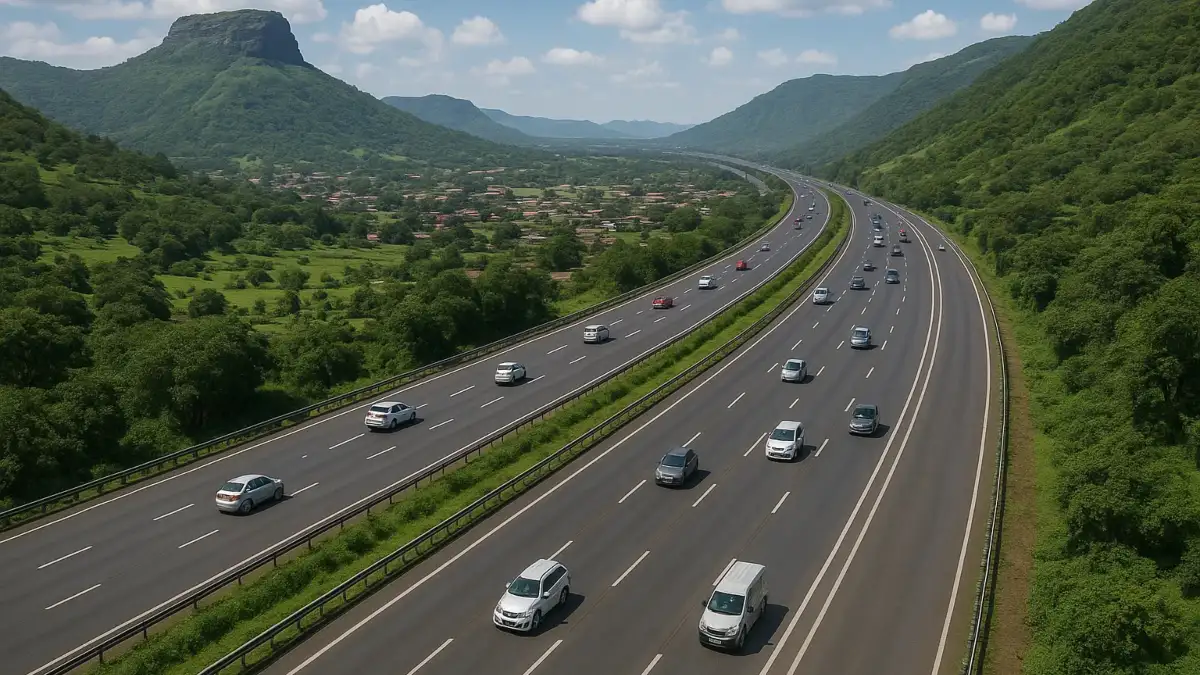
Goa has placed a large transport infrastructure expansion proposal before the Union government, seeking financial and administrative backing for highway and bridge projects valued at over ₹7,000 crore. The plan, submitted by the state’s public works department, signals a renewed push to address long-standing mobility constraints in one of India’s most land-constrained and environmentally sensitive regions, where traffic growth is increasingly outpacing road capacity.
The proposed portfolio focuses on strategic highway widening, bypasses, and bridge construction aimed at improving inter-district movement and cross-border connectivity with neighbouring states. State officials involved in the submission say the projects are designed to reduce congestion on key freight and commuter corridors while supporting tourism-driven economic activity, a critical pillar of Goa’s economy. Among the larger proposals is a new river crossing at Borim with extended approach roads, intended to ease pressure on existing bridges that currently act as bottlenecks during peak travel periods. Transport planners note that bridge infrastructure in Goa carries disproportionate load due to limited alternative routes, making resilience and redundancy essential for both daily commuters and emergency response.
Another major component is a proposed bypass near Cuncolim along the coastal national highway corridor. This stretch has seen rising traffic volumes from a mix of local traffic, tourist movement, and logistics vehicles. Urban planners argue that well-designed bypasses can divert through-traffic away from dense settlements, improving road safety and local air quality while reducing travel times for longer-distance users. The plan also includes extensive four-laning of hill and forest-adjacent highway sections near the Goa–Karnataka border. These routes are vital for regional trade and supply chains but are often slowed by narrow carriageways and seasonal congestion. Experts caution, however, that execution will require careful environmental management, given the ecological sensitivity of the Western Ghats and surrounding biodiversity zones.
Industry observers see the proposal as part of a broader national trend where smaller states are seeking central support to modernise transport networks without overburdening state finances. “For Goa, the challenge is balancing growth with sustainability,” said an infrastructure analyst tracking coastal states. “Road capacity upgrades must integrate climate resilience, drainage planning, and pedestrian safety, especially in monsoon-prone areas.” The state has indicated that several projects already have detailed planning documentation in place, which could shorten approval timelines if funding is cleared. Improved road connectivity is also expected to influence land values and real estate development along peripheral corridors, underscoring the need for coordinated land-use planning to avoid unplanned sprawl.
While the proposal awaits scrutiny and approval at the central level, its scale highlights Goa’s attempt to shift from incremental road upgrades to corridor-based planning. If executed with environmental safeguards and multimodal integration, the investments could ease daily commuting pressures while supporting a more resilient and efficient transport network. The next steps will depend on funding decisions and how effectively sustainability considerations are embedded into project execution.
Goa Highway Expansion Plan Seeks Central Support