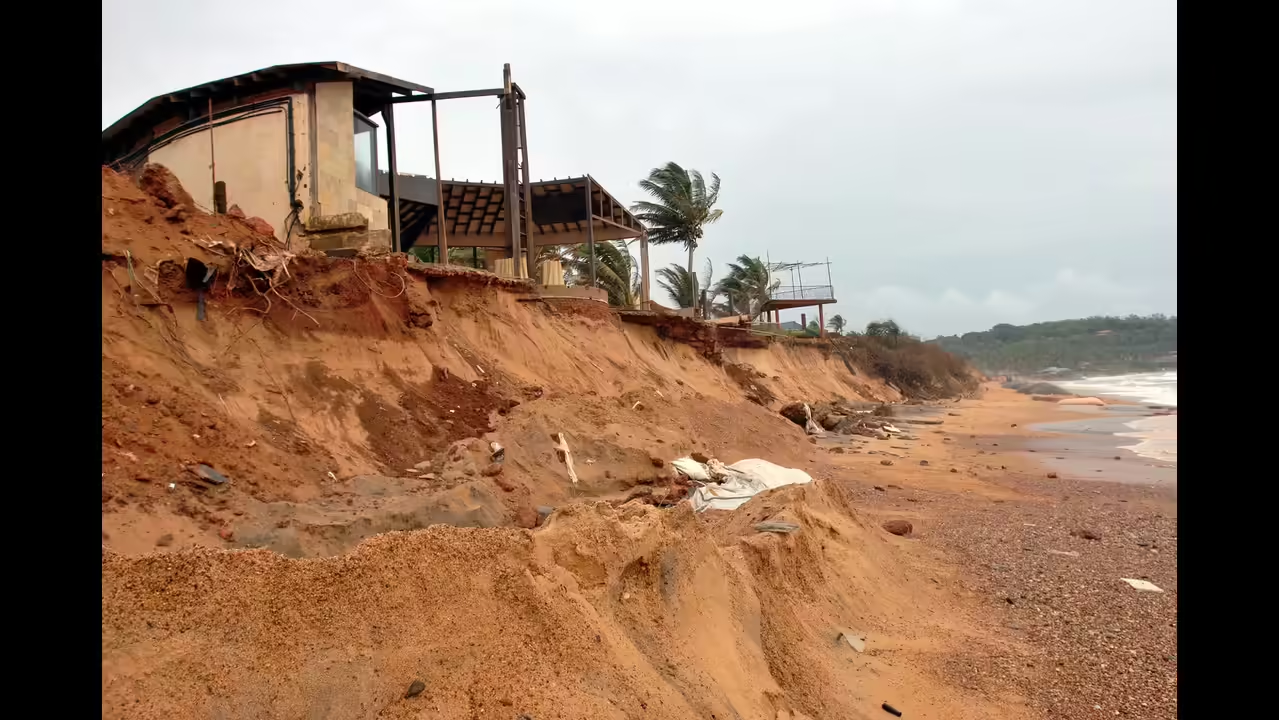
Goa’s coastline is undergoing visible transformation, with new scientific assessments indicating a decline in stable shoreline stretches and a rise in erosion across several key beach locations. The Goa coastal erosion trend is emerging as a critical concern for urban planners and environmental authorities, as it directly affects tourism infrastructure, coastal livelihoods, and long-term climate resilience in the state.
Recent shoreline analysis shows that only a small portion of Goa’s nearly 194-kilometre coast now qualifies as stable, reflecting a significant drop over the past decade. At the same time, the extent of erosion has increased, while areas experiencing natural sediment build-up have grown only marginally. Experts attribute these shifts to a combination of natural coastal dynamics and intensified human activity along the shore.
Urban development along beaches and coastal belts has altered sediment flows and weakened natural buffers such as sand dunes and vegetation. Planners note that the disruption of these systems makes coastlines more vulnerable to wave action and seasonal changes. The Goa coastal erosion pattern is particularly evident in high-activity zones where tourism, fishing operations, and construction overlap.
Several coastal stretches across North and South Goa are witnessing repeated erosion cycles, including areas that support economic activities and sensitive ecosystems. Beaches that double as tourism hubs or fish landing sites are under increasing stress, while ecologically significant zones, including turtle nesting habitats, are also being affected.
The implications extend beyond environmental loss. Coastal erosion can damage infrastructure, reduce beach width, and impact local economies dependent on tourism. In low-lying areas, the loss of natural barriers raises the risk of flooding and saline intrusion into groundwater systems—issues that are likely to intensify with climate change and rising sea levels. Policy responses are gradually shifting towards nature-based solutions. Coastal management experts have recommended reducing reliance on hard engineering structures such as seawalls, which can sometimes exacerbate erosion in adjacent areas. Instead, softer interventions like beach nourishment and dune restoration are being explored to rebuild natural resilience.
Authorities have initiated pilot projects in identified erosion hotspots, focusing on restoring beach profiles and stabilising vulnerable stretches. International collaborations have also been brought in to guide these efforts, with an emphasis on using scientific modelling and long-term monitoring to inform interventions. However, experts caution that isolated projects may not be sufficient. The Goa coastal erosion challenge requires a more integrated approach that aligns land-use planning, tourism policy, and environmental protection. Limiting construction in sensitive zones, preserving natural coastal features, and strengthening regulatory enforcement are seen as key steps. For residents and local communities, the issue is both immediate and long-term. Changes in shoreline patterns can disrupt livelihoods, reduce access to common spaces, and alter the character of coastal settlements. As Goa continues to balance economic growth with environmental stewardship, the management of its coastline is likely to become a defining test of sustainable urban governance.
Goa Coastal Erosion Raises Climate Risk Concerns