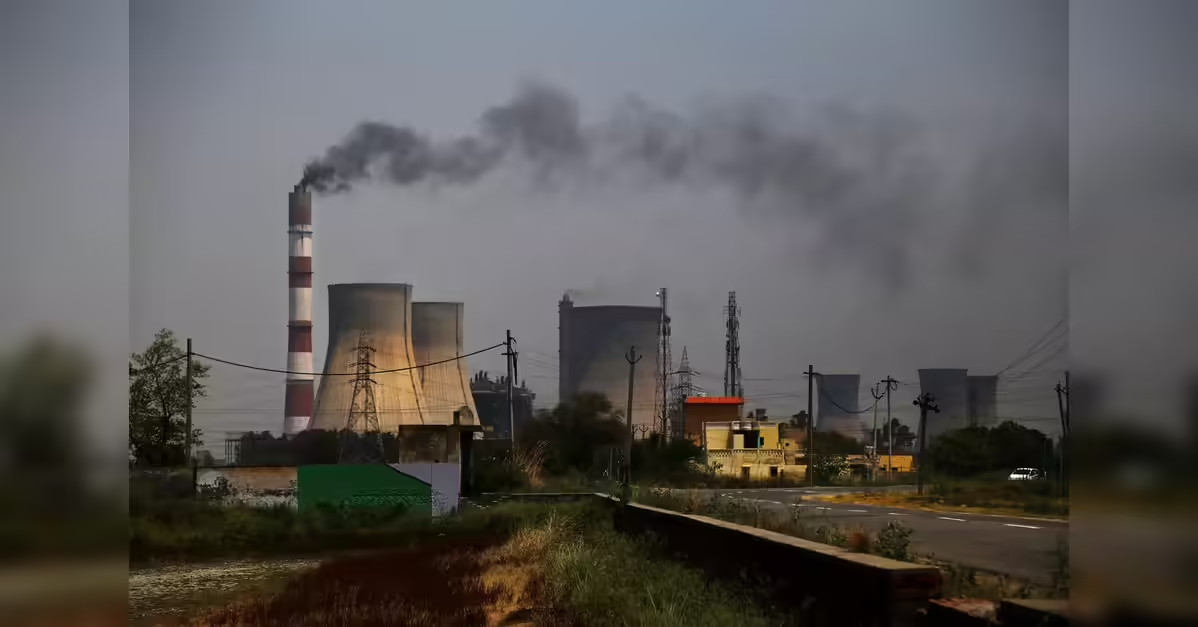
Goa Coal Dust Pollution Sparks Urban Health Concerns
Goa’s government has stepped in to address growing concerns over coal dust pollution in Mormugao, as pressure mounts from residents and local authorities over the environmental and health impact of port-linked coal handling operations.The Chief Minister has assured that measures will be taken to contain coal dust emissions in the port town, where communities have long flagged air quality concerns linked to coal transport and storage. The issue has gained urgency amid rising complaints about dust dispersion affecting residential areas close to the port.
At the centre of the debate is the environmental footprint of coal logistics at Mormugao Port, a key maritime gateway that handles bulk cargo, including coal for industrial use. While the port plays a significant role in regional trade and employment, its operations have increasingly come under scrutiny for their impact on urban air quality and public health.The Goa coal dust pollution issue reflects a broader tension between industrial activity and liveability in coastal cities. Residents in Mormugao and surrounding areas have repeatedly raised concerns about airborne coal particles settling on homes, public spaces, and vegetation, with potential long-term health implications. Local civic bodies have also entered the conversation, with calls in recent months for stricter controls—and even a complete halt—to coal handling operations unless environmental safeguards are significantly strengthened. These demands highlight a growing shift in urban governance, where communities are increasingly asserting their right to cleaner air and healthier living conditions.In response, authorities have indicated that containment measures—such as improved handling systems and infrastructure upgrades—are being prioritised. Previous interventions have included the development of covered storage facilities aimed at reducing dust dispersion, though concerns remain about their effectiveness and enforcement.
The Goa coal dust pollution challenge underscores the complexities of managing legacy industrial infrastructure within expanding urban regions. As cities grow around ports and logistics hubs, the proximity between residential zones and heavy industrial activity becomes a critical planning issue.Urban development experts point out that ports like Mormugao are essential economic engines but require modernisation to align with contemporary environmental standards. This includes investing in enclosed conveyor systems, dust suppression technologies, and real-time air quality monitoring—measures that are increasingly standard in global port operations.The issue also intersects with India’s broader climate and sustainability goals. While coal remains a key component of the country’s energy mix, its handling and transportation in urban areas present immediate environmental challenges that require localised solutions.
For Goa, the path forward will depend on balancing economic activity with environmental safeguards. Strengthening regulatory oversight, improving infrastructure, and ensuring transparent monitoring could help restore public confidence while maintaining the port’s operational viability.As scrutiny intensifies, the outcome in Mormugao may serve as a test case for how Indian cities manage the environmental costs of industrial logistics—particularly in regions where economic growth and ecological sensitivity must coexist.