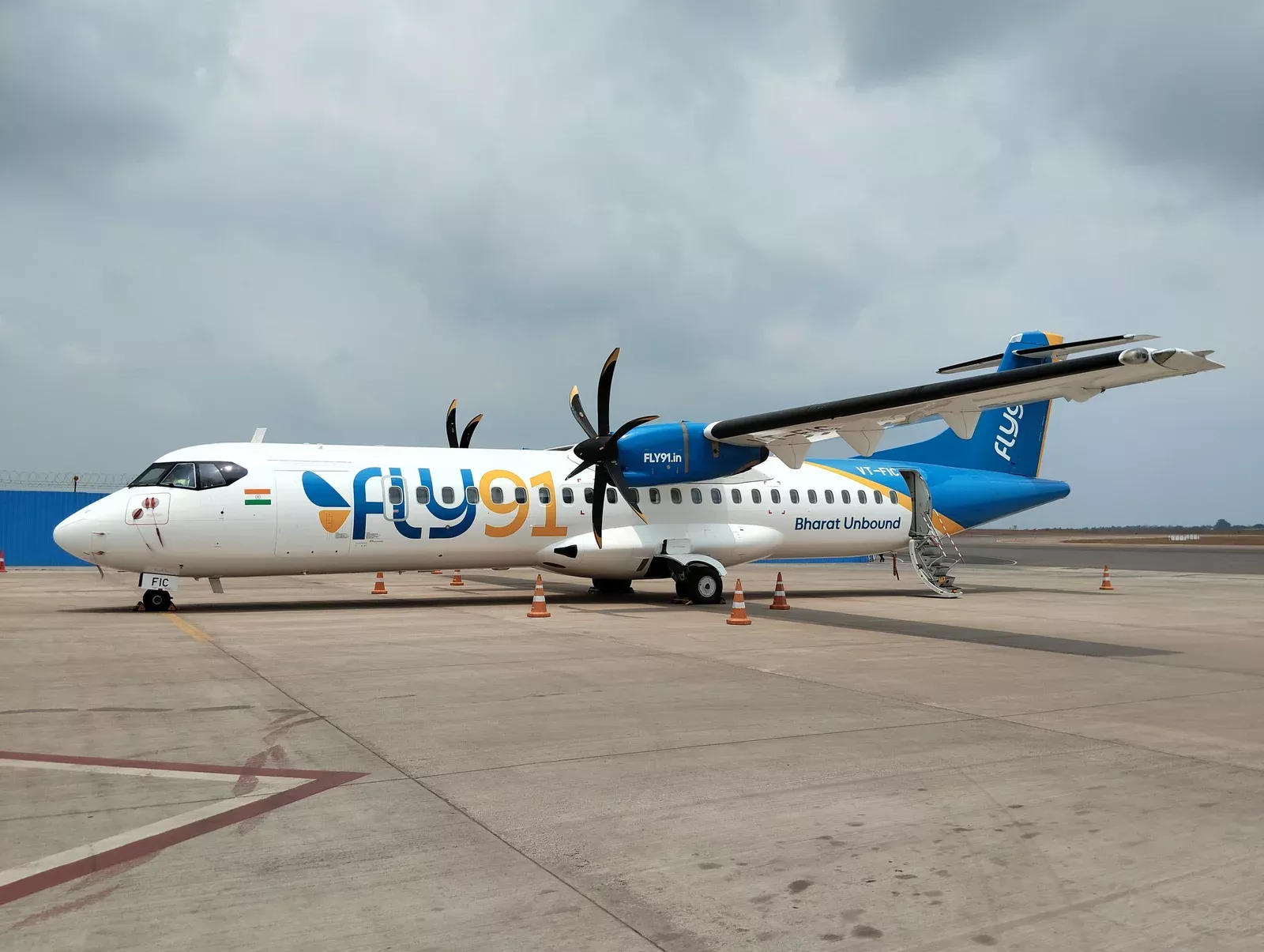
A Goa-headquartered regional carrier has expanded its fleet with two additional ATR 72-600 turboprop aircraft, signalling a deeper push into India’s underserved air corridors. The move strengthens the regional aviation network emerging from Manohar International Airport and reflects growing demand for direct links between smaller cities and larger economic centres.
The airline, which commenced operations last year, now operates six ATR 72-600 aircraft. The latest additions were inducted through a lease arrangement with a global aircraft lessor, underscoring a capital-light growth model common among new regional operators. Industry analysts say such calibrated fleet expansion helps balance operational risk with network ambition in a highly competitive domestic market. The regional aviation network being built from Goa connects destinations such as Pune, Hyderabad and Bengaluru with smaller centres including Agatti in Lakshadweep, Jalgaon, Sindhudurg and Solapur.
Additional routes to cities such as Rajahmundry, Vijayawada, Hubballi, Nanded and Indore are under evaluation, according to aviation officials familiar with the airline’s plans. The choice of the ATR 72-600 is strategic. The twin-engine turboprop is designed for short-haul sectors and can operate efficiently from runways that may not accommodate larger jet aircraft. Aviation planners note that such aircraft consume less fuel per trip on short routes compared to narrow-body jets, supporting lower operating costs and potentially reducing per-seat emissions an important consideration as India’s aviation sector faces increasing scrutiny over its carbon footprint.
Strengthening the regional aviation network also has urban and economic implications. Improved air access can shorten travel time between tier-2 and tier-3 cities and major metropolitan hubs, enabling faster business travel and improving access to healthcare, education and administrative services. For coastal and island destinations like Agatti, better connectivity can reshape tourism flows while demanding careful planning to protect fragile ecosystems. Urban economists argue that consistent air links can influence real estate demand around secondary airports, stimulate hospitality investment and enhance labour mobility. However, they caution that aviation growth must be integrated with multimodal transport planning to avoid congestion and unplanned peri-urban expansion around smaller airports.
India’s regional connectivity scheme has already increased flight frequencies across previously unserved routes. The expansion of this regional aviation network from Goa adds competitive capacity in markets that historically relied on long road or rail journeys. As the airline signals intentions to scale operations further over the next few years, infrastructure readiness at smaller airports including terminal capacity, navigation systems and sustainable ground operations will determine how effectively this growth translates into equitable regional development.
For cities seeking balanced economic expansion beyond major metros, the trajectory of this regional aviation network may prove pivotal, provided connectivity gains are matched with environmental safeguards and coordinated urban planning.
Goa Airline Expands Regional Aviation Network