


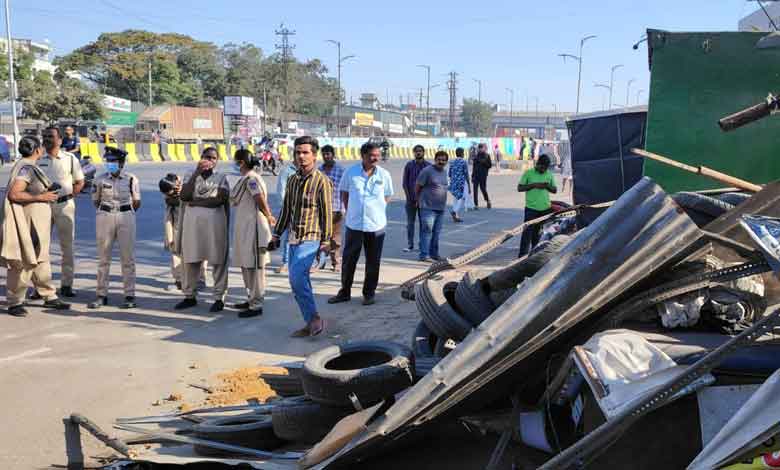
GHMC LB Nagar encroachment drive raises civic concerns
The Greater Hyderabad Municipal Corporation (GHMC) carried out an extensive encroachment removal operation in LB Nagar on Tuesday, aiming to clear shops, sheds, and temporary structures that were obstructing footpaths and roadways near the LB Nagar underpass. The authorities focused on structures including sheds and shade awnings from restaurants, juice centres, and paan shops, along with the removal of a puncture shop operating directly on the road. This action was part of GHMC’s ongoing efforts to improve traffic flow and reclaim public spaces for pedestrians.
While the operation was meant to streamline traffic and prevent illegal encroachments, it has sparked significant outrage from local residents and business owners. Shopkeepers and residents voiced their concerns about the demolition, citing that the drive appeared selective. The controversy intensified when it was noticed that the Pushpak Bus Stop shed, located nearby, was spared despite being an equally prominent encroachment. The decision to leave the bus stop structure intact has raised questions about the perceived fairness of the operation.
Protests Erupt Over Perceived Bias in Enforcement
The GHMC’s encroachment clearance met with strong resistance from locals, including business owners like Shivaji, who runs a mobile repair shop. “They are having a biased treatment towards the public. They spared that Pushpak bus stop room, but they ruthlessly demolished a man’s entire livelihood. How can they do that?” Shivaji remarked, highlighting the emotional toll such demolitions can have on small business owners who depend on these spaces for their survival.
Tensions rose as residents confronted GHMC officials on-site, demanding answers and clarity regarding the criteria for selecting which structures were to be removed. The standoff culminated in a heated exchange, with the police intervening to maintain order. Despite the protests, GHMC officials continued their operation, stating that the removal of encroachments was necessary to ensure smoother traffic flow and maintain public property. The decision to clear spaces like footpaths, which had been illegally occupied, was justified by the authorities as a measure to prevent accidents and ensure the safety of pedestrians.
Sustainability and Urban Development: Balancing Growth with Livelihoods
This operation raises significant questions about urban development, particularly the balance between clearing encroachments for infrastructure improvements and safeguarding the livelihoods of local businesses. In a rapidly growing city like Hyderabad, the demand for public space often clashes with the reality of street-level businesses that rely on encroachments for visibility and trade. While the GHMC’s move aims to restore public spaces and improve traffic, it must also consider the socio-economic impact on those whose livelihoods are disrupted.
Urban sustainability goes beyond infrastructure development; it must include the consideration of social sustainability. Business owners like Shivaji face the challenge of not only dealing with the physical loss of space but also the financial strain that comes with it. Ensuring that future development in urban areas doesn’t disproportionately affect small-scale businesses is crucial for fostering an inclusive and sustainable city. Urban planning needs to integrate solutions that address both infrastructure needs and the socio-economic well-being of residents and entrepreneurs.
Public Policy and Civic Responsibility: The Road Ahead
The GHMC’s encroachment removal operation serves as a reminder of the broader civic responsibility of urban development. While the removal of encroachments is essential for improving traffic flow and public safety, it must be carried out with fairness and transparency. Civic authorities must ensure that affected business owners are provided with adequate support or alternative spaces to operate, helping them transition without a significant loss of income. At the same time, a more inclusive and consultative approach to urban planning is needed to reduce tensions and foster cooperation between the authorities and residents.
As Hyderabad continues to expand, its urban spaces will inevitably face growing pressures. It is essential for public policy to adapt, creating frameworks that prioritise both infrastructural development and the welfare of its citizens. The success of these operations lies not only in clearing encroachments but in ensuring that these measures are sustainable and beneficial to the broader community.
