


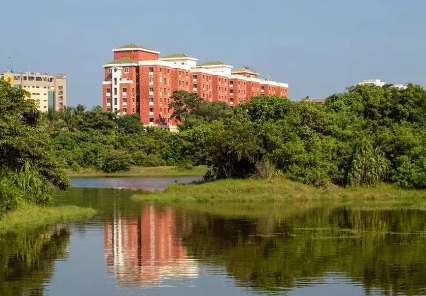
Greater Chennai Corporation (GCC) has unveiled plans to revamp Kadapakkam Lake. Spanning 55 hectares in the Manali zone, this landmark initiative is poised to double the lake’s capacity from 1.1 million cubic meters (MCM) to 2.2 MCM. Funded jointly by the Global Environmental Facility and the Asian Development Bank at an estimated ₹149 crore, the project is an embodiment of the Ecosystem-based Adaptation (EbA) approach inaugurated by the Chief Minister on Monday.
The project blueprint emphasises comprehensive lake rejuvenation, including desilting operations to bolster flood retention capabilities, primarily through the renovation of existing sluice gates. In line with the GCC’s vision of inclusive urban spaces, the plan incorporates eco-friendly recreational features such as a butterfly park, a bird island, and a play area, making it a haven for both biodiversity and community engagement.
A meticulous field study conducted by the GCC in March 2022 reported a lack of encroachment by human settlements or commercial entities, with the surrounding catchment areas primarily used for agricultural purposes. While the initial environmental assessment reflects a lake untainted by sewage or industrial effluents, it flags concerns over agricultural waste, vehicular washing, and open defecation, necessitating proactive pollution management. Historically plagued by illegal groundwater extraction and soil mining, Kadapakkam Lake is strategically located, connecting upstream to Sembium Manali Lake and downstream to Ariyalur Lake. The restoration plan addresses these challenges by fortifying lake bunds, installing protective fencing, and limiting unauthorised access. The proposals also include sanitation initiatives, including the Swachh Bharat Mission, to elevate public health and hygiene standards.
The GCC’s recommendations advocate for the removal of invasive species, notably water hyacinth and karuvelam, while reintroducing native flora to rejuvenate aquatic ecosystems. Ensuring the lake’s natural replenishment through monsoons by maintaining its connectivity with adjacent water bodies is central to the sustainability agenda. Furthermore, the project promotes the use of sustainable materials and practices, exemplified by using dredged soil for bund reinforcement and employing fly ash bricks for paving. This initiative not only underscores Chennai’s commitment to environmental stewardship but also sets a precedent for urban lake restoration, dovetailing infrastructure development with ecological conservation.
