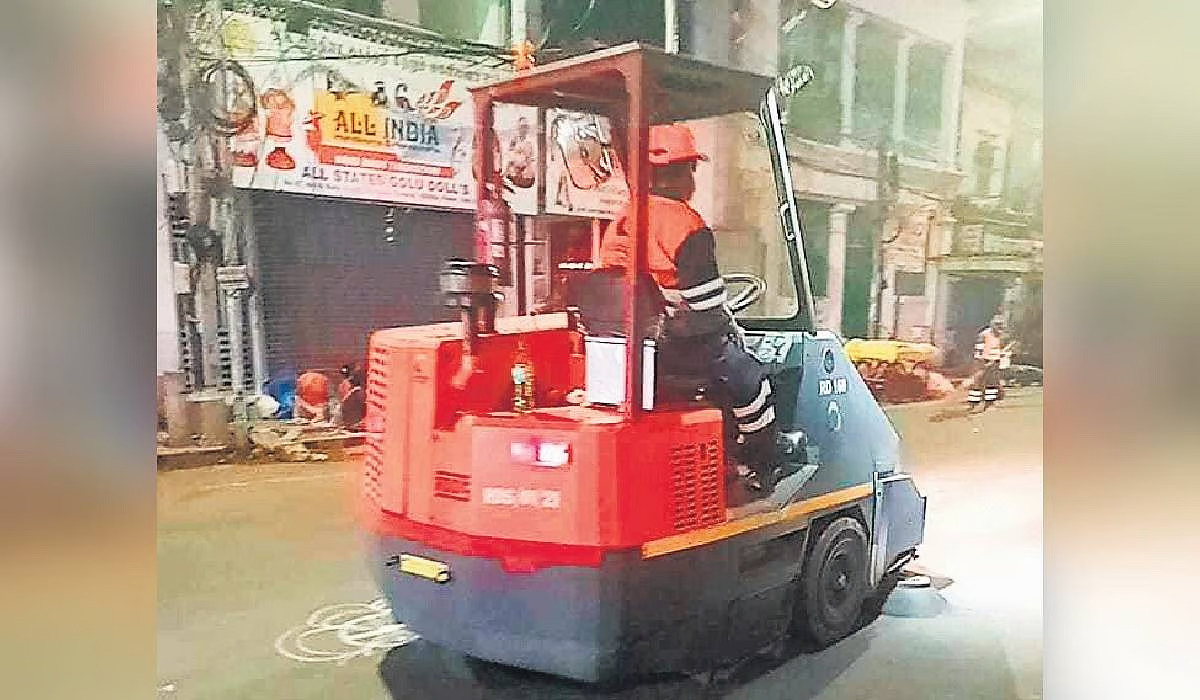
The Greater Chennai Corporation (GCC) has rolled out a suite of pollution control measures this summer, aimed particularly at reducing dust emissions from roads and construction zones.
With the city increasingly grappling with urban particulate pollution during dry spells, the civic body is piloting new solutions to keep the air breathable and the environment liveable. At the core of this initiative is the pilot deployment of a mechanised street-washing vehicle, a model adapted from Bengaluru’s civic system. Operated under contract, the vehicle is being tested across key urban corridors in Chennai to evaluate its efficiency in dust suppression. This new equipment, working in tandem with suction sweepers, is designed to remove surface-level dust before spraying water to lock in residual particulates.
Officials overseeing the operation said the initiative marks a shift from manual sweeping to machine-based cleaning on arterial roads. Plans are already in motion to procure at least 20 ride-on suction sweepers for continuous deployment on high-density transit corridors. The push is part of a broader vision to reimagine urban cleanliness through technological and ecological interventions. “Even minor unpaved surfaces contribute significantly to airborne dust,” explained a senior GCC official involved in the urban development division. “By ensuring seamless paving—right from bitumen roads to medians, drains, and pedestrian walkways—we are eliminating one of the most persistent sources of particulate matter.”
To complement the mechanical cleaning, the GCC is intensifying its jet-spraying efforts on public infrastructure such as bus shelters and pavements. Notably, the city is employing secondary treated water sourced from the Chennai Metro Water Supply and Sewerage Board to reduce wastage and promote sustainable water reuse. The civic body’s dust mitigation campaign is not limited to road maintenance. An urban greening drive has been initiated in parallel, with plans to lay lawns in vacant public plots, develop roadside parks, and expand tree cover across residential and commercial zones. Officials said the strategy is designed to lower surface temperatures, bind soil particles, and create microclimates conducive to air purification. Perhaps the most significant intervention, however, lies in the overhaul of construction and demolition (C&D) site practices. The GCC is set to embed clean construction protocols into the building permit system itself. New guidelines drafted by the administration mandate the use of tin or metal barricades—six metres for plots up to an acre and ten metres for larger sites. Additionally, all demolition or excavation work will require fogging or water-sprinkling systems to be in place, either manually or via machinery.
Transporting debris or materials will now also come under stricter scrutiny. Trucks and lorries will be legally required to avoid overloading and to be covered by tarpaulin sheets. These measures, officials stated, will be enforced with immediate penalties for non-compliance, forming part of a larger accountability framework intended to bring long-term behavioural change among contractors and developers. These proactive steps by the Chennai civic authority mirror environmental regulatory models previously adopted in cities such as Delhi and Mumbai. However, officials noted that GCC’s approach places a stronger emphasis on decentralised enforcement and community-scale interventions.
Experts in urban governance and climate adaptation welcomed the developments. “It’s encouraging to see a southern city adopting air quality reforms that go beyond reactionary dust control. The shift to cleaner construction, sustainable landscaping, and systemic monitoring indicates a more holistic vision for urban health,” said a consultant affiliated with a national sustainable cities programme. While implementation remains a challenge, especially across a city as large and rapidly growing as Chennai, civic officials believe that early action this summer will prevent a potential spike in respiratory illnesses and environmental degradation. The seasonal timing, coinciding with low humidity and high vehicular activity, adds urgency to the rollout.
As Chennai navigates the climate pressures of a megacity, the current phase of civic intervention underlines a shift towards proactive governance—where clean air is recognised not just as an environmental concern, but as a fundamental urban right.
GCC rolls out cleaner air drive to tackle Chennai dust crisis