


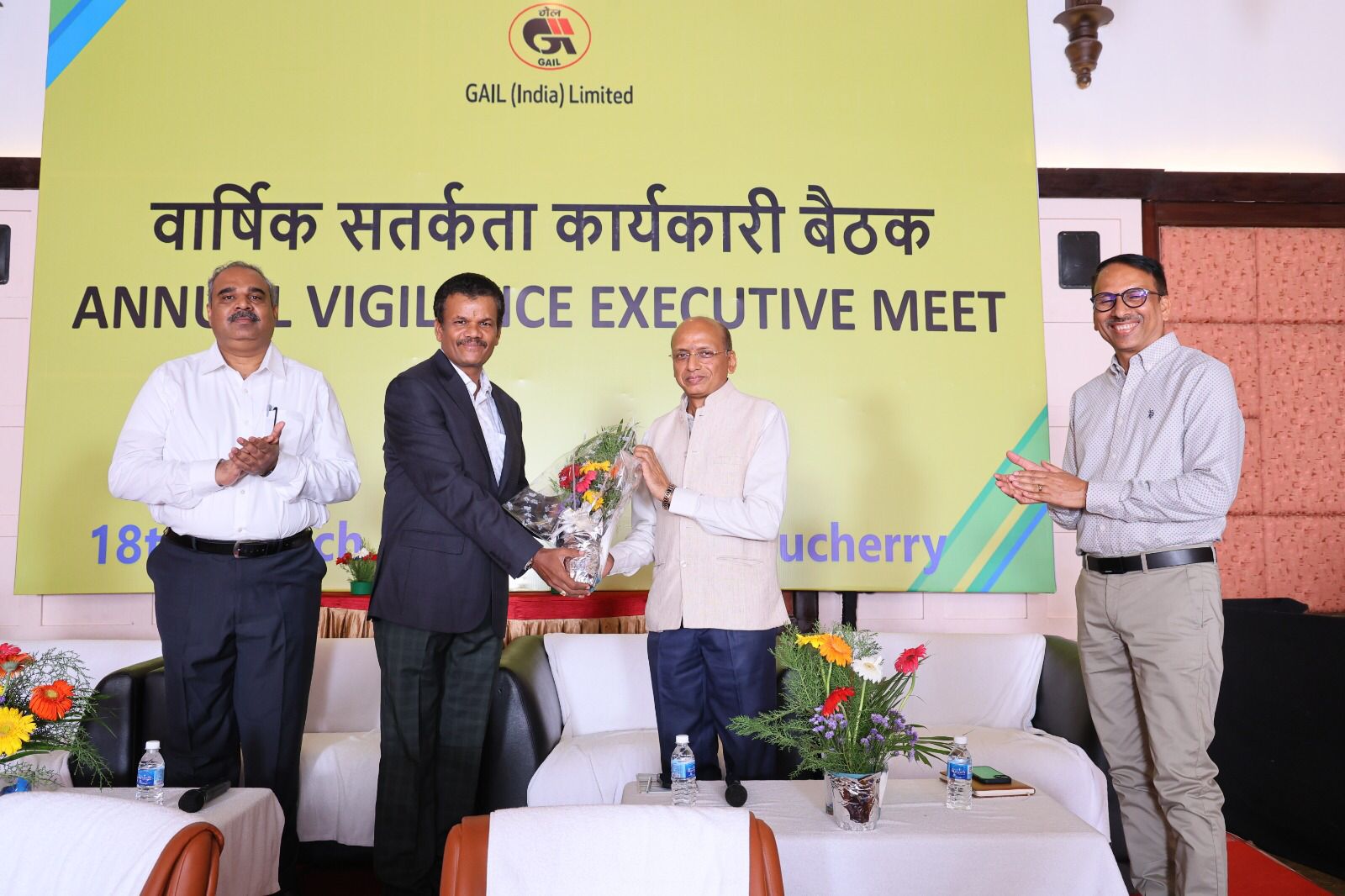
GAIL convened senior vigilance officials from across its subsidiaries and joint ventures in Hyderabad this week, as the state-run energy major intensified its internal oversight architecture at a time of expanding infrastructure investments and heightened public scrutiny.
The annual gathering, organised by the company’s Corporate Vigilance Department, brought together more than 30 vigilance executives to align processes, strengthen compliance mechanisms and standardise practices across the GAIL group. For a public sector enterprise operating critical gas transmission and energy infrastructure, a unified vigilance governance framework is increasingly central to risk management and long-term institutional credibility.Senior officials overseeing vigilance functions stressed the importance of balancing accountability with protection for employees who adhere to procedures. According to participants, discussions focused on reinforcing transparent complaint-handling systems, improving vigilance clearance procedures and ensuring consistency in disciplinary protocols across units.
The GAIL Vigilance Meet also included structured workshops aimed at building technical capacity among nodal officers. Sessions examined procedural gaps that often emerge in large, geographically dispersed organisations—particularly those engaged in capital-intensive infrastructure such as pipelines, petrochemicals and city gas distribution networks. Experts in public administration highlighted the need for clear documentation trails, time-bound grievance redressal, and digital tracking systems to reduce discretion and enhance traceability.Governance specialists note that vigilance mechanisms within public infrastructure entities play a critical role in safeguarding taxpayer resources and maintaining investor confidence. With India accelerating investments in energy transition infrastructure—ranging from gas-based networks to renewable integration—robust compliance systems are increasingly tied to project financing, ESG metrics and international partnerships.
The Hyderabad workshop comes amid a broader push across public sector undertakings to embed risk controls within operational workflows rather than treating vigilance as a post-facto corrective tool. Industry observers argue that preventive vigilance—through training, peer learning and standard operating procedures—reduces litigation, project delays and reputational damage.For cities and urban regions dependent on reliable energy supply, institutional integrity within transmission and distribution entities directly affects service continuity and infrastructure rollout. As India’s gas grid expands to support cleaner fuel adoption and industrial decarbonisation, governance frameworks will influence not only project timelines but also public trust.
Participants at the GAIL Vigilance Meet concluded with a roadmap to harmonise practices across subsidiaries, ensuring that oversight standards do not vary between joint ventures and the parent entity. Officials indicated that future sessions may incorporate digital compliance tools and data-driven monitoring to strengthen early-warning systems.As public infrastructure scales in complexity and climate-linked investments grow, internal vigilance systems are emerging as foundational pillars of sustainable, accountable growth. For energy majors like GAIL, governance reform is no longer peripheral—it is embedded within the architecture of expansion itself.
Also Read:Bengaluru Weather Shifts Spark Spike In Respiratory Complaints
GAIL Vigilance Meet Signals Governance Push
