


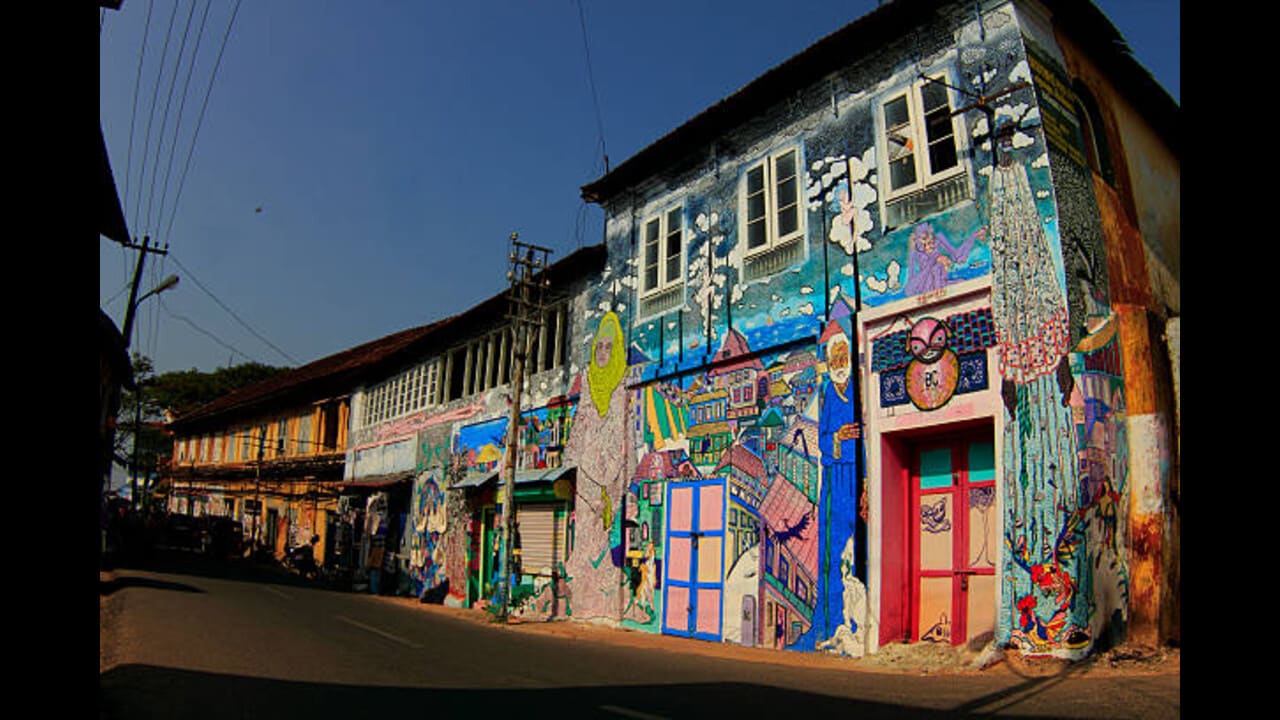
As the Kochi Muziris Biennale enters its mid-cycle, Fort Kochi’s parallel cultural and commercial ecosystems are quietly sustaining year-round economic activity. While the Biennale remains a global draw, local entrepreneurs, heritage groups and independent retailers say the neighbourhood’s long-term vitality depends on what happens beyond official venues.
Across the historic precinct, performance spaces such as the Great K V Kathakali Centre continue to host classical art showcases that attract both visitors and residents. Informal evening gatherings at Arman Collective and David Hall reinforce the area’s identity as a people-led cultural district rather than a single-event destination.Urban historians involved with the Kochi Heritage Project note that curated heritage walks are witnessing increased participation during the festival season. These walks interpret Fort Kochi’s layered histories — from maritime trade and colonial architecture to migration patterns — broadening the economic impact beyond galleries.
Food and hospitality establishments are also experiencing diversified demand. Heritage properties such as Brunton Boatyard and contemporary boutique stays like The Lila report steady occupancy driven by cultural tourism. Casual dining spaces including Pandhal Cafe and waterfront venues like Seagull Bar benefit from extended evening footfall, particularly along Princess Street and surrounding lanes.Retail patterns indicate a shift towards curated, small-batch consumption. Stores such as One Zero Eight and House of Vandy highlight handloom textiles and ethically produced apparel, aligning with rising demand for responsible fashion. Independent bookshops like Idiom Booksellers and Printed Matter are hosting readings and community events, reinforcing the neighbourhood’s role as an intellectual commons.
Urban development observers suggest this decentralised ecosystem is critical to Fort Kochi’s resilience. Rather than relying solely on periodic mega-events, the locality sustains micro-economies built around cafés, music venues, bookstores and design-led retail. These enterprises generate employment, encourage adaptive reuse of heritage structures, and maintain street-level vibrancy.However, planners caution that rising commercial interest must be balanced with preservation safeguards. Heritage zoning, waste management and mobility planning will determine whether growth remains inclusive and environmentally sustainable.
For visitors, the lesson is straightforward: the neighbourhood’s economic and cultural strength lies in slow engagement — walking streets after dusk, entering unplanned spaces, and interacting with residents. For the city, Fort Kochi demonstrates how culture-led urban regeneration can thrive when supported by everyday community networks, not only flagship festivals.
Also Read:Chennai Roads Department Gets Largest Budget Share
Fort Kochi Cultural Economy Beyond Biennale
