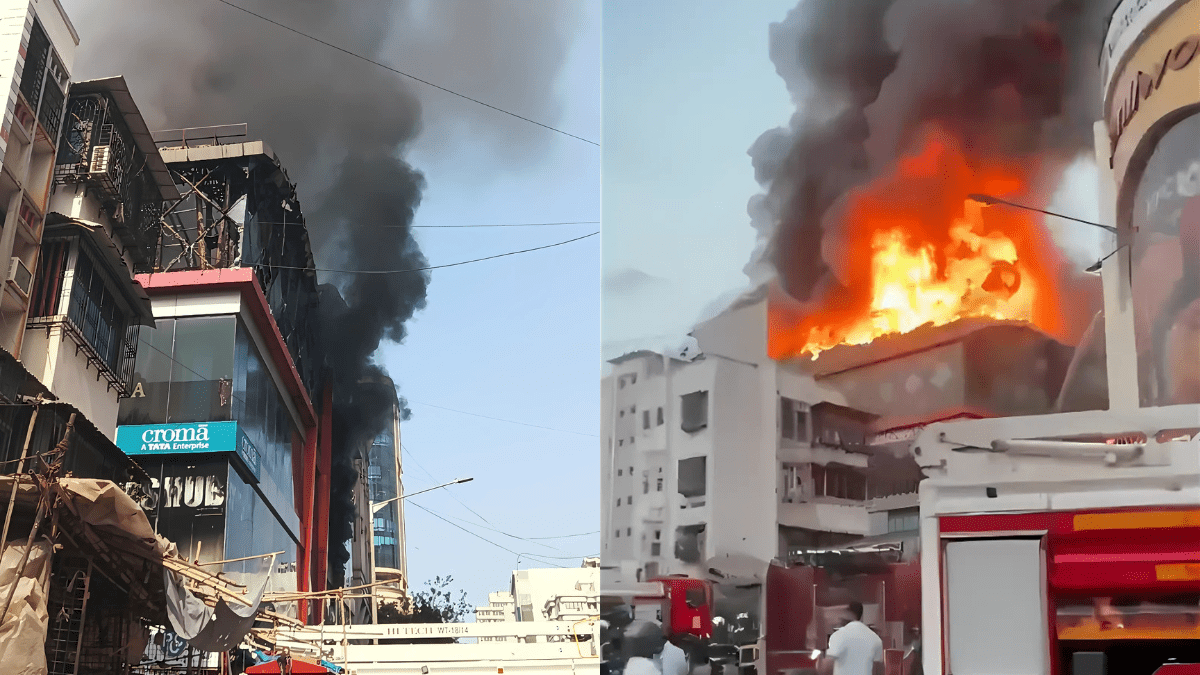
A devastating fire broke out in the early hours of Tuesday at a prominent shopping mall located on Linking Road in Bandra West, Mumbai, resulting in a prolonged firefighting operation that extended beyond 18 hours.
Fortunately, no casualties were reported, but the incident has reignited serious questions over fire preparedness and emergency response in densely packed urban commercial spaces. According to civic officials, the fire began around 4:10 am in the basement level of the multi-storey retail complex, believed to have started in an electronics goods showroom. The blaze soon escalated, with thick, toxic smoke spreading through the upper floors, leaving the structure engulfed in flames visible from a distance.
By 4:50 am, the Mumbai Fire Brigade had classified the situation as a Level III fire. Within two hours, the alert level was raised to Level IV—indicating a major fire requiring extensive resources and technical expertise. A specialised team from the National Disaster Response Force (NDRF) was deployed shortly after, arriving on site by 7:50 am to assist with containment efforts. Despite the massive scale of the operation, there were no reported injuries. As a precaution, a neighbouring building was evacuated. However, several shops and business units within the mall suffered extensive damage due to the intensity of the flames and the material stored within, including rubber, cardboard, and synthetic goods—all of which fuelled the fire.
The firefighting efforts involved a fleet of 13 fire engines at the peak of the operation, supported by 20 water tankers and over 80 breathing apparatus units used by emergency personnel to navigate through heavy smoke. Officials stated that access to the core areas of the mall was severely hampered by internal obstructions, metal mesh shutters, and narrow passages between shops. The fire was “covered from all sides” by 5:20 pm but was still not fully extinguished late into the night. Senior fire officials noted that the mall’s internal firefighting system failed to activate due to a power outage. Automated sprinkler systems and smoke extraction units did not function, highlighting major gaps in the fire safety infrastructure of the building.
Authorities are now examining whether fire protocol violations may have contributed to the scale of the disaster. Urban safety experts also raised concerns over the late alert—initial eyewitness accounts suggest the fire may have started as early as 1:30 am, but emergency services were reportedly notified only at 3:58 am. Officials from the fire brigade dismissed allegations of inadequate response, claiming they deployed all available resources. A senior officer confirmed that trained personnel and high-capacity equipment were present on site and in active use. The brigade, however, acknowledged the operational difficulties due to the mall’s cluttered layout and the presence of highly combustible materials in the basement and retail areas.
In response to public outcry, including from local political figures, the city’s municipal administration has initiated a formal inquiry to examine potential lapses in emergency response and compliance with fire safety norms. Investigators are also expected to scrutinise the mall’s construction and retrofitting history, given that the structure dates back nearly two decades. Urban planners and sustainability advocates have long argued for stricter fire compliance standards in high-footfall commercial zones like Bandra. They also recommend integrating renewable backup systems, such as solar-powered fire safety equipment and decentralised emergency lighting, to prevent total system failure during outages.
The fire marks the second major blaze in Mumbai in just two days. On Sunday, a similar early morning fire damaged the premises of a central investigative agency’s office in Ballard Estate, again underlining the city’s vulnerability to fire incidents amid dense construction and overburdened safety infrastructure. As Mumbai continues to grow vertically and commercially, incidents such as these raise urgent questions about how urban spaces are designed, monitored, and regulated. In an age where cities are being shaped for resilience and sustainability, ensuring robust fire safety is not a matter of compliance alone—it is a critical component of public trust and urban wellbeing.
Fire Breaks Out at Bandra Mall Mumbai Blaze Lasts 18 Hours