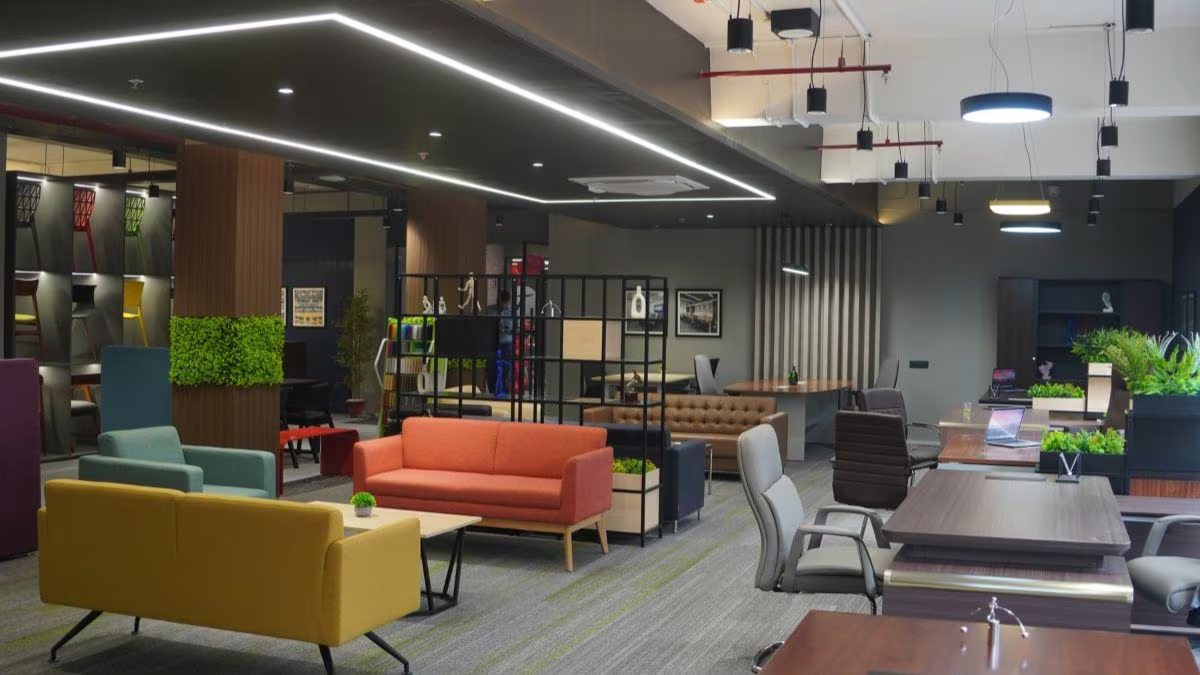
Featherlite Crosses 1000 Crore Mark In Furniture Sector
Workspace furniture manufacturer Featherlite is nearing the ₹1,000 crore revenue milestone, underscoring the rapid transformation of India’s organised furniture sector as demand rises from offices, educational institutions, and emerging urban markets.The Bengaluru-headquartered company’s growth trajectory is being driven by expansion in manufacturing capacity, deeper penetration into Tier II and Tier III cities, and diversification into new segments such as education and healthcare furniture.
This milestone reflects a broader structural shift in India’s furniture industry, where formal, design-led manufacturers are gaining ground over unorganised players. The implementation of standardisation norms and evolving customer expectations around ergonomics and durability are accelerating this transition.At the centre of this shift is the Featherlite furniture growth, which signals how urban infrastructure demand is reshaping the interiors and workspace ecosystem. As cities expand and office formats evolve—particularly with hybrid working models—there is increasing demand for modular, flexible, and ergonomic furniture solutions.Featherlite’s expansion into the education segment has emerged as a key growth driver, with the company investing in dedicated manufacturing capabilities for institutional furniture. This aligns with rising investments in schools, universities, and training centres, where furniture design is increasingly linked to learning outcomes and space efficiency. The Featherlite furniture growth also reflects changing procurement patterns in the built environment. Large corporates, developers, and institutions are moving towards integrated solutions providers that can deliver end-to-end furniture systems across multiple locations. This has led to a shift from retail-led sales to project-based, business-to-business engagements.
From an urban development perspective, the role of furniture is becoming more integral to how spaces function. In high-density cities, workspace and institutional furniture are no longer standalone elements but critical components of spatial planning—affecting productivity, collaboration, and occupant well-being.The company’s presence across approximately 70 cities and its network of experience centres indicate the increasing importance of distributed supply chains in supporting urban growth. As development activity spreads beyond metros, access to quality furniture solutions in smaller cities is becoming a key enabler of economic decentralisation.At the same time, sustainability considerations are beginning to shape the sector. Manufacturers are focusing on material efficiency, longer product lifecycles, and environmentally responsible production processes. Featherlite’s emphasis on solar-powered manufacturing and resource-efficient operations reflects this emerging priority within the industry. The milestone also comes amid intensifying competition from both domestic players and imports. Industry experts note that regulatory standards and quality certifications could provide an advantage to organised manufacturers capable of meeting compliance requirements at scale.
Looking ahead, the trajectory of the Featherlite furniture growth will depend on how effectively the company adapts to evolving urban needs—ranging from flexible workspaces to education infrastructure and healthcare facilities.As India’s cities continue to expand and diversify, the furniture sector is set to play a more strategic role in shaping how built environments function—making design, durability, and sustainability central to the next phase of urban development.