


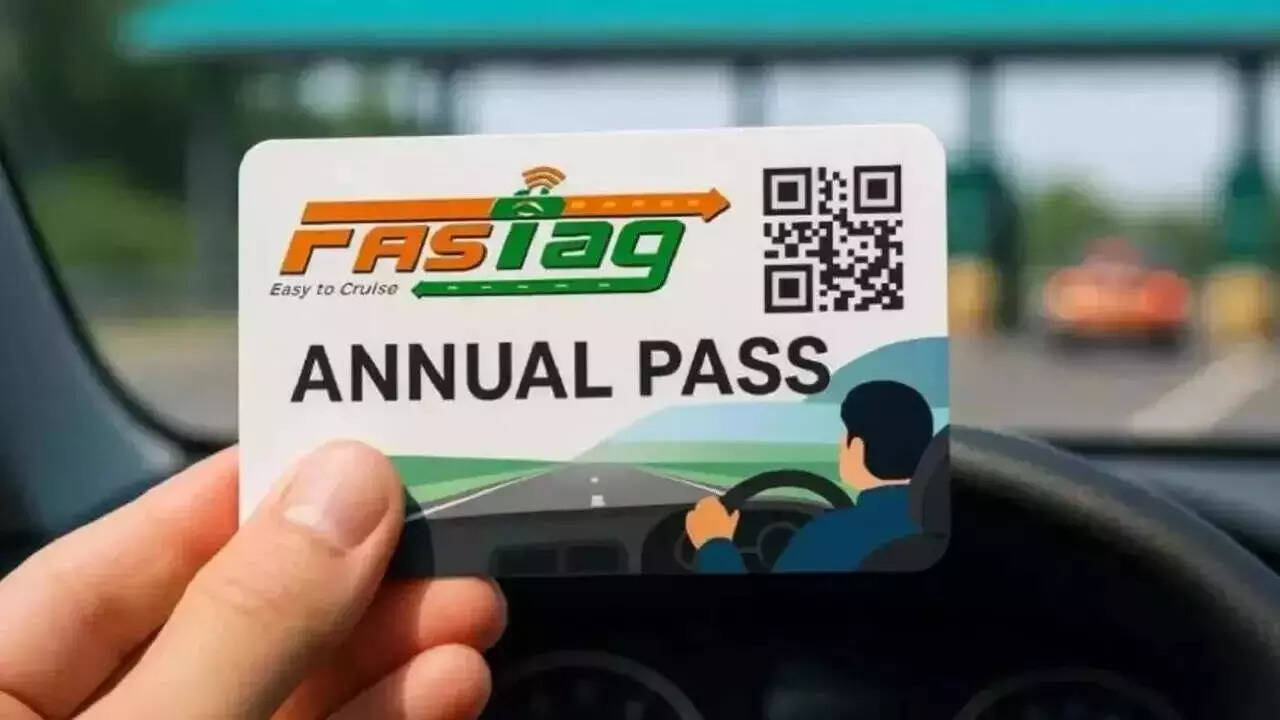
The newly launched FASTag Annual Pass has attracted widespread interest, with over half a million subscriptions secured in less than a week. But even as private car owners flock to adopt the scheme, officials have clarified that the pass will not be valid on several major expressways and state-managed highways across India. This exclusion has sparked questions about uniformity in tolling systems at a time when the country is driving towards seamless mobility and digital adoption.
Introduced by the National Highways Authority of India (NHAI) on Independence Day 2025, the annual pass allows private non-commercial vehicle owners to make up to 200 trips in a year, or travel toll-free for a year, by paying a one-time fee of ₹3,000. It was designed as a convenience product for frequent highway users and a tool to reduce congestion and cash transactions at toll plazas. However, the pass is restricted to centrally managed national highways and expressways, creating clear boundaries between federal and state tolling regimes. Expressways such as Yamuna, Purvanchal, Bundelkhand and Agra-Lucknow in Uttar Pradesh, the Mumbai-Pune Expressway and Samruddhi Mahamarg in Maharashtra, and portions of the Ahmedabad-Vadodara Expressway in Gujarat remain excluded. State-operated facilities such as the Atal Setu in Goa also fall outside the ambit of the scheme. On these stretches, even if the annual pass is active, tolls will continue to be deducted from the regular FASTag wallet. Officials explained that the exclusion stems from the fact that these routes are not under the purview of NHAI but are instead maintained by state authorities or development corporations with separate concession agreements.
Experts argue that while the initiative is a strong step towards making highway travel more efficient, the limited scope may create confusion among users. Transport economists highlight that fragmentation of tolling systems reduces the effectiveness of technology-driven solutions, adding administrative complexity. On the other hand, proponents say that such schemes are an important pilot to build momentum before broader integration between centre and states becomes feasible. The annual pass is currently available only to private, non-commercial vehicles such as cars, jeeps, and vans. It excludes commercial fleets, taxis, yellow-plated vehicles, and two-wheelers. To activate the scheme, vehicle owners must register via the Rajmarg Yatra app or NHAI’s digital portal, complete payment, and receive verification within two hours. Each user’s FASTag account is split into two – one linked to the annual pass and the other for routine deductions on ineligible roads.
Industry watchers note that if the scheme achieves scale, it could save frequent long-distance travellers thousands of rupees annually while also reducing carbon emissions by cutting idling at toll booths. The digital-first model is also aligned with India’s broader policy of minimising cash transactions and achieving net-zero transport emissions by improving traffic flow and fuel efficiency. For now, however, motorists using state-managed expressways must continue to pay regular tolls. The challenge ahead for policymakers will be to bring state authorities on board so that digital tolling innovations do not end at administrative boundaries.
Also Read : Indias First Barrier-Less Multi-Lane Free Flow Tolling Launches Soon In Gujarat
