


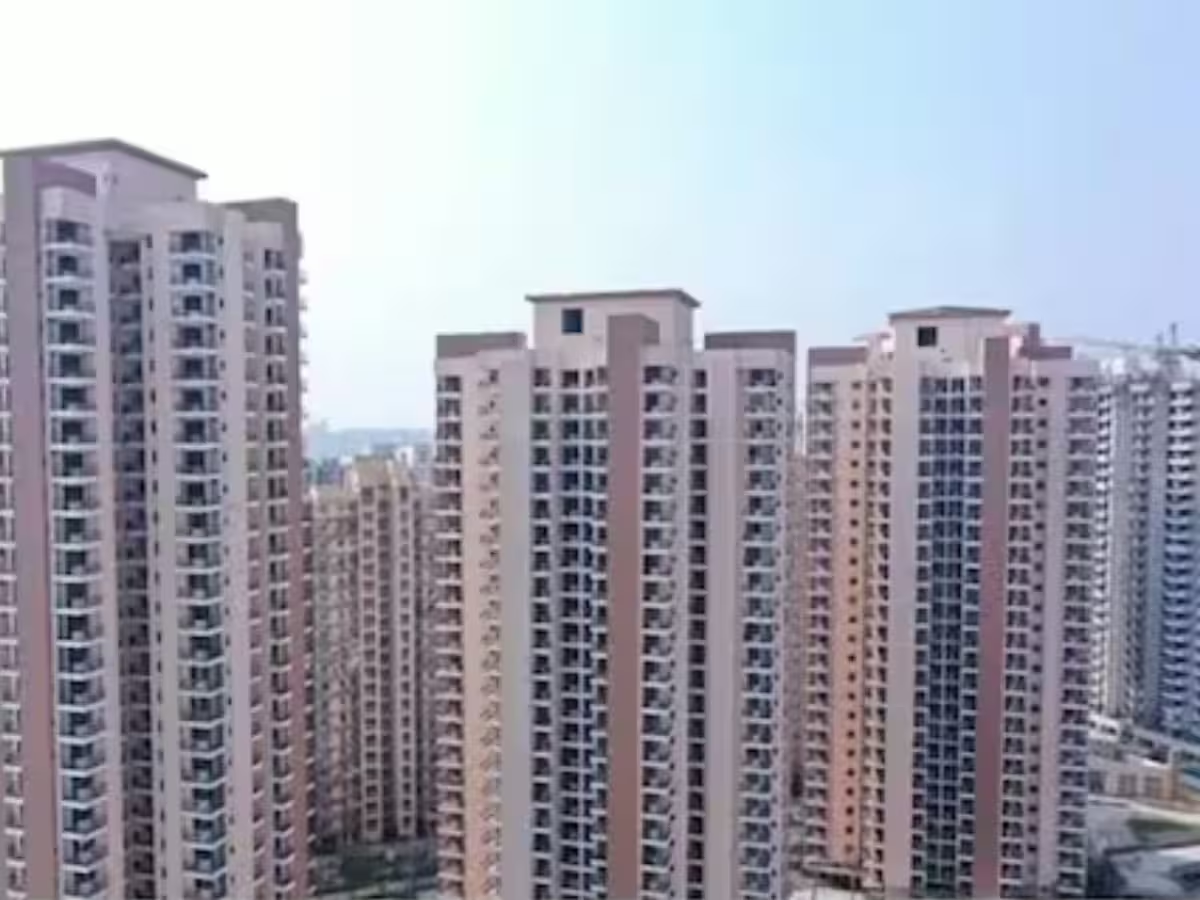
Faridabad’s evolving urban landscape has received a fresh boost after a north India focused real estate developer secured Rs 170 crore in institutional funding for a mixed-use development in the city. The capital infusion reflects growing investor confidence in integrated urban formats emerging across peripheral National Capital Region markets, where housing, retail, and workspaces are increasingly being planned together.
People familiar with the transaction said the funds have been raised through a structured credit arrangement involving domestic asset management and global real estate investment platforms. The financing will be used to support construction activity and working capital needs, ensuring timely execution of the Faridabad project at a time when delivery credibility has become a key differentiator in the residential market. Urban planners note that Faridabad, long seen as an industrial satellite of Delhi, is undergoing a gradual repositioning. Improved road connectivity, proximity to employment hubs, and relatively affordable land values have made the city attractive for mixed-use developments that reduce commuting distances and support more walkable neighbourhoods. Projects that combine housing with commercial and community spaces are increasingly aligned with people-first planning principles. Institutional investors appear to be responding to this shift. Market analysts say debt-led funding for real estate has become more selective, favouring projects with clear demand visibility, phased development potential, and locations supported by infrastructure investment. Faridabad’s inclusion in this trend suggests that capital is no longer limited to core NCR markets but is moving towards well-connected secondary cities.
The financing also underlines a broader recalibration within India’s real estate sector. With sales recovering steadily and regulatory oversight strengthening, developers are relying less on speculative land banking and more on structured capital to build execution-focused pipelines. For cities, this translates into better-quality construction, improved compliance, and reduced risk of stalled projects. From an environmental and social standpoint, mixed-use developments offer advantages if designed responsibly. Compact planning can lower transport-related emissions, while integrated amenities reduce pressure on municipal infrastructure. Urban development specialists stress, however, that such benefits depend on design choices, energy efficiency standards, and last-mile public transport integration.Faridabad’s local economy could see spillover effects as construction activity generates employment and allied services. Over the longer term, completed mixed-use districts can support small businesses, create local jobs, and enhance liveability critical factors as NCR cities grapple with congestion and climate resilience challenges.
As institutional capital continues to shape India’s urban built environment, the Faridabad funding deal highlights a cautious but clear shift toward sustainable, integrated growth models. The real test will lie in project execution and how effectively such developments respond to the everyday needs of residents rather than simply adding built-up space to expanding cities.
Also Read: Hyderabad Property Holdings Face Intensified Benami Scrutiny
Faridabad Sees Renewed Confidence In Mixed Use Development
