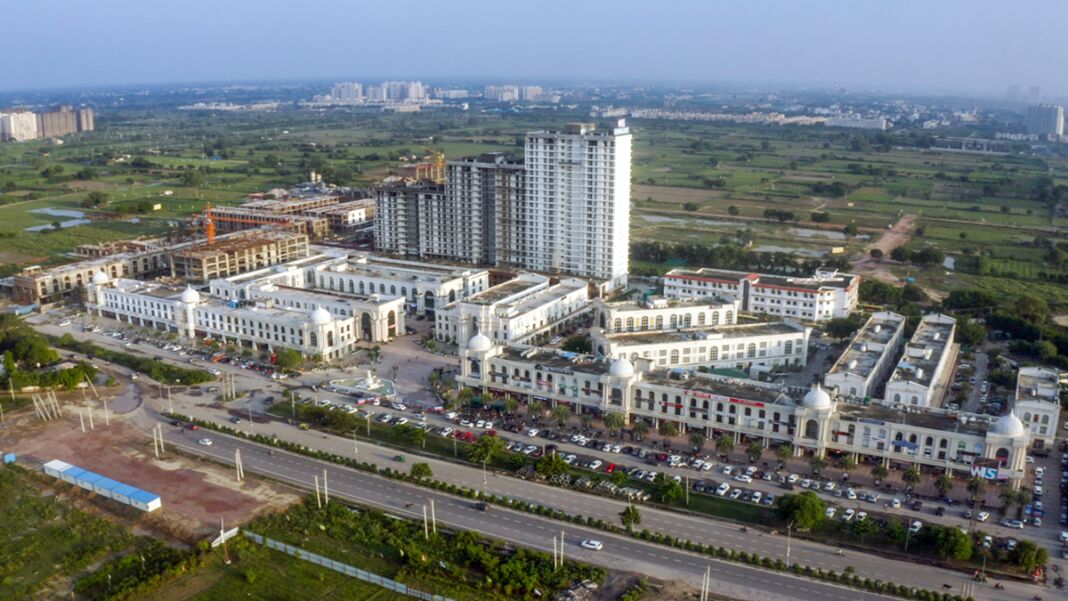
Faridabad, once defined primarily by its manufacturing clusters and industrial estates, is steadily repositioning itself as one of the National Capital Region’s emerging residential and investment destinations.
Improved transport links, expanding commercial activity and comparatively lower property prices are driving Faridabad real estate growth, reshaping the city’s urban identity and drawing attention from both developers and homebuyers. Market indicators point to a significant upswing in residential activity over the past year. Property values in parts of the city have risen sharply while housing sales have increased, particularly in the mid-income segment that caters to salaried professionals seeking alternatives to more expensive NCR markets. Demand has remained strong enough that most new housing launches are being absorbed quickly by buyers, reflecting growing confidence in the city’s long-term potential.
Connectivity upgrades are playing a central role in this transition. The extension of metro services linking Faridabad with Delhi has shortened commuting times and made the city more viable for daily travel to employment centres in the capital. Meanwhile, new road corridors—including the Faridabad-Noida-Ghaziabad Expressway and links to the upcoming international airport at Jewar—are expanding the city’s regional accessibility and opening new real estate corridors. Urban planners say these infrastructure improvements are gradually integrating Faridabad more tightly into the wider metropolitan economy. Residential neighbourhoods along Mathura Road and in the expanding Greater Faridabad region are seeing increased development as workers seek housing options that remain relatively affordable compared with nearby cities such as Gurugram and Noida. Lower land prices continue to give Faridabad a cost advantage for both developers and first-time homebuyers.
Commercial investment is also reinforcing the city’s transformation. New retail districts, office projects and technology-oriented developments are beginning to generate employment opportunities and support a broader urban services economy. Industry estimates suggest that thousands of new jobs linked to retail and business infrastructure could stimulate additional residential demand in emerging neighbourhoods. Beyond the real estate market, the city’s economic trajectory is influenced by its role in wider industrial and logistics networks. Faridabad forms part of regional economic initiatives including the Delhi-Mumbai Industrial Corridor, which is expected to strengthen manufacturing supply chains and create additional demand for housing and commercial space in surrounding urban areas.
Yet the city’s transformation also presents planning challenges. Rapid development has placed pressure on municipal services, infrastructure capacity and urban management systems. Local authorities have outlined multi-year investment plans to upgrade roads, utilities and civic amenities in response to the city’s expanding population and property activity. Urban economists note that Faridabad’s evolution illustrates a broader pattern across India’s metropolitan peripheries. Industrial satellite towns are increasingly transitioning into mixed-use urban centres as transport connectivity improves and housing demand spreads outward from major cities.
For Faridabad, the coming decade will likely determine whether this momentum translates into sustainable urban growth. The city’s ability to balance infrastructure expansion, environmental management and inclusive housing will shape whether its real estate boom becomes a stable metropolitan transformation.