


A 38-year-old diamond unit owner in Surat allegedly lost ₹2.22 lakh after downloading a malicious APK file disguised as an RTO e-challan notification, leading to unauthorised transfers from four bank accounts linked to him and his family.
According to the complaint filed by Bhavesh Paladiya, a resident of the Ashwini Kumar area, the fraud occurred between September 8 and 19. He received a message claiming to relate to an RTO traffic challan and was persuaded to download an APK file on his mobile phone to process the alleged notice.
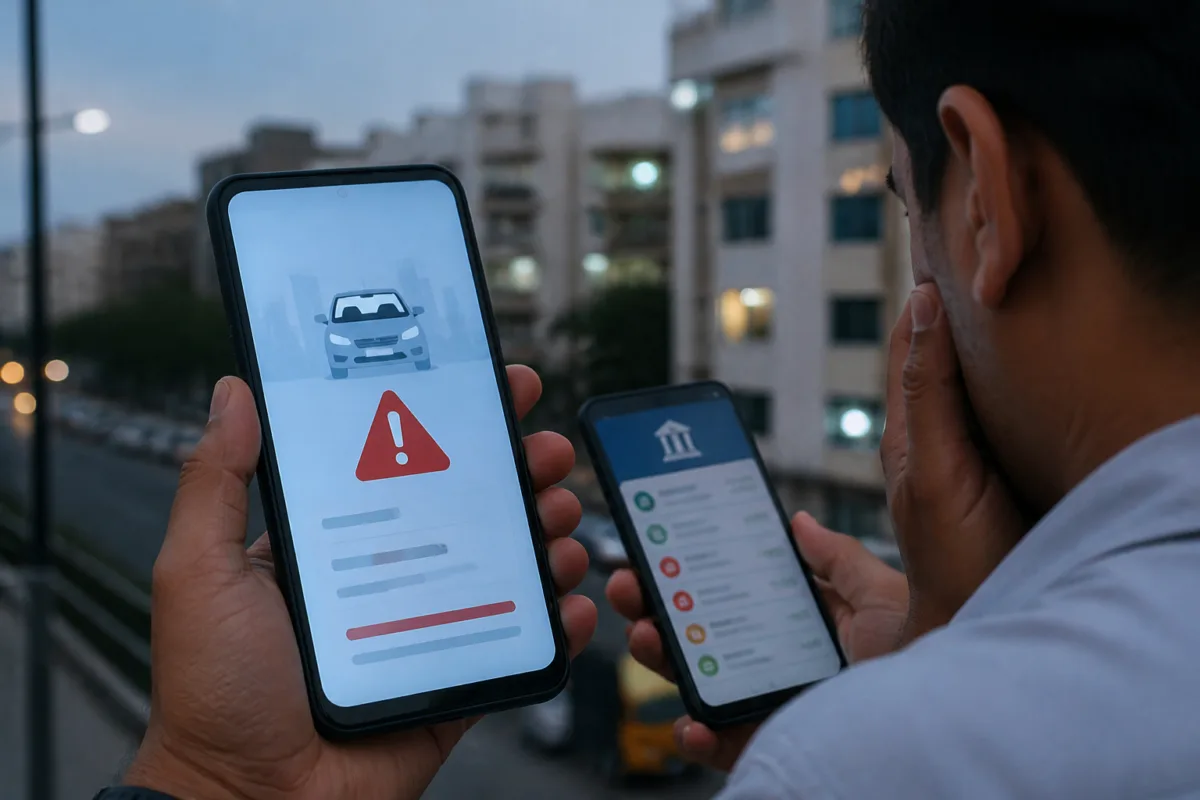
After installing the application, Paladiya was asked to enter his details. The file displayed a ₹2,000 traffic fine linked to his car’s registration number, according to the complaint. The downloaded application allegedly compromised his phone and enabled fraudsters to access banking information belonging to Paladiya and members of his family.
Multiple unauthorised transactions were subsequently carried out from his Bank of India account and other accounts belonging to his wife and mother. A total of ₹2.22 lakh was siphoned off from the four accounts, the complaint stated.
Paladiya later realised that he had been cheated and reported the incident through the national cyberfraud helpline, 1930. The helpline is intended for reporting financial cyberfraud so that complaints can be recorded and possible action on affected transactions can begin.
Following the complaint, Ashwini Kumar police registered a first information report on Monday under provisions of the Bharatiya Nyaya Sanhita and the Information Technology Act. The case concerns the alleged use of a fake traffic-challan communication to induce the victim to install an application outside a verified official channel.
The incident illustrates the way a familiar urban service—digital traffic-fine communication—can be used as a pretext for financial fraud. The message appeared credible to the complainant because it referred to a vehicle registration number and displayed a specific penalty amount, according to the report.
Police investigation is now focused on the unauthorised transactions and the people responsible for sending the fake challan message and malicious application. The FIR follows the complainant’s report to the cyberfraud helpline and will proceed under the legal provisions cited by Ashwini Kumar police.

