


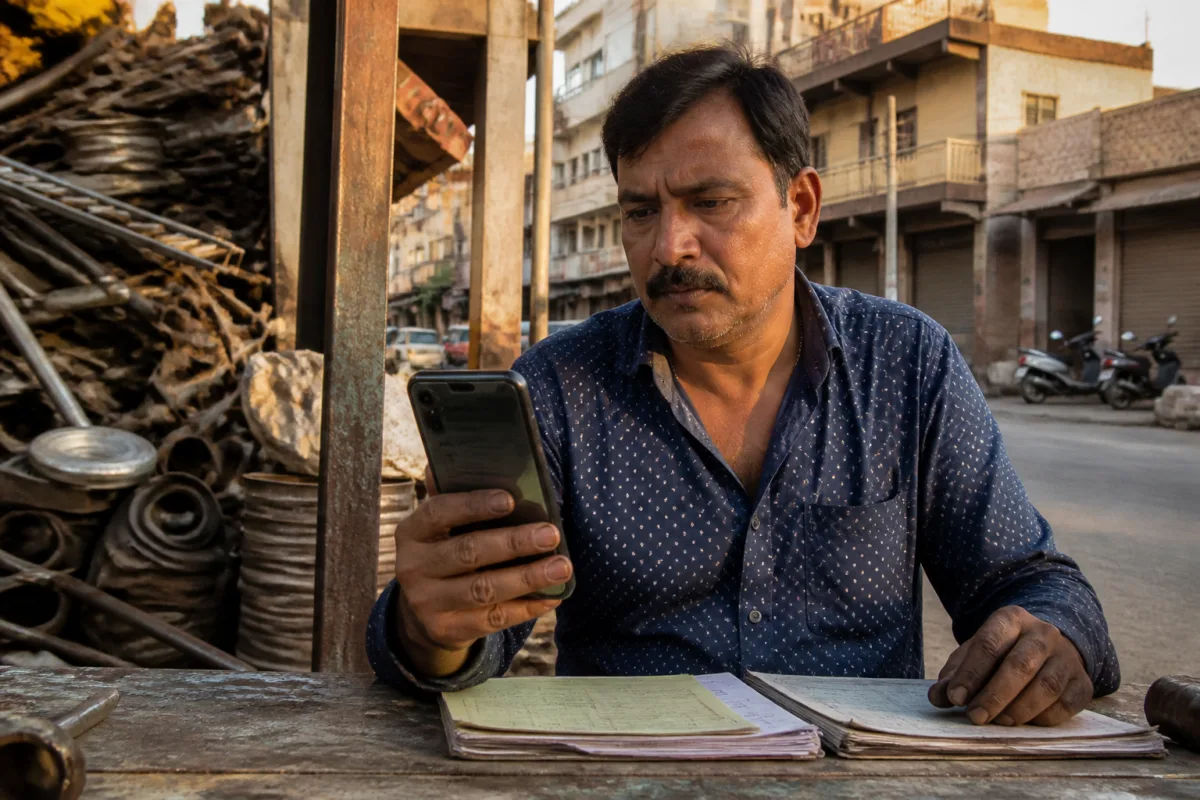
A Surat scrap dealer lost ₹57,000 after allegedly clicking on a fraudulent M-Parivahan e-challan link that appeared to be an official traffic-fine communication, according to a complaint registered at Amroli police station.
The complainant, identified as Vijay Parmar, received the link after his younger brother was sent a message asking him to pay an outstanding challan online. Since a traffic challan was pending against his brother’s two-wheeler, Parmar asked him to forward the message so that he could make the payment himself.
The message appeared to come from M-Parivahan and directed the recipient towards an online payment process. Parmar clicked on the link after receiving it on WhatsApp, but no payment page appeared. He later deleted the message, according to the account recorded in the first information report.
The complaint states that the fraudsters allegedly obtained access to Parmar’s banking details after he opened the link. Several one-time passwords were subsequently sent to his phone, but Parmar deleted them without realising that unauthorised transactions were being carried out from his account.
He discovered later that ₹57,000 had been withdrawn from his bank account. The complaint does not state whether the money was recovered or whether any suspect had been identified at the time of registration.
The incident began with a digital message linked to a routine transport-service transaction: the payment of a traffic challan. The use of an M-Parivahan identity made the communication appear connected to the Regional Transport Office, according to the complaint. The case therefore involves both an alleged financial fraud and the misuse of a familiar public-service platform to persuade a resident to open a payment link.
After discovering the loss, Parmar contacted the cybercrime helpline on 1930 and lodged a police complaint at Amroli police station. The FIR was registered on October 26, and the complaint is now part of the investigation into the unauthorised transactions and the fraudulent link used in the incident.
The case also shows how a message intended for one person can reach another recipient and still appear credible when it refers to a genuine pending challan. Parmar was attempting to make the payment on behalf of his brother when he opened the link, according to the complaint. The subsequent receipt of multiple OTPs did not immediately alert him to the withdrawals because he deleted the messages.
No further details about the investigation, the bank’s response, the identity of the account holders who received the money or the recovery of the funds were available in the report. The police complaint and the cybercrime helpline intervention remain the documented next steps in the case.

