

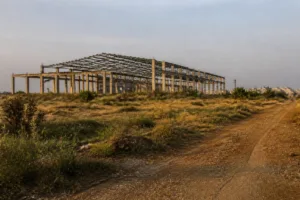
The Telangana High Court has brought the Central Bureau of Investigation (CBI) into a dispute over land allotted to Sem India Fab Pvt Ltd at Fab City in Raviryal, after questioning how the State Bank of India (SBI) released a loan of about Rs 500 crore when the government had already resumed most of the land.
Justice Nagesh Bheemapaka directed the registry to provide the CBI’s standing counsel with the petition papers and related orders. The court said it required the assistance of the CBI’s Hyderabad unit and posted the matter for December 4. The direction does not, by itself, establish any wrongdoing or indicate the outcome of a CBI inquiry.
The proceedings arise from an SBI writ petition challenging the Telangana government’s resumption of 100 acres spread across several survey numbers at Fab City in Rangareddy district. The bank has also sought protection for recovery proceedings under the Securitisation and Reconstruction of Financial Assets and Enforcement of Security Interest (SARFAESI) Act, based on a possession notice issued on September 12, 2012.
SBI told the High Court that it had relied on no-objection certificates issued by the state government and Telangana Industrial Infrastructure Corporation Limited (TGIIC), which allowed Sem India to mortgage its leasehold rights. The bank said an equitable mortgage was created over the land as security for the loan.
The state government has disputed that position. It told the court that the mortgage was created on August 20, 2011, around 18 months after the allotment had been cancelled. The government’s case is that ownership of the land remained with the state through TGIIC and that the no-objection certificates did not transfer title or any other interest in the property to Sem India or SBI.
The court noted that SBI released the loan in 2011, while the government resumed 78 acres in February 2010 under a government order. The state had originally allotted 100 acres to the company in April 2007 on a 66-year lease at a rent of Rs 1 per acre a year.
The dispute also reflects the collapse of a major semiconductor manufacturing plan. Fab City was announced in 2006 by the then Andhra Pradesh government and SemIndia, a consortium of non-resident Indian technologists. The wider project was proposed on a 1,200-acre site near Hyderabad’s new airport, with an announced investment of USD 3 billion. The company later proposed an investment of about USD 2.2 billion for its semiconductor project.
According to the report, the project did not progress beyond an unfinished skeletal shed, and SemIndia shelved its planned investment by 2008. The government cited the lack of progress when it resumed the land in 2010. An earlier challenge to the resumption failed in the High Court, while the Supreme Court declined to interfere when SBI approached it.
At an earlier hearing in June, the High Court had declined to stay the resumption for the time being. It also questioned SBI about action against the official who sanctioned the loan and why the bank was reluctant to seek a CBI investigation. The bank had told the court that the principal outstanding was about Rs 169 crore and that dues, including interest, had exceeded Rs 640 crore.
The case now places three linked issues before the court: whether the mortgage was validly created after the land had been resumed, whether the bank’s recovery rights can operate over the property, and whether the checks carried out before the loan was sanctioned were adequate. Its outcome could affect how industrial development authorities, lenders and project companies document land rights before large infrastructure or manufacturing loans are released.