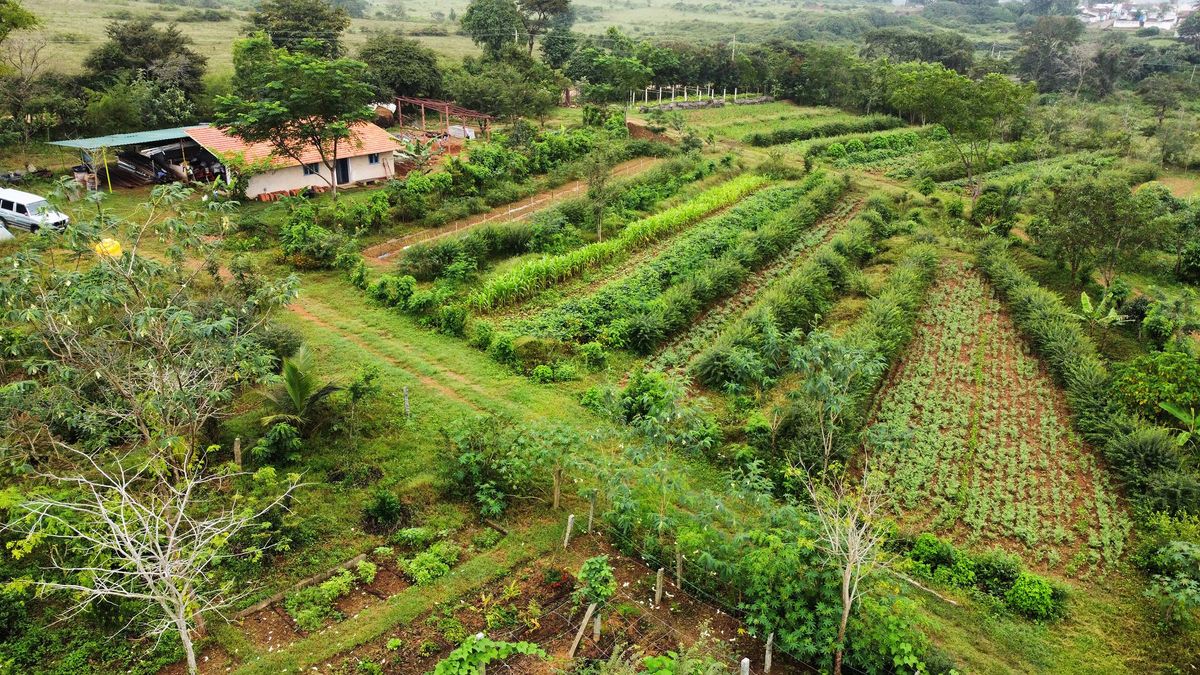
Natural farming emerged as a key solution to combat desertification and drought at a public meeting held in Anantapur on Tuesday to mark the World Day to Combat Desertification and Drought. Experts, officials, and over 500 farmers gathered to explore sustainable farming techniques aimed at restoring soil health and improving food security in drought-prone regions.
At the event, experts from ecology and agricultural research organisations warned that decades of chemical fertiliser and pesticide use have degraded soil quality across India. They pointed out that the excessive application of chemicals has reduced food productivity and triggered long-term health issues. Farmers were urged to shift toward organic methods, including composting, mulching, intercropping, and the use of native seeds.
A senior official from a regional ecology centre noted that natural farming—without synthetic inputs can restore soil vitality, improve water retention, and reduce dependency on erratic monsoons. Representing the district administration, a revenue department official conveyed support for natural farming initiatives and emphasised the need to conserve ecological balance for sustainable development.
According to the official, natural farming is not only crucial for maintaining soil health but is also directly linked to food security and public health outcomes. A scientist from an agricultural research station added that the Green Revolution’s gains have now turned into liabilities due to over-exploitation. He highlighted that drought is no longer caused solely by low rainfall.
Instead, protecting natural systems—like water bodies, hillocks, and soils—will ensure that nature continues to support human life. He outlined a three-tier classification of soil—healthy, degraded, and heavily degraded—and called for a holistic approach that treats land, water, and biodiversity as interconnected. Protecting each element, he said, is essential to rebuild ecological balance and community resilience.
The event also included 20 stalls set up by non-profits, government departments, and research institutes showcasing new models of natural farming, water conservation, and seed preservation. Farmers engaged in peer-to-peer learning, sharing experiences of chemical-free practices that have improved yields while lowering input costs.