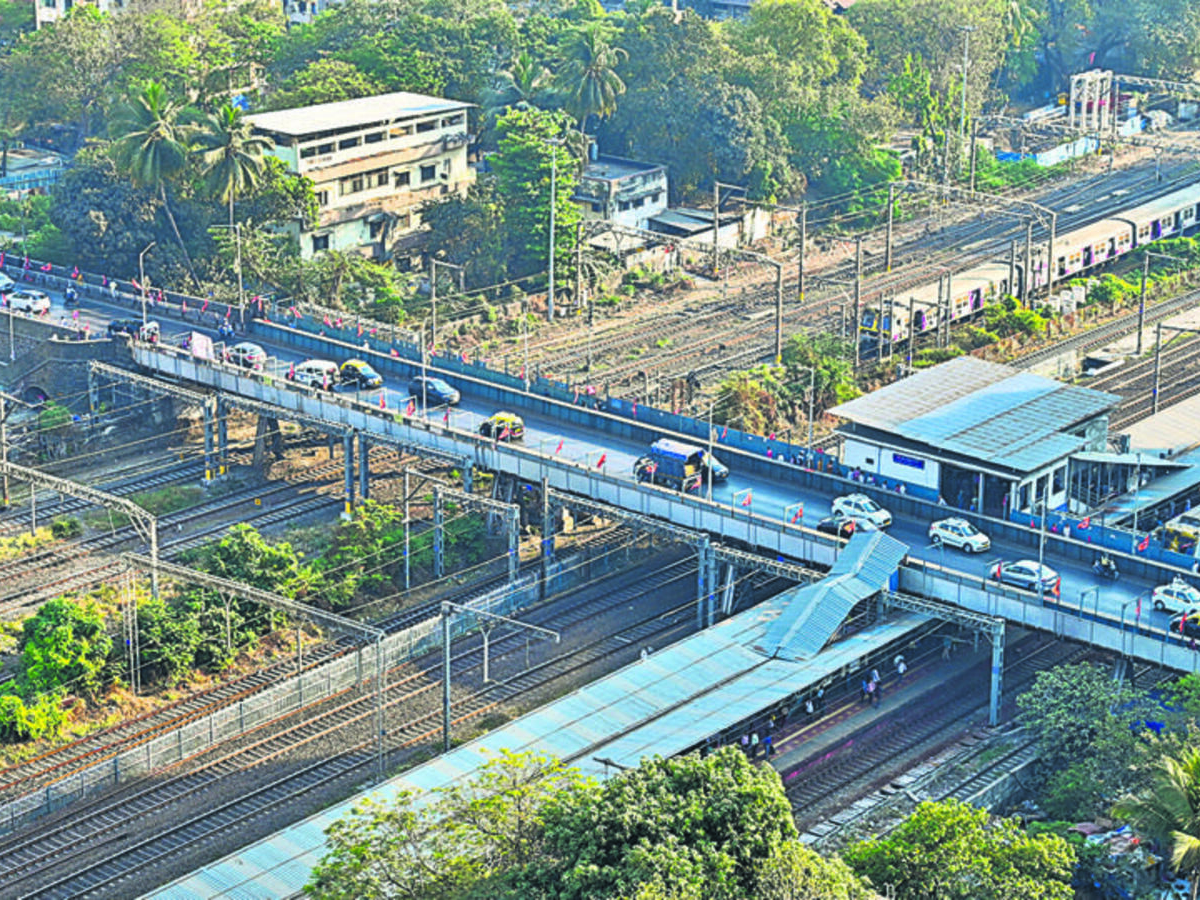
Late-night rail commuters in Mumbai are set to face significant service disruptions as Central Railway undertakes critical infrastructure work on a key overbridge along its suburban network. The scheduled overnight block between Parel and Currey Road is part of ongoing efforts to dismantle sections of an ageing railway overbridge, a process essential for long-term network safety and capacity upgrades.
The planned shutdown will temporarily halt train movement across both fast and slow corridors on a crucial stretch of the Central line. While the intervention is limited to a few hours past midnight, its impact is expected to ripple across multiple services, with several trains cancelled, shortened, or diverted. Officials indicate that such blocks are necessary to carry out complex engineering work that cannot be safely executed during regular operations. The dismantling of bridge components involves both structural and electrical modifications, requiring coordinated traffic and power shutdowns across the corridor.
For daily commuters, however, the immediate concern is disruption to late-night connectivity. The Central line serves as a vital mobility backbone linking suburban nodes to the city’s core, and even short-duration blocks can affect thousands of passengers, including shift workers and essential service providers. Transport analysts note that Mumbai’s heavy reliance on suburban rail makes even minor interruptions highly visible and impactful. The current work forms part of a broader push to modernise ageing infrastructure across the city’s rail network. Many overbridges and related assets were built decades ago and now require replacement or redesign to meet present-day safety standards and traffic volumes. Experts suggest that such upgrades are critical not only for operational efficiency but also for enhancing resilience against extreme weather events, which have increasingly disrupted urban transport systems.
During the block period, select services will be rerouted via alternative tracks, while others will skip intermediate stations to maintain partial connectivity. This operational adjustment reflects the railway’s attempt to balance infrastructure maintenance with passenger movement, though capacity constraints remain a challenge. Urban mobility planners argue that better integration between rail schedules and alternative transport options could help mitigate commuter inconvenience during such disruptions. They also point to the need for improved real-time communication systems to ensure passengers are adequately informed about service changes.
From a sustainability perspective, maintaining and upgrading rail infrastructure is essential to preserving Mumbai’s low-carbon transport backbone. Suburban trains carry millions of passengers daily, significantly reducing reliance on road-based travel and associated emissions. As infrastructure renewal projects continue across the network, periodic disruptions are likely to remain a feature of Mumbai’s transit landscape. The focus, experts say, must be on minimising inconvenience while ensuring that critical upgrades are delivered efficiently and safely, strengthening the long-term reliability of the city’s public transport system.
Elphinstone Bridge Work Disrupts Mumbai Local Train Services