


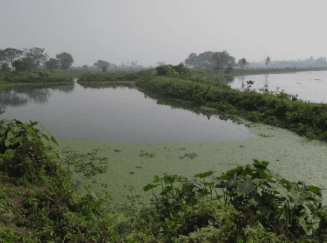
The Calcutta High Court has raised significant concerns over the sluggish pace of efforts by the East Kolkata Wetlands Management Authority (EKWMA) in dismantling unauthorized constructions encroaching upon the ecologically sensitive East Kolkata Wetlands (EKW), a designated Ramsar site. During recent proceedings, Justice Amrita Sinha expressed disappointment over the lack of substantial progress and directed the EKWMA and state authorities to furnish a detailed progress report by the next hearing scheduled for July 31.
The court’s dissatisfaction stemmed from the delayed demolition of 505 identified illegal structures within the wetlands area. Justice Sinha underscored the urgency of restoring the wetlands to their original state, highlighting the imperative of expeditious action. Of particular concern to the court was the provision of electricity connections by power utilities, including CESC and WBSEDCL, to these illegal constructions. The court questioned the legitimacy of such connections and instructed the utilities to investigate how they were authorized, demanding a report on measures taken to disconnect electricity supply to these structures. The state counsel informed the court that notices had been served to the unauthorized constructions, with 377 charge sheets filed against the violators. Additionally, a committee comprising representatives from local municipalities and the district magistrate’s jurisdiction had been formed to adjudicate on demolition orders, resulting in 52 reasoned decisions so far.
Despite these measures, the court expressed skepticism regarding the efficacy of the authorities’ actions under the EKW (Conservation and Management) Act, 2006 and its associated rules. The EKWMA counsel assured the court that no new building plans were being sanctioned presently, indicating a regulatory halt on further construction in the wetlands. Justice Sinha admonished the authorities for what she perceived as inadequate enforcement of the law, highlighting the disparity between legal provisions and practical implementation. The court’s scrutiny underscored the need for stringent adherence to environmental regulations to safeguard the fragile ecosystem of the EKW, crucial for its ecological and hydrological significance. The ongoing legal battle reflects a broader challenge in balancing developmental pressures with environmental conservation imperatives, resonating the complexities faced by regulatory bodies tasked with managing sensitive ecological zones amidst urban expansion.
