


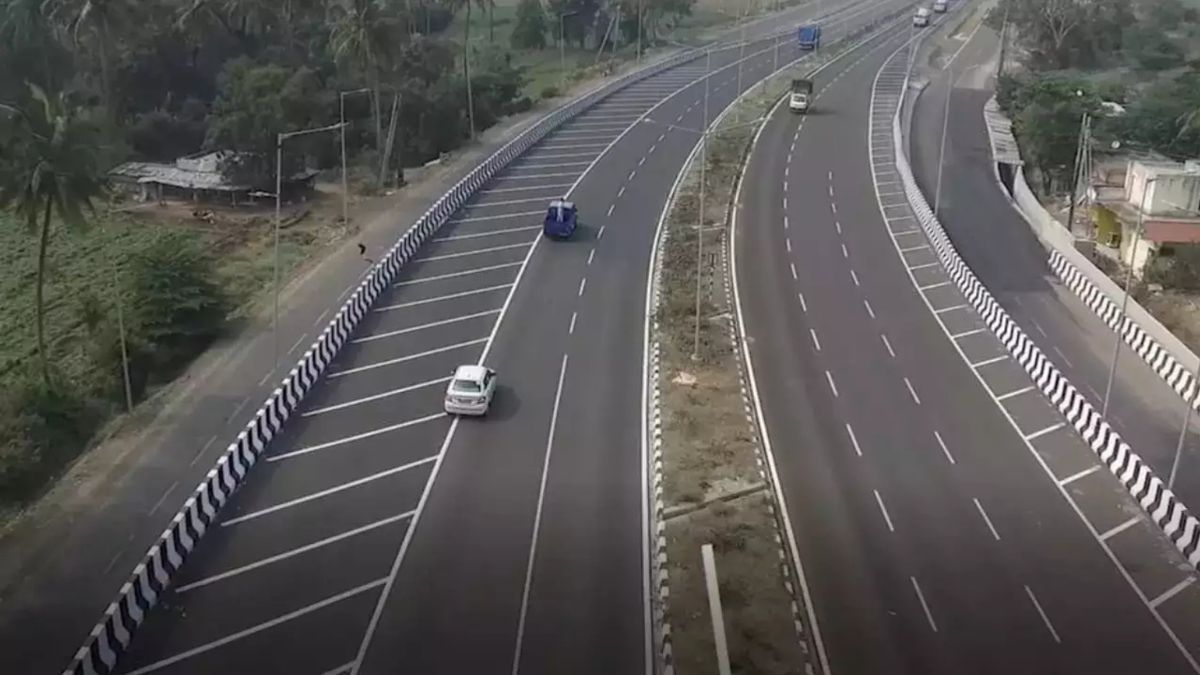
The Grand Southern Trunk (GST) Road, the Tamil Nadu government has revived an eight-laning project at Perungalathur, allocating ₹12.8 crore to complete the long-pending works on the flyover. This development is part of the Chennai Metropolitan Development Plan (CMDP), which aims to enhance the transport infrastructure in the region, ensuring smoother commutes for the daily influx of over 180,000 vehicles.
Currently, the stretch beneath the flyover spans just 1.5 km, with parts operating as a mere four-lane road. This limitation has exacerbated traffic snarls, particularly during monsoon seasons when rainwater stagnation worsens the situation. With the completion of this project anticipated by mid-2025, authorities plan to upgrade the area with a uniform eight-lane roadway, relaying it with a durable bituminous layer while implementing new drainage systems to mitigate waterlogging. The project also promises to complete the flyover’s fourth arm, linking it to the Tambaram Eastern Bypass—a critical connection that has faced delays due to land acquisition challenges. Residents have expressed strong support for this development, underscoring the need for improved access to reduce congestion on surrounding roads. Local activist Dayanand Krishnan highlighted the urgency of addressing a vital 850-metre link to Rajakilpakkam, emphasising that efficient routing for heavy vehicles is crucial to prevent further overcrowding of the flyover.
Yet, there remains a palpable scepticism among the community regarding the project’s overall impact. Many believe that if bottlenecks at nearby Irumbuliyur are not resolved, the new infrastructure may only provide limited relief. The National Highways Authority of India (NHAI) had initiated work on a vehicular underpass at Irumbuliyur, but progress has stalled, creating uncertainty for commuters. From a sustainability perspective, the enhanced road infrastructure aims to reduce travel time and fuel consumption, contributing positively to air quality by decreasing emissions from idling vehicles. Moreover, the introduction of efficient drainage systems is expected to lessen the environmental impact caused by water stagnation, a significant concern during the monsoon months. As the project unfolds, the emotional sentiments of residents remain intertwined with the broader implications of urban development. Many are hopeful that this initiative will not only ease their daily commutes but also pave the way for a more sustainable urban future, balancing infrastructure needs with environmental considerations.
