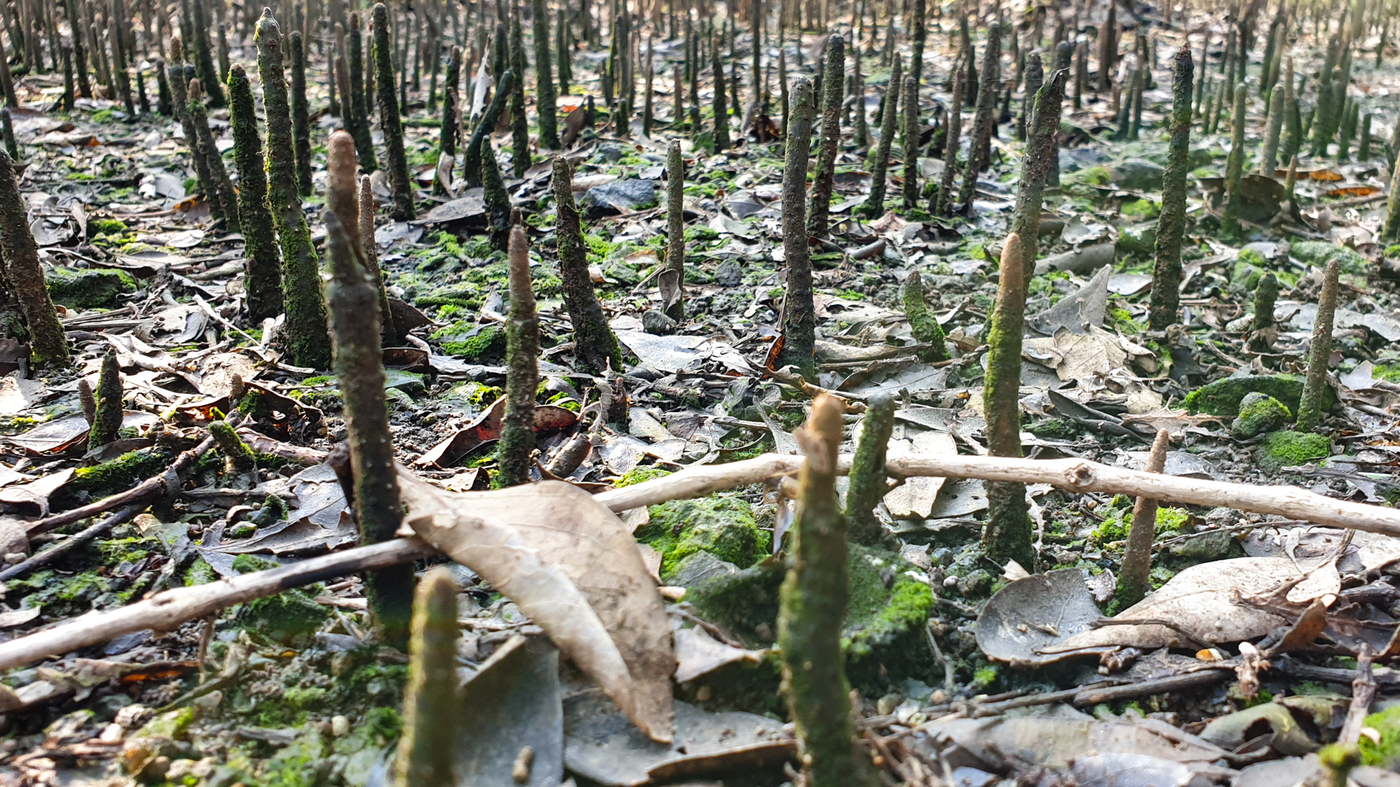
Alarming destruction of coastal ecosystems has come to light in Maharashtra, with environmentalists raising red flags over two recent incidents of mangrove devastation in Thane and Mumbai. Toxic debris, including hazardous waste, has reportedly been dumped on sensitive mangrove patches in Thane’s Balkum area, while in suburban Mumbai, a fire has ravaged large swathes of mangroves behind a residential complex in Lokhandwala.
These disturbing developments point to a deepening crisis facing the state’s coastal regulation zone (CRZ) protections, as encroachment, waste dumping and alleged land grabbing continue to chip away at natural buffers critical to Mumbai’s climate resilience. The mangrove patch in Balkum, which falls within the CRZ-I category, has witnessed extensive dumping of debris and waste, in what environmental groups claim is a systematic attempt to flatten and reclaim the land. Multiple survey plots in the area are reportedly being targeted, with environmental activists calling for the land to be restored to its original creek level. This incident adds to a growing list of at least 14 sites in Thane that have been flagged for CRZ violations, with previous National Green Tribunal orders failing to deter continued encroachment. The silence and inaction from enforcement authorities have raised questions about the efficacy of existing conservation laws and the political will to uphold them.
Simultaneously, the charred remains of mangrove trees have been reported from the Lokhandwala backroad area in Mumbai, near a known tidal creek. The incident has been widely reported by local residents and nature groups, who fear that the fire was deliberately set to clear the land for real estate interests. Coastal suburbs like Andheri, Versova and Oshiwara have in recent years faced intense development pressure due to their proximity to the Arabian Sea and the high land value in these locations. Environmentalists argue that these illegal actions are motivated by an intention to erase ecological zones, thus paving the way for unauthorised construction.
Mangroves are protected by law under the Environment Protection Act, and their conservation has been repeatedly upheld by courts, including a significant High Court judgement that banned their destruction. Despite this, state agencies appear to be lagging in proactive monitoring, often acting only after public outrage or social media alerts. These fragile ecosystems serve as carbon sinks, protect against coastal erosion and flooding, and support unique biodiversity. Their destruction not only violates environmental norms but also compromises Mumbai’s capacity to face climate-induced disasters such as storm surges and rising sea levels.
With repeated violations going unchecked, the current scenario demands immediate intervention from government bodies tasked with protecting CRZ areas. The cumulative environmental cost of losing mangroves in urban centres like Thane and Mumbai cannot be overstated. As the city continues to urbanise at a rapid pace, the disappearance of its natural shields poses a serious risk to both its ecological balance and human habitability. Swift regulatory enforcement, restoration efforts, and a clear signal to deter further damage are essential to safeguard what remains of these vital green lungs.
Ecological heritage under fire as Mumbai mangroves burnt and Thane lands poisoned