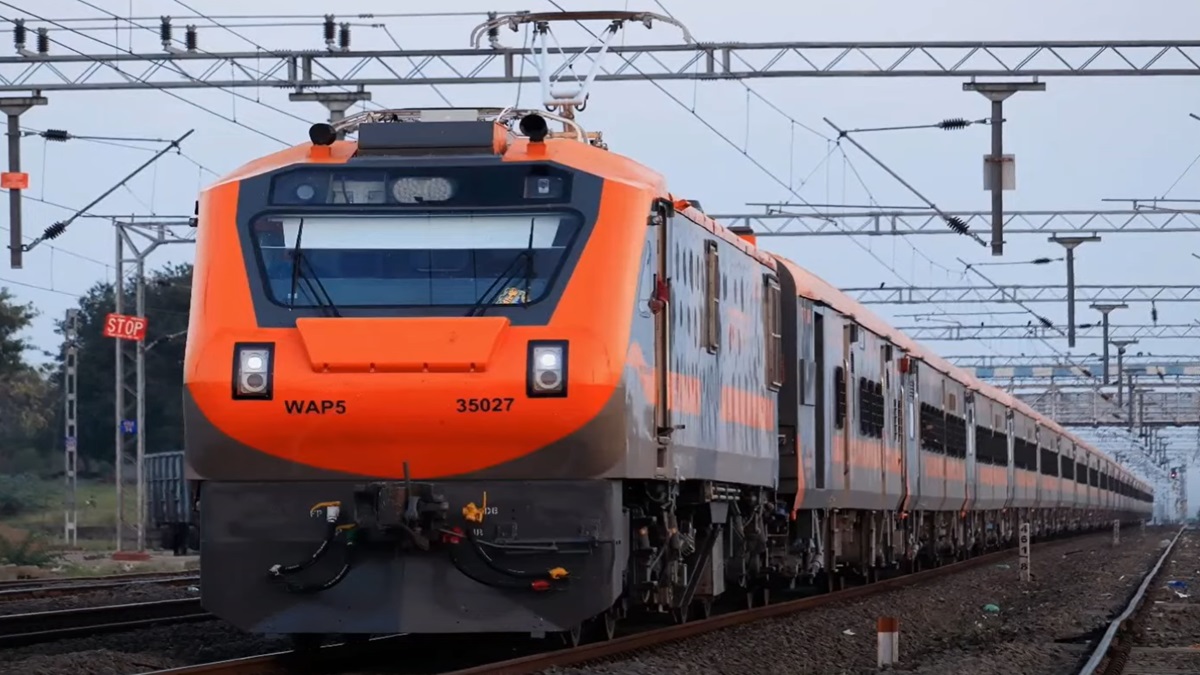
India’s long-distance rail travel landscape is set to shift with the launch of the first Vande Bharat sleeper service on the eastern corridor, linking Kolkata and Guwahati. Scheduled to begin operations in mid-January, the overnight train marks a structural upgrade in how Indian Railways approaches inter-regional mobility, blending higher speeds with sleeper comfort for journeys that span more than a day.
The new service, operating between Howrah Junction and Kamakhya, arrives at a moment when rail demand across eastern and north-eastern India is rising steadily. Improved connectivity on this axis carries economic and social weight, strengthening access between manufacturing centres, ports, education hubs and emerging cities across Assam, West Bengal and neighbouring states.
Railway officials say the sleeper configuration is designed to address a long-standing gap in the premium segment. While earlier semi-high-speed services focused on daytime travel, overnight routes remained dependent on ageing rolling stock. The Vande Bharat sleeper train introduces modern interiors, enhanced ride stability and higher operational speeds, offering an alternative to short-haul flights and long road journeys with a lower carbon footprint.
Alongside the sleeper launch, Indian Railways is rolling out six new Amrit Bharat Express services across multiple routes. These trains target medium- and long-distance passengers seeking reliable, affordable connectivity rather than luxury travel. Transport planners view the dual-track approach premium sleeper services alongside upgraded mass-market trains as a signal of more balanced network planning, especially for regions historically underserved by modern rail infrastructure. Fares for the sleeper service have been structured across multiple air-conditioned classes, reflecting a tiered pricing strategy aimed at capturing both business travellers and middle-income households. Rail economists note that pricing remains competitive with air travel when time, comfort and overnight accommodation costs are factored in, potentially shifting passenger behaviour on busy east–north-east corridors.
Beyond the immediate launches, 2026 is shaping up as a transition year for railway operations. Senior officials have indicated that digital tools and artificial intelligence will increasingly be deployed for maintenance planning, safety monitoring and asset management. Industry observers say such changes are less visible than new trains but are critical to improving punctuality, energy efficiency and long-term network resilience. The eastern region stands to benefit disproportionately from these upgrades. Faster, more comfortable overnight rail services can reduce the friction of distance, making it easier for professionals, students and traders to move across state boundaries without relying on carbon-intensive transport.
Urban planners also highlight the knock-on effects for station-area development, hospitality and local economies along the route. As trials continue and additional sleeper sets are readied for deployment later in the year, attention will turn to execution on-time performance, maintenance standards and passenger experience. If delivered consistently, the Vande Bharat sleeper programme could redefine long-distance rail travel, positioning Indian Railways as a viable, climate-aligned backbone for intercity mobility in a rapidly urbanising economy.
Eastern India rail network enters sleeper era