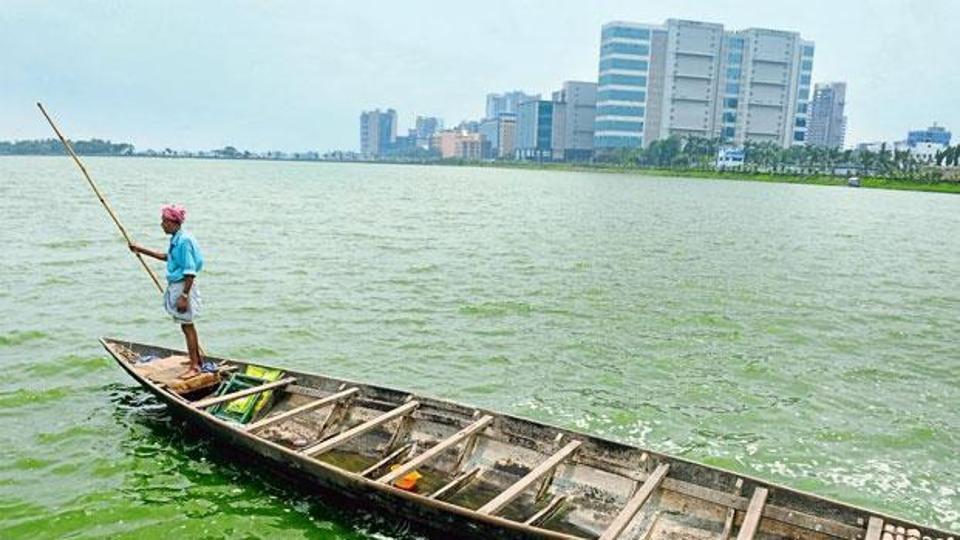
The Calcutta High Court has escalated scrutiny of illegal structures inside the East Kolkata Wetlands, signalling the possible deployment of central forces to support demolition drives if state agencies fail to act. The development places renewed focus on the governance breakdown surrounding one of India’s most ecologically sensitive urban landscapes and raises questions about enforcement capacity in rapidly urbanising regions.
During recent proceedings, the bench questioned the lack of coordinated action between the East Kolkata Wetlands Management Authority (EKWMA), the Kolkata Municipal Corporation (KMC) and district administrations. Officials acknowledged limitations in manpower and logistical support, particularly when faced with local resistance during enforcement operations. The court indicated that administrative constraints cannot justify inaction within a notified Ramsar site. The East Kolkata Wetlands span nearly 12,500 hectares across parts of Kolkata and adjoining districts. Recognised internationally for their wastewater-fed fisheries and flood-buffering capacity, the wetlands act as natural infrastructure for the eastern metropolitan corridor. Urban planners warn that unchecked East Kolkata Wetlands illegal construction threatens not only biodiversity but also the city’s long-term climate resilience. Government submissions to the court have pointed to more than 500 alleged unauthorised constructions within the protected zone.
These include warehouses, boundary walls and residential structures raised without land-use conversion approvals. Land records in at least one disputed parcel reportedly continue to classify the property as agricultural land, making permanent construction impermissible under wetland protection norms. Municipal authorities have maintained that enforcement drives have been undertaken in recent months and that encroachment will not be tolerated. However, the judiciary expressed concern over repeated compliance reports without demonstrable on-ground outcomes. The matter now involves central ministries responsible for environment and housing, reflecting the widening institutional footprint of the case. The litigation began as a private grievance over unauthorised development on a specific plot but has since evolved into a broader examination of systemic lapses in wetland governance. Environmental economists note that the cost of restoring degraded wetlands far exceeds the short-term gains from speculative land conversion.
Beyond ecological loss, informal and illegal developments often lack basic services, compounding urban risk during extreme weather events. For Kolkata, which faces rising rainfall variability and drainage stress, the East Kolkata Wetlands illegal construction issue has direct implications for flood mitigation and public safety. The wetlands naturally treat a significant share of the city’s wastewater while absorbing storm surges functions that engineered alternatives would struggle to replicate at comparable cost. The court is scheduled to revisit the matter next month. For policymakers, the case underscores a larger urban challenge: balancing growth pressures with statutory land protection in a city expanding eastwards. How agencies respond could set a precedent for safeguarding natural assets that underpin sustainable metropolitan futures.