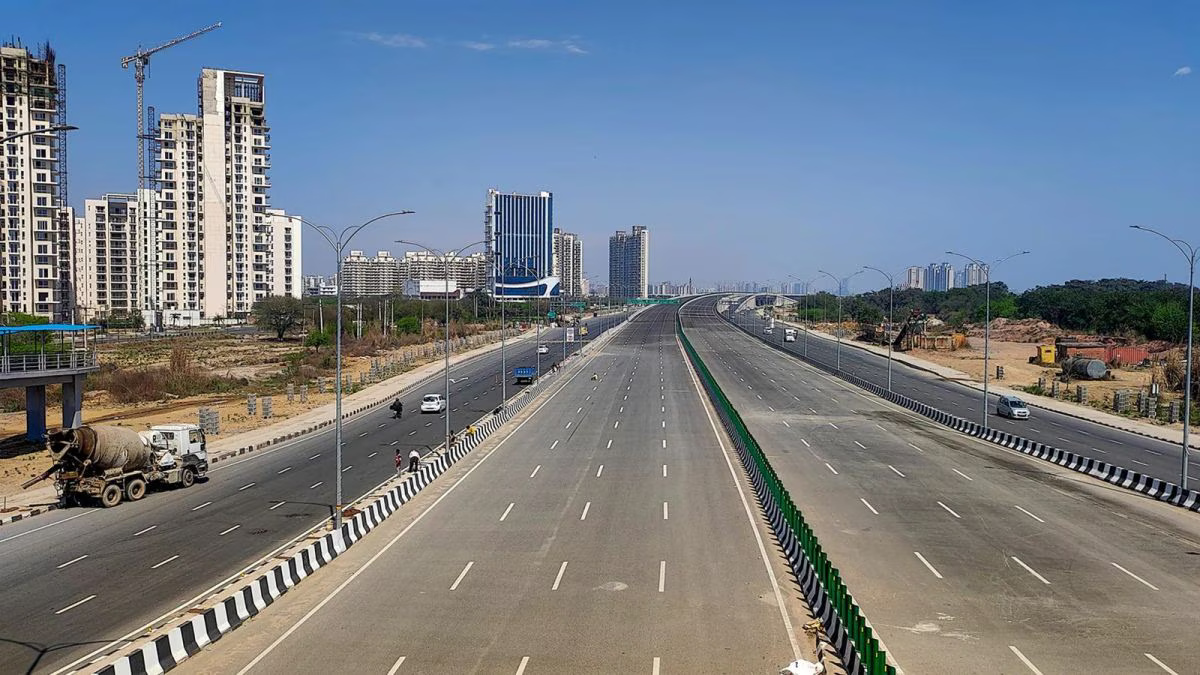
Dwarka Expressway Real Estate Values Triple In Ten Years
Residential property values along the Dwarka Expressway property prices corridor have surged dramatically over the past decade, reflecting the impact of major transport infrastructure, improved connectivity, and sustained demand across the National Capital Region’s expanding housing markets. Market assessments indicate that average housing rates in the corridor have risen nearly threefold since the mid-2010s. What was once considered a peripheral development stretch has gradually evolved into one of NCR’s most closely watched real estate zones following the completion and operationalisation of the 29-kilometre access-controlled expressway linking Dwarka in Delhi with Gurugram.
Urban planners say the transformation illustrates the powerful influence of infrastructure on urban land markets. The expressway has reduced travel times between residential sectors and critical destinations such as the international airport and major employment districts in Gurugram. As connectivity improved, the Dwarka Expressway property prices corridor began attracting both end-users and long-term investors seeking improved access to Delhi and the broader NCR economy. Officials associated with regional infrastructure planning note that the expressway’s full opening has helped address earlier concerns around project delays and incomplete connectivity. With road access stabilised, developers have accelerated construction and homebuyers have shown greater confidence in purchasing property in newly emerging neighbourhoods along the corridor. Additional infrastructure upgrades are also underway to support the region’s long-term urban expansion. Transport authorities are planning new grade-separated interchanges and signal-free junctions along sections of the expressway, which are expected to improve traffic movement while supporting future commercial districts planned nearby.
Policy measures introduced by state authorities have also influenced market dynamics. A substantial revision in circle rates across sectors bordering the expressway has effectively raised official property valuation benchmarks. Analysts say such adjustments often follow sustained market activity and signal growing institutional confidence in the corridor’s development potential. Industry observers report strong residential absorption levels across multiple projects launched in recent years, suggesting that much of the new supply is being purchased by homebuyers rather than remaining unsold inventory. The Dwarka Expressway property prices trend therefore reflects both infrastructure-driven appreciation and genuine end-user demand in the region. Alongside residential projects, the corridor is also witnessing growth in supporting urban infrastructure such as schools, healthcare centres, retail complexes and hospitality developments. These facilities are gradually strengthening the liveability of emerging neighbourhoods and making them more attractive for long-term settlement.
Urban development specialists caution that while infrastructure-led growth has created strong property momentum, future planning must prioritise sustainable urban design. Integrating public transport connectivity, pedestrian-friendly streets, green spaces and resilient infrastructure will be essential to ensure the corridor evolves into a balanced urban district rather than simply a high-density housing cluster. With further transit links, commercial districts and civic amenities expected to emerge over the coming years, the Dwarka Expressway corridor is likely to remain a central focus of NCR’s residential expansion and urban transformation.