


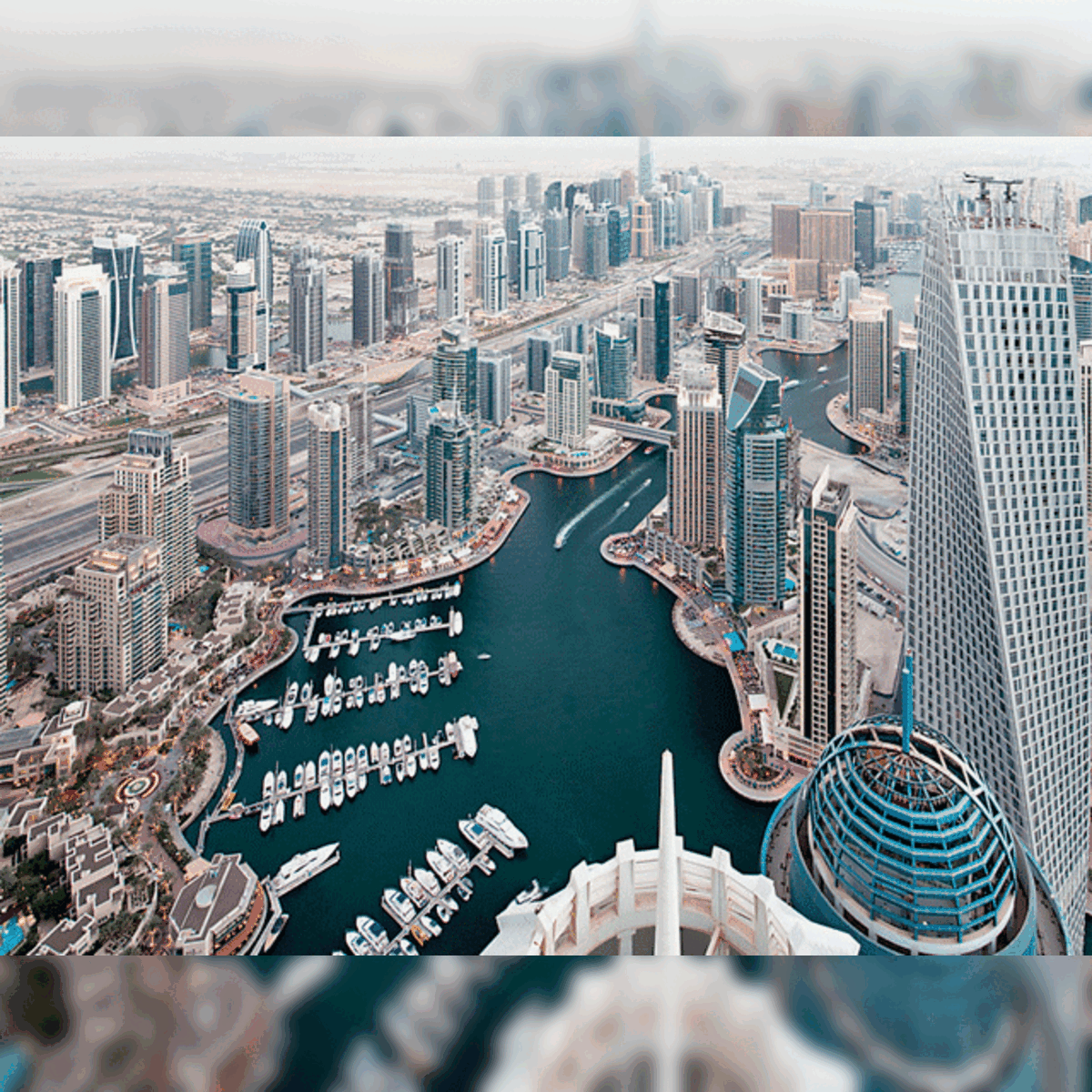
Dubai’s real estate market is witnessing a renewed surge of cross-border capital from India, marking a deeper structural shift in how Indian households and investors allocate long-term wealth. Data from the emirate’s land authorities show record transaction volumes in the first half of 2025, reinforcing Dubai’s position as a global real estate destination at a time when investors are prioritising regulatory clarity, infrastructure depth, and stable urban growth models.
The scale of activity is significant. More than 125,000 property transactions were recorded in six months, with total deal values crossing AED 430 billion. Investments came from nearly 95,000 individuals, indicating that the market is no longer driven by a narrow investor base but by diversified global participation. Urban economists note that such breadth reduces volatility while improving the resilience of housing demand across cycles. Indian buyers continue to play a prominent role. Industry estimates suggest that Indian nationals accounted for over one-fifth of all residential purchases in Dubai last year, with cumulative investments running into tens of billions of dirhams. This trend reflects changing risk perceptions, particularly among professionals and business owners seeking currency diversification, predictable regulations, and exposure to globally integrated cities. A senior executive at a UAE-based real estate development firm points out that investor behaviour is also evolving. Rather than speculative buying, capital is increasingly flowing towards transit-linked districts, mixed-use communities, and rental-driven assets. “Yield stability and asset longevity are becoming more important than rapid appreciation,” the executive explains, adding that investors are scrutinising operational costs, vacancy risk, and infrastructure readiness more closely.
One factor shaping this confidence is the UAE’s tax framework. The absence of personal income tax and capital gains tax for individual investors allows rental returns to be reinvested efficiently. However, property analysts caution that acquisition costs such as land department transfer fees and annual service charges must be factored into long-term projections. Transparent pricing and predictable levies, they argue, are ultimately more important than low headline taxes. Policy-linked incentives have also influenced investor sentiment. Dubai’s property-linked long-term residency options have reduced perceived mobility risk for overseas buyers. While residency is not the primary motivation for most investors, planners note that it supports housing stability by encouraging longer holding periods rather than rapid churn. Macro fundamentals remain supportive. Strong foreign direct investment inflows, expanding employment in technology and services, and sustained public spending on transport and clean infrastructure continue to underpin housing demand. Urban sustainability experts highlight that newer developments are increasingly incorporating energy-efficient design, district cooling, and walkable layouts features that align with climate-resilient city planning.
As 2026 approaches, market observers suggest that disciplined capital, rather than speculative inflows, will shape Dubai’s next real estate cycle. For cities across India and the Gulf, this shift offers lessons in how long-term planning, regulatory certainty, and infrastructure investment can channel private capital into more resilient urban growth.
Also Read: Mumbai Infrastructure Market Draws Global Data Investors
Dubai Real Estate Gains Momentum With India Investors
