


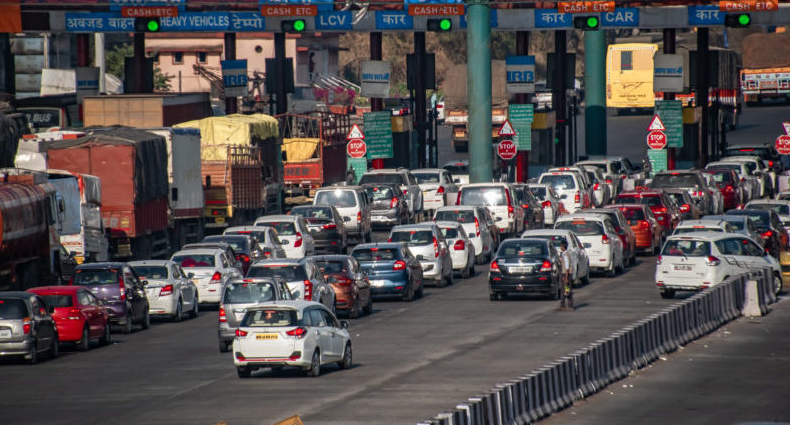
To bolster the adoption of FASTag, the National Highways Authority of India (NHAI) has mandated that vehicles without the electronic toll collection system will be charged double the toll fees on national highways. This directive aims to streamline toll operations and reduce delays caused by non-FASTag vehicles at toll plazas.
The Ministry of Road Transport and Highways emphasised that vehicles lacking FASTag stickers contribute to unnecessary congestion at toll booths. Implementing double charges for these vehicles is expected to enhance the efficiency of toll collection. Additionally, vehicles without FASTag may face blacklisting, further encouraging compliance. Standard operating procedures (SOPs) have been distributed to all toll collection agencies and concessionaires, ensuring that this new policy is prominently displayed at toll plazas. CCTV cameras at toll booths will monitor and record the registration numbers of vehicles without FASTag stickers. Banks responsible for issuing FASTags have been instructed to ensure the sticker is applied to the vehicle’s windshield at the point of sale.
Under the National Highway Fee (Determination of Rates and Collection) Rules, 2008, NHAI collects tolls across approximately 1,000 plazas for around 45,000 kilometres of national highways and expressways in India. With over eight crore users and a penetration rate of approximately 98%, FASTag has significantly transformed toll collection in the country. The new double toll charge system will initially be piloted on select highway stretches before a nationwide rollout.
In parallel, NHAI is exploring satellite- or GPS-based tolling systems to create a more equitable toll collection method. This system would eliminate the need for dedicated toll plazas, instead utilising geofencing technology via GPS or radio frequency identification (RFID) to establish virtual boundaries. The toll would be collected based on the distance travelled, detected by devices fitted in vehicles, thereby allowing commuters to pay proportional tolls based on their travel distance. This proposed GPS-based tolling system would require vehicles to be equipped with tracking devices, and tolls would be calculated at the exit point of the highway. This method is designed to be fairer, as it would charge lower tolls for shorter distances travelled, unlike the current fixed-rate toll system. The new system would operate through sensors, eliminating the need for stopping at toll plazas.
To participate in this system, highway users would need to register themselves and their vehicles and link their bank accounts for automatic toll payments. This innovative approach is anticipated to further modernise toll collection, making it more efficient and user-friendly. As India pushes towards greater technological integration in its infrastructure, these measures reflect a significant step towards achieving streamlined, efficient, and equitable toll collection on national highways.
