


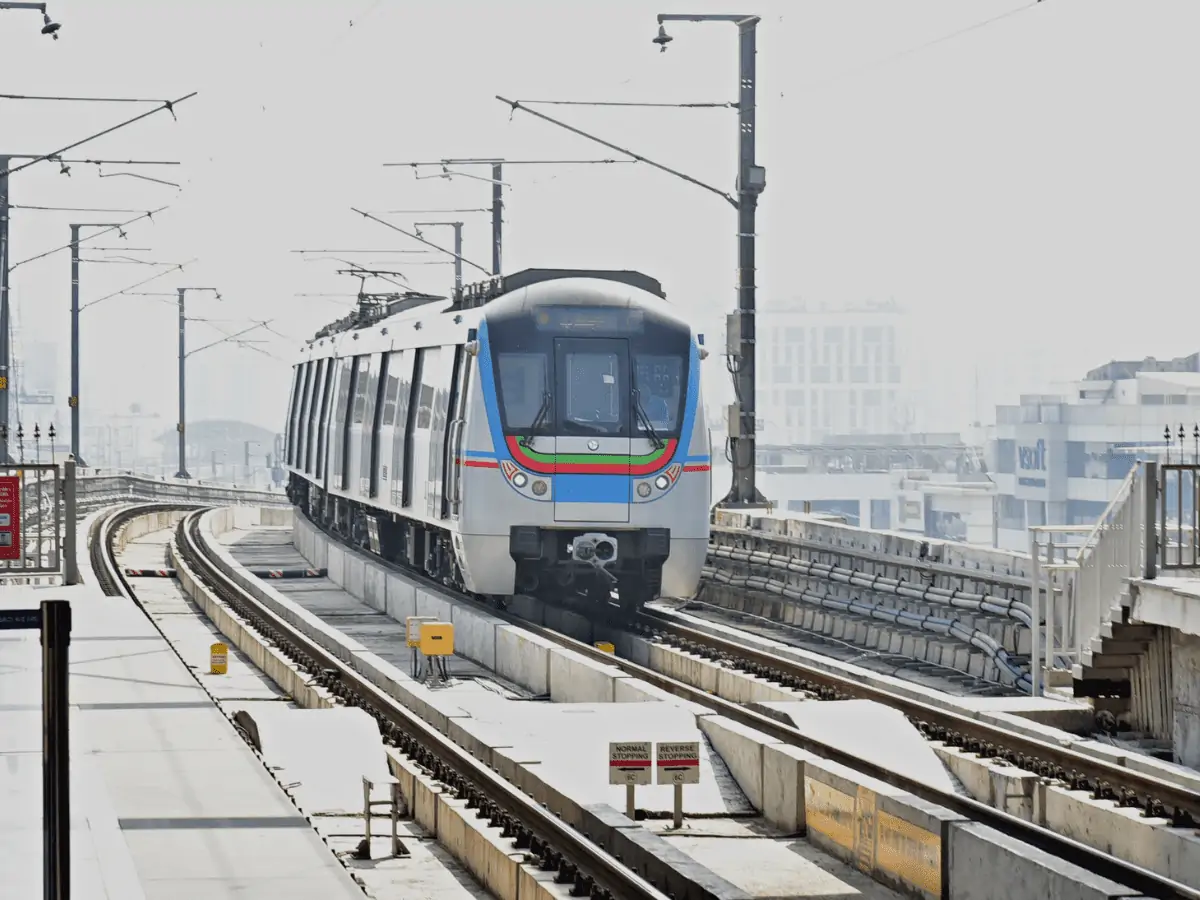
Karnataka’s government is preparing Detailed Project Reports (DPRs) for extending Namma Metro and intercity train connectivity to Tumakuru, alongside developing a satellite town—moves aimed at relieving Bengaluru’s strain and enhancing regional equity.
During celebrations for a senior minister’s 75th birthday in Tumakuru, the Deputy Chief Minister announced the DPRs. He stated that both Metro and intercity rail connectivity will be designed in tandem with plans for a satellite town around Tumakuru, backed by the state cabinet. Officials confirm that these proposals follow earlier lobbying by the Home Minister for Tumakuru’s inclusion in the Greater Bengaluru Authority. The DPR also aligns with past suggestions to convert the district into Bengaluru’s second airport location 1.
With Bengaluru facing heavy commuter loads, the plan to extend Metro and rail to Tumakuru supports a low-carbon transfer of passenger traffic—offering commuters a sustainable alternative to highway travel. Urban transport analysts note the significance: intercity Metro links could slash private-vehicle dependence and emissions. A recent draft feasibility study for a 59 km Metro corridor from Madavara to Tumakuru forecasts early ridership of 15,000 passengers per hour, with daily volumes reaching 280,000 by 2032. This underscores the viability of shifting trips to mass transit.
The Metro extension, elevated and integrated with suburban rail, would mirror global “polycentric” models, distributing economic and commuting load across multiple urban nodes. Investment in a satellite town further supports this by decentralising residential and commercial activities—a clear gesture toward gender-neutral, equitable growth. Experts emphasise the importance of synchronous infrastructure delivery. Scaling transit without complementary civic utilities—roads, water, sanitation—can create bottlenecks. However, the current proposal combines transport and urban planning, reflecting a comprehensive growth narrative .
Additionally, infrastructure data shows Tumakuru is 70 km northwest of Bengaluru and houses over half a million residents. It has rail connectivity on the Hubli–Bengaluru mainline, augmented by KSRTC services. The proposed DPRs align with these existing networks Transport equity analysts highlight that a satellite town around Tumakuru could serve as a living-lab for sustainable urbanism—integrating renewable energy, rainwater harvesting, and gender-neutral public spaces from day one. This approach reflects Karnataka’s agenda for low-carbon, inclusive city expansion. In parallel to transport uplift, the Deputy CM reiterated the commitment to complete the Yettinahole water project to supply Kolar by 2027. He emphasised drinking water and lake rejuvenation as the state’s immediate priorities.
Funding will likely follow established patterns: joint State‑Centre schemes, supplemented by multilateral loans and private investment. Development of a satellite town invites opportunities for transit‑oriented development, offering financial sustainability alongside social equity. However, there are cautionary notes: urban experts say that including Tumakuru within a Greater Bengaluru Authority must be handled thoughtfully. Oversizing regional boundaries risks governance overload. Modular decentralisation, with strong local institutions, is preferred At present, Tumakuru’s role as an industrial and education hub is growing. Township planning and Metro extensions may further reinforce its role in Karnataka’s economic map. For commuters, the promise is clear: less time on highway buses and more time in productive train travel.
With DPRs underway, stakeholders await defined timelines, cost estimates, and phasing plans—expected by year-end. A well-executed rollout could make Tumakuru the blueprint for satellite-city transit integration across India. In the meantime, coordination between Karnataka’s urban development, rail, and water agencies will be pivotal. The policy narrative—from intercity Metro to equitable satellite-town planning—offers a model for sustainable, low‑carbon urban expansion.
Whether Tumakuru becomes Karnataka’s next green-regional success story depends on navigating fiscal, technical, and governance complexities—but the direction points toward a cleaner, connected future.
Also Read : CIDCO Launches QR Ticketing on Metro Line 1
