


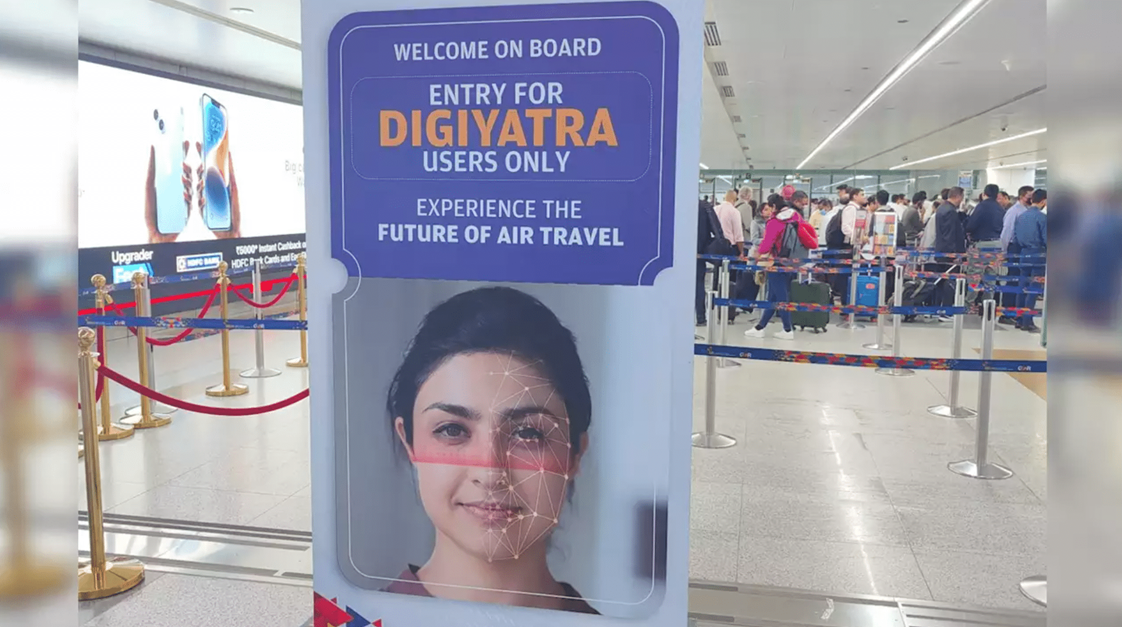
India’s Digi Yatra initiative is poised for a nationwide expansion, with plans underway to integrate the paperless airport entry system at 41 airports by the end of 2025. The move aims to accelerate contactless, biometric-based passenger processing, improve travel efficiency, and support the country’s broader digital infrastructure goals. As more airports come online under this rollout, authorities hope to streamline air travel experiences while reinforcing data security and operational ease across India’s growing aviation network.
First launched as a pilot project in December 2022, Digi Yatra is based on facial recognition technology (FRT) and allows passengers to check in, clear security, and board flights without showing physical identity documents. Instead, the system uses a digital facial profile linked with their boarding credentials, enabling seamless verification across checkpoints. The initiative is part of the government’s broader strategy to reduce congestion, promote paperless services, and modernise airport operations in alignment with India’s Digital Public Infrastructure roadmap. According to officials involved in the programme’s execution, Digi Yatra has already been successfully deployed at several major airports including Delhi, Bengaluru, Hyderabad, and Varanasi. Following its success in these metro and Tier 1 cities, the Ministry of Civil Aviation is accelerating the next phase of deployment with an eye on Tier 2 and Tier 3 urban centres that are experiencing growing passenger volumes due to regional connectivity schemes like UDAN.
The expansion to 41 airports by the end of 2025 will cover both existing high-traffic hubs and emerging aviation zones such as Pune, Bhubaneswar, Indore, and Coimbatore. The Airports Authority of India (AAI), along with private airport operators and the Digi Yatra Foundation—a not-for-profit entity responsible for managing the central ecosystem—will oversee the infrastructure rollout and integration across terminals. Authorities have confirmed that new airport terminals under construction, such as those in Navi Mumbai and Jewar, will also be Digi Yatra-enabled from Day One of operations. Aviation experts believe that the scaling of Digi Yatra is both timely and necessary. India is now the world’s third-largest domestic aviation market by passenger volume, and airports are under increasing pressure to accommodate more travellers without compromising convenience or safety. As per the Directorate General of Civil Aviation (DGCA), Indian airports handled nearly 153 million domestic passengers in 2023–24—a figure projected to rise by 8–10% annually through 2030.
In such a growth scenario, traditional document-based check-ins and manual verifications are proving inefficient. Digi Yatra not only cuts wait times but also minimises physical contact, a key consideration in the post-pandemic travel environment. For passengers, the system offers convenience; for authorities, it offers security and data traceability. Each enrolment requires Aadhaar-linked facial data to be voluntarily submitted via the Digi Yatra mobile app and linked to the passenger’s ticket during the booking or check-in process. Government officials assure that all facial recognition and data handling are done using decentralised storage systems and encrypted formats to minimise privacy risks. No biometric data is stored centrally after 24 hours of flight completion, according to the Digi Yatra Foundation’s stated policy. This privacy-by-design approach is aimed at building public trust, particularly at a time when digital surveillance and data misuse are global concerns.
Digital rights experts have nevertheless urged continuous public consultation and policy transparency as the system scales up. While the voluntary nature of enrolment ensures that travellers retain choice, some advocates argue for a legal framework to govern biometric use in civil aviation more comprehensively. They point to examples in the European Union, where data protection regulations have been codified in law alongside digital identity systems. Even so, the adoption trajectory of Digi Yatra so far signals growing user confidence. In airports where the system is operational, adoption rates have exceeded 20% of total passenger footfall during peak hours. Several airlines are also working to better integrate their boarding systems with the Digi Yatra ecosystem, allowing smoother passenger movement across airline counters, security checks, and boarding gates.
Looking ahead, the Digi Yatra Foundation is also exploring integration with international terminals, enabling seamless processing for outbound travellers. Officials noted that the system could potentially be extended to railway stations, metro networks, and other mass transit systems as part of India’s digital mobility stack in future phases. India’s push for digitally enabled, sustainable infrastructure aligns with global best practices in aviation technology. Airports in countries like Singapore, Netherlands, and the UAE have already adopted facial recognition systems as part of their long-term smart airport blueprints. The Indian model is distinctive in that it is built on open standards and public-private collaboration, which could help make it more adaptable to the country’s vast and diverse urban environment.
From the standpoint of equity, experts caution that future iterations of Digi Yatra must also address accessibility for elderly, differently abled, and low-digital-literacy passengers. To ensure inclusion, authorities are expected to maintain parallel manual processing options at all airports and conduct sensitisation programmes for ground staff and security personnel. With passenger expectations evolving rapidly and India’s urban mobility needs growing more complex, Digi Yatra stands out as a critical digital intervention. It promises not only smoother air travel but also represents a broader shift toward smarter, greener, and more equitable cities—where technology serves the traveller without overwhelming the citizen.
As the 2025 deadline draws closer, the success of the 41-airport rollout will depend not just on technical readiness, but also on public acceptance, stakeholder coordination, and robust digital governance. If executed responsibly, Digi Yatra could become a model for how India builds digital-first public infrastructure with speed, scale, and citizen focus.
Also Read : Indian Railways to Finalise Passenger Charts Eight Hours Ahead of Departure
