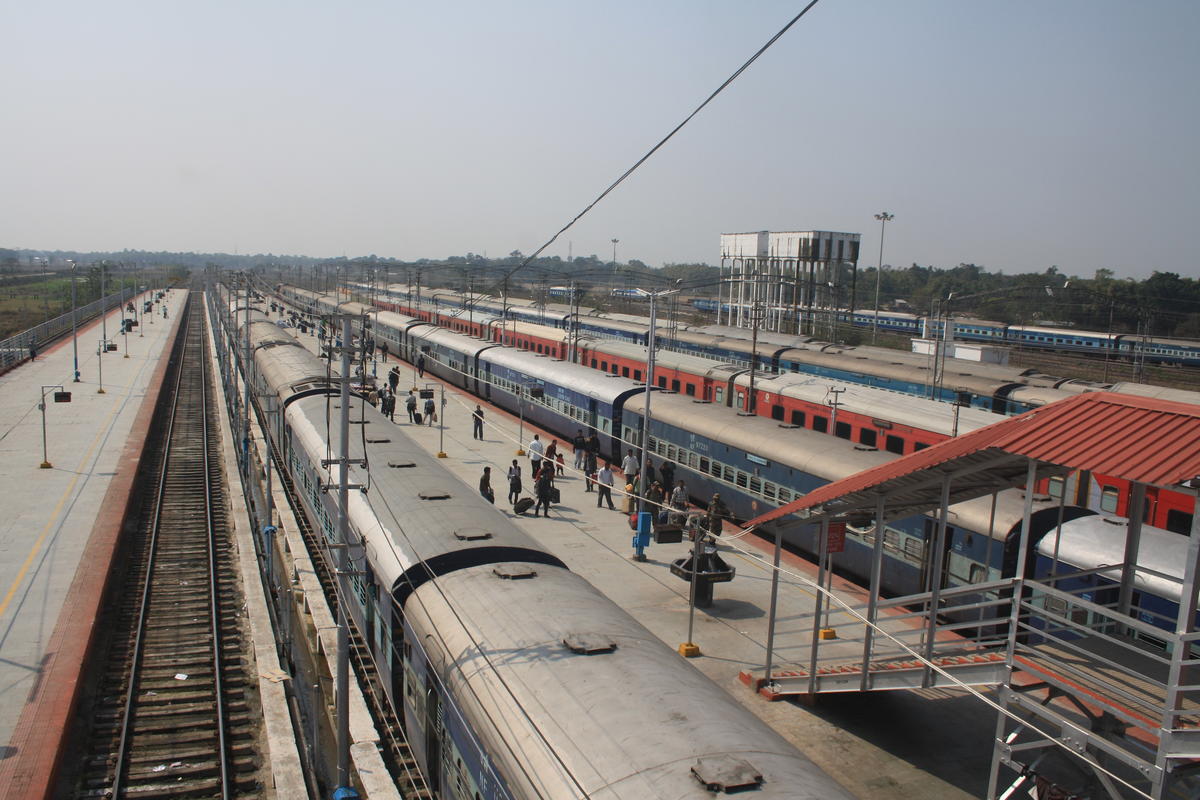
Dibrugarh Electric Train Launch Powers Northeast Connectivity Shift
In a milestone that underscores India’s infrastructural transformation, the inaugural electric train from Dibrugarh to New Delhi has been flagged off, marking the first time an electric locomotive has operated in Northeast India. The development is part of Indian Railways’ ‘Mission Electrification’, a strategic national agenda to decarbonise transport while integrating far-flung geographies into the mainstream mobility grid.
The 12423 Dibrugarh–New Delhi Rajdhani Express, fully electrified as of June 28, now covers its over 4,000 km journey on electric traction. This breakthrough comes at a time when the Northeast, often underrepresented in high-speed and green transit networks, is receiving long-overdue attention. Dibrugarh’s inclusion in the national electric rail network reflects a clear policy signal—no region is to be left behind in the country’s journey toward sustainable development.
Electrification in the region addresses both ecological and economic imperatives. Each electric train service in this terrain saves approximately 2,500 litres of diesel and reduces carbon emissions by 33%, according to internal Indian Railways estimates. It is also a direct contribution to India’s national goal of achieving net-zero emissions by 2070. As diesel engines give way to electric traction, the region’s carbon footprint from rail-based movement is set to shrink significantly.
Beyond the environment, the economic ripple effects are substantial. With reduced journey times, greater energy efficiency, and lower operational costs, industries in Assam and its neighbouring states—particularly agriculture, logistics, and tourism—stand to benefit. Agricultural produce from the Brahmaputra valley, local tea, and indigenous crafts can now reach larger markets in North India more swiftly and cost-effectively. Destinations like Kaziranga, Majuli, and Sivasagar are expected to witness an uptick in tourist footfall as accessibility improves.
The symbolic value of this upgrade is equally potent. Chief Minister Himanta Biswa Sarma described it as a “turning point” for the Northeast, while local stakeholders see it as a bridge between aspiration and opportunity. For entrepreneurs and traders, it means faster deliveries and improved competitiveness. For residents, it is a moment of visibility and validation.
Looking ahead, Indian Railways plans further electrification projects across the Northeast, including the Guwahati–Silchar and Agartala–Lumding routes. Cross-border connectivity with Bangladesh and Myanmar is also part of the long-term vision. If executed with consistency, these upgrades could redefine the economic geography of the Northeast.
At its core, the Dibrugarh electric train launch is more than a transport update. It’s a tangible promise of equitable growth, climate-conscious development, and infrastructural modernity. In an era where connectivity dictates prosperity, this move places the Northeast firmly on the fast track to inclusion.