


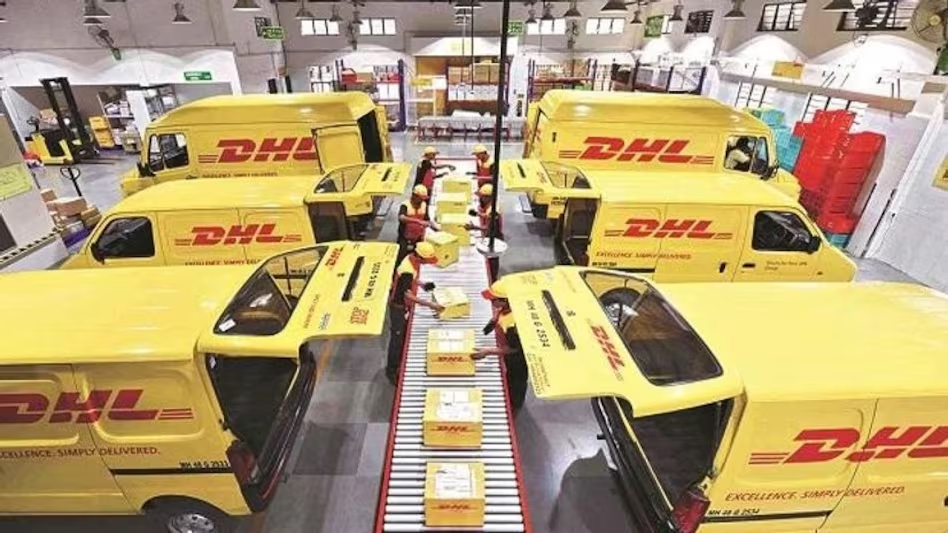
Chennai’s peripheral industrial belt has recorded a sizeable logistics transaction, with a global supply chain operator securing approximately 350,000 square feet of warehousing space in the city’s northern hinterland. The deal, executed at a large-format logistics park in Thiruvallur district, highlights Chennai’s growing importance as a freight, manufacturing and distribution hub, and underscores how industrial real estate is reshaping employment and infrastructure patterns around India’s port-led cities.
Property registration data indicates that the facility sits nearly 50 kilometres from the city core, positioned to serve both the Chennai metropolitan region and wider southern markets. Industry experts say the Chennai warehousing lease reflects sustained demand from third-party logistics providers as consumption-led supply chains become more decentralised and time-sensitive. Monthly rentals for quality warehouse assets in this micro-market have stabilised, suggesting a maturing logistics ecosystem rather than speculative growth. The lease tenure, structured over a short-term period with defined escalation, mirrors how large occupiers are balancing flexibility with scale. Analysts tracking industrial assets note that occupiers are increasingly prioritising compliance-ready parks offering fire safety norms, clear title, and connectivity to highways and ports. Locations such as Polivakkam benefit from proximity to arterial road networks linking Chennai Port, Ennore Port and manufacturing clusters across Tamil Nadu. Beyond real estate metrics, the transaction carries broader urban implications. Warehousing growth along Chennai’s outskirts has emerged as a significant source of formal employment, particularly for semi-skilled workers. Urban planners point out that logistics-led development, when paired with planned housing and public transport, can reduce long commutes and uneven growth. However, unmanaged sprawl risks placing pressure on water resources and local road networks.
From a sustainability lens, newer logistics parks around Chennai are gradually adopting energy-efficient roofing, natural lighting and rainwater harvesting to reduce operational emissions. While not always visible to end consumers, such measures play a critical role in lowering the carbon footprint of large-scale supply chains. Experts argue that future Chennai warehousing lease activity will increasingly be influenced by environmental compliance, especially as global firms align Indian operations with climate commitments. The deal also fits into a wider national pattern. Industrial and warehousing leasing across India’s major cities has remained resilient, driven largely by logistics operators, engineering firms and e-commerce-linked supply chains. Chennai continues to rank among the top markets for absorption, benefiting from its manufacturing base, skilled workforce and improving expressway connectivity.
Looking ahead, sustained demand for organised warehousing presents both opportunity and responsibility for policymakers. Strategic zoning, reliable utilities and last-mile connectivity will determine whether Chennai’s logistics growth translates into inclusive, low-impact urban expansion. As global occupiers deepen their presence, the city’s ability to balance economic momentum with climate resilience will shape the next chapter of its industrial landscape.
Also Read: Bengaluru Office Market Gains Global Media Interest
DHL Expands Chennai Warehousing Footprint Strategically
