


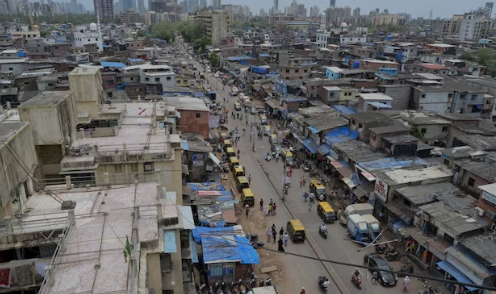
The blueprint for Mumbai’s most ambitious redevelopment project is ready, but practical challenges persist in finding space to relocate over one lakh households currently residing in Dharavi’s slum settlements. The Dharavi Redevelopment Project Ltd (DRPPL), an 80:20 joint venture between the Adani Group and the state government, is constructing free in-situ housing for residents whose tenements have existed in Dharavi since before 2000.
However, those residing in tenements and slums that emerged between 2000 and 2011, and beyond, will have to relocate. DRPPL has tentative plans to build nearly 1.5 lakh homes for such ‘ineligible’ residents on approximately 1,000 acres of land parcels, termed ‘Nav Dharavis,’ across suburban Mumbai. While DRPPL is the contractor for the project, a government body known as the Dharavi Redevelopment Project is scouting for additional land parcels outside the precinct to house these ineligible residents. This task is complex given Mumbai’s space constraints. So far, 540 acres have been identified in the eastern suburbs, but nearly 50% of this land is near Deonar and Mulund dumping grounds, which will take years to make suitable for human settlement. A government official noted, “Land parcels have been identified at four locations, but other locations remain unconfirmed.” Of the six land parcels measuring 541 acres in the eastern suburbs, 21 acres belong to MHADA in Kurla.
However, development constraints posed by Coastal Regulation Zone norms and civil aviation height restrictions necessitate large, continuous parcels for mass rehabilitation. The plan to utilise land currently used for an octroi naka and waste collection in Mulund, as well as land belonging to a defunct dairy in Kurla, has faced backlash from residents and political parties. These protests, sparked by fears of overcrowding and increased pressure on public facilities, raise questions about the project timeline. The DRPPL, a special purpose vehicle, has a seven-year timeline to execute the rehabilitation or relocation in a phased manner. The entire project has a 17-year deadline, encompassing the construction of hotels, convention centres, business parks, and more.
According to Development Control rules, DRP can construct a maximum of 650 flats per hectare, considering population density. “18% of the plot area will be left for roads, 15% for green and open spaces, and 7% for infrastructure,” an official added. Additionally, 10% will be reserved for commercial establishments, which housing societies will lease out to earn revenue for maintenance. “All Nav Dharavi townships are designed to eventually supplement what has been missing in their current neighbourhood for decades,” he added. However, experts have questioned the need to relocate a large section outside Dharavi. An urban planner suggested, “These Dharavikars should be given land in Dharavi at a cost. The free housing policy is a failure, and giving land outside Dharavi to settle ineligible tenants can increase social strife.” A housing expert concurred, “Why should people from Dharavi be uprooted? The beauty of Dharavi is that people stay and work in the same place.”
Nevertheless, it was stated that the new colonies will be planned to minimise dislocation and improve quality of life. “In fact, once built, Nav Dharavis can uplift the profile of a region’s real estate market and attract premium rates in the area,” he added.
