


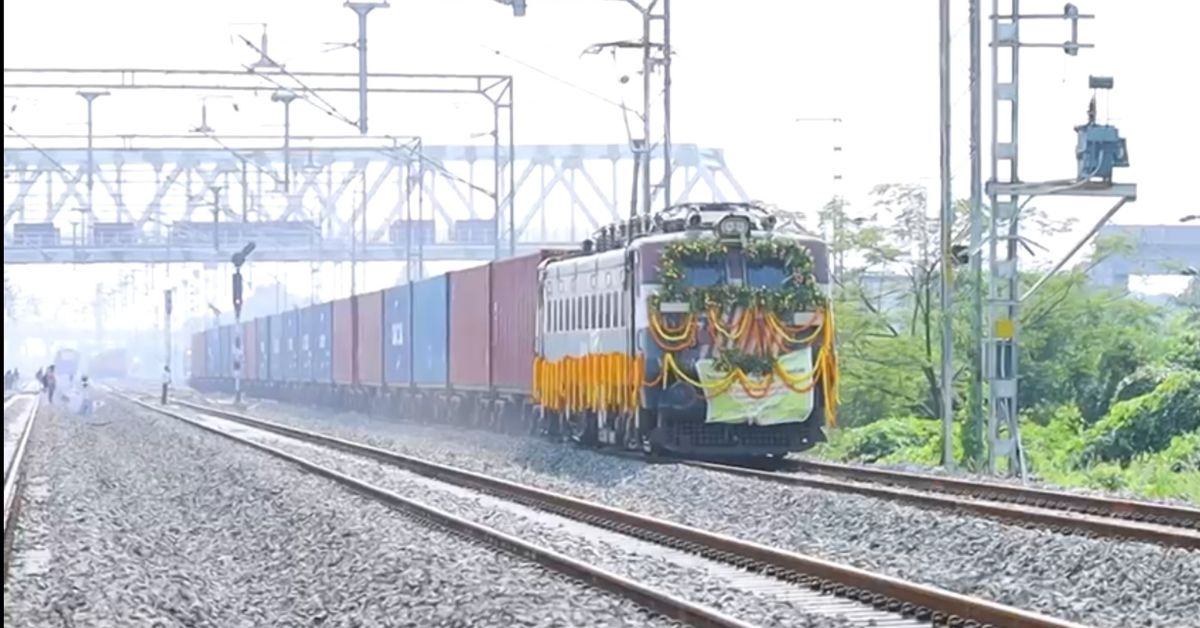
The Dedicated Freight Corridor Corporation of India Ltd (DFCCIL) has reached a pivotal milestone with the inauguration of its fourth cargo terminal at New Gothangam, located on the Western Dedicated Freight Corridor (WDFC). This newly operationalised Gati Shakti Cargo Terminal (GCT) is part of an ongoing effort by DFCCIL to revolutionise freight logistics infrastructure and expand the country’s freight handling capabilities.
DFCCIL officials highlighted that the New Gothangam terminal marks the fourth such facility to be commissioned, and the third in the financial year 2024-25, following successful launches at New Rewari, New Bhaupur, and New Daud Khan. These terminals are an essential element in India’s ambitious plan to enhance its supply chain infrastructure, accommodating rising demand for efficient logistics and transportation. The Gati Shakti Cargo Terminals are being developed under the Gati Shakti Multi Modal Cargo Terminal Policy, which aims to modernise and expand India’s freight logistics. These terminals serve to streamline the movement of goods, reduce congestion, and support the economic growth of the regions they serve. With the addition of the New Gothangam terminal, DFCCIL has played a key role in the development of four out of the seven GCTs commissioned under the railway land initiative, which is expected to further support India’s freight network. A spokesperson from DFCCIL explained that the GCTs at New Gothangam, along with the others in the pipeline, will significantly enhance the freight-handling capacity of the Dedicated Freight Corridor network. These terminals will support the seamless transportation of a wide range of goods, including steel, cement, food grains, and automobiles, which are vital to India’s industrial expansion. To further support the growing demand for modernised freight facilities, DFCCIL is expanding its operations.
The corporation has issued an expression of interest for the development of additional GCTs across 115 locations throughout the country. These new terminals will transform existing Dedicated Freight Corridor stations into centres of economic activity, providing facilities for businesses to enhance their supply chains and logistics operations. The establishment of these terminals is part of a broader national strategy to facilitate multi-modal transport and boost the efficiency of freight movement across the country. The initiative aligns with India’s efforts to modernise its infrastructure, making it a key enabler of economic growth. It is expected that the new terminals will also help in decongesting major metropolitan areas, reducing road traffic, and ensuring a more sustainable transport network by promoting rail over road for long-haul cargo. In line with this, DFCCIL is also focusing on expanding freight capacity at strategic locations. Terminals under construction at New Sardhana and New Sakun are set to further expand capacity, while approval for another terminal at New Dabla is expected in the coming weeks. These developments will contribute significantly to India’s growing demand for logistics space and support the government’s commitment to improving infrastructure.
Along with the GCTs at New Gothangam, the Schedule-1 terminals being developed at locations such as New Sanjali, New Rewari, New Malikpur, New Dadri, and others, are expected to accelerate the trade of essential commodities like fertilisers, marine gypsum, and food grains. These facilities are crucial to enhancing regional economic growth, industrialisation, and job creation. The focus on multimodal logistics and efficient freight handling reflects a shift towards a more sustainable and integrated supply chain, which is critical for India’s continued economic progress. DFCCIL’s strategic vision is to not only meet the growing demand for freight services but also ensure that India’s infrastructure can keep pace with the dynamic needs of the modern economy.
As the country continues to experience rapid industrial growth and urbanisation, the role of efficient, well-planned freight corridors will only become more important. The successful commissioning of the New Gothangam terminal stands as a testament to the progress being made in this regard, with many more such initiatives on the horizon to help reshape India’s logistics and supply chain landscape.
