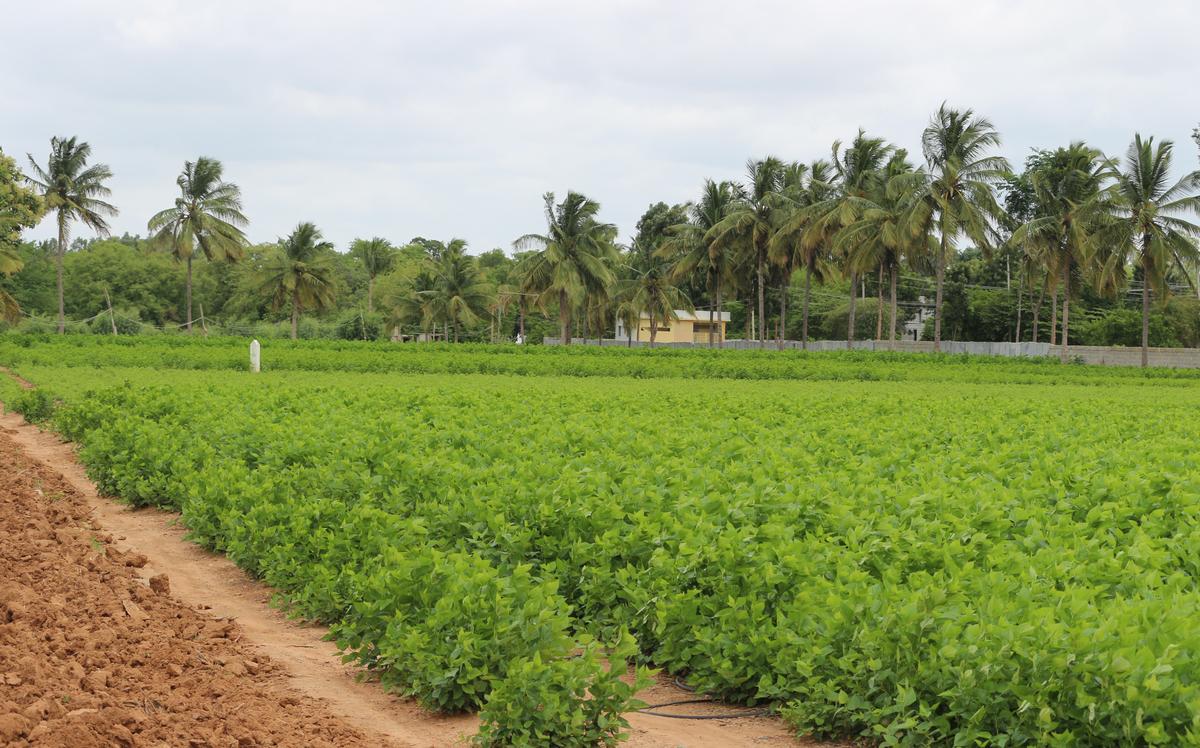
Devanahalli Farmers Win Land Battle as Karnataka Halts Acquisition
In a major policy shift reflecting grassroots pressure, the Karnataka government has withdrawn plans to acquire over 1,700 acres of agricultural land in Devanahalli taluk for an aerospace park project. The move comes after sustained protests by local farmers, who argued that their fertile lands—located close to Bengaluru markets—were essential for their livelihoods. After a series of dialogues with protesting groups, state officials confirmed that the acquisition process would be halted, though land voluntarily offered by farmers would still be accepted at enhanced compensation rates.
For over three years, the farmers of Devanahalli taluk staged a non-violent protest in Channarayapatna, demanding the withdrawal of the land acquisition process. Their opposition stemmed from concerns about food security, economic displacement, and the loss of fertile land that currently yields high returns due to proximity to urban markets. The protest eventually grew into a collective mobilisation, with support from progressive organisations across the state, signalling a broader resistance to land-for-industry models that neglect local needs and ecological sustainability. Government officials acknowledged that the protests had raised valid concerns. The farmers’ insistence on retaining agricultural land underscores a growing awareness of ecological resilience and sustainable land use, especially in peri-urban areas.
While some in the industry sector expressed concern that shelving the plan could drive investors to neighbouring states, the government maintained that long-term agrarian stability and food systems resilience must take precedence. The decision marks a rare moment where rural voices have directly shaped urban-industrial planning. While the government has agreed to accept land from willing farmers at higher rates and with promised benefits like a share in developed plots, this compromise also highlights a new approach in balancing industrial ambitions with equitable land ownership. The shift in policy may serve as a case study for future infrastructure projects, where voluntary participation and respect for land-dependent communities become guiding principles.
By preserving agricultural zones in close proximity to urban centres, the government has avoided displacing hundreds of farmers and maintained an essential food supply chain into Bengaluru. This decision could influence future urban planning strategies not just in Karnataka but across India, especially in states navigating the tension between industrial expansion and rural livelihoods. As farmers remain central to India’s socio-economic fabric, ensuring that development does not come at their cost is crucial for equitable and sustainable growth. The Devanahalli protest and its resolution serve as a reminder that infrastructure dreams must be built on foundations of consent, fairness, and ecological balance.