


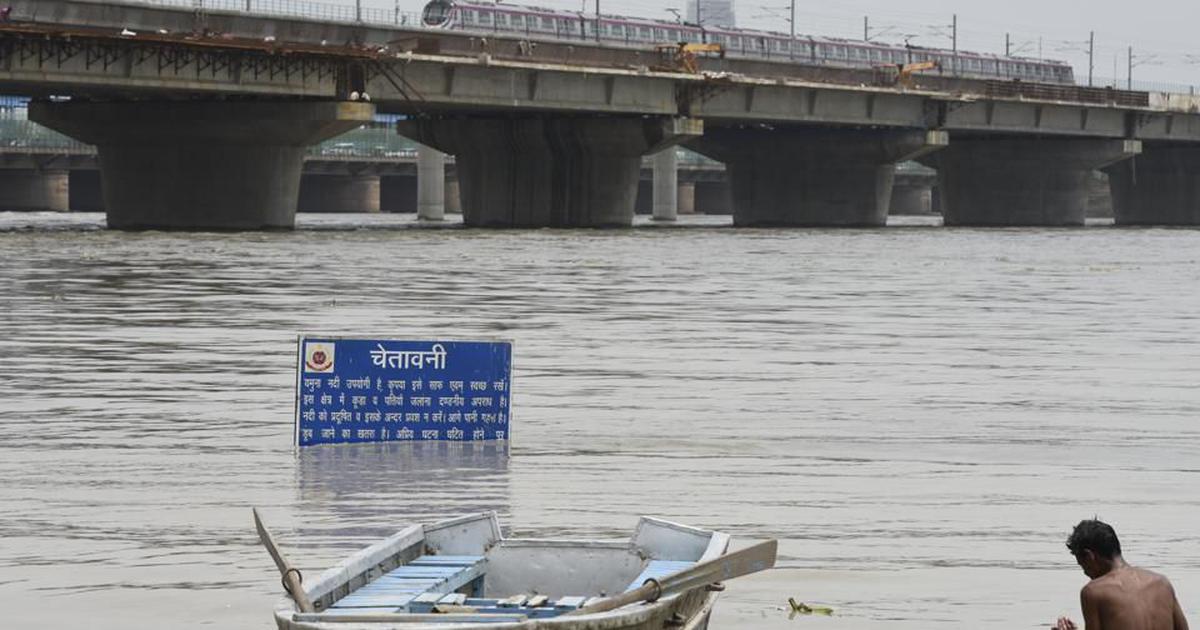
Delhi’s perennial battle with the elements is once again in sharp focus as the Yamuna River’s water level drops below the critical danger mark. However, this temporary reprieve for a city long threatened by floods is overshadowed by the persisting high humidity and deteriorating air quality. The climatic flux exposes the capital’s profound vulnerability and underscores an urgent need for sustainable, eco-friendly urban infrastructure that can truly offer its inhabitants long-term relief and stability.
The river’s retreat provides a moment of relief to communities along its banks, which have been on high alert. The water level, which had surpassed the danger mark of 205.33 metres just days earlier, has now fallen to 205.2 metres. While this signifies a crucial step back from the brink of urban flooding, it remains above the cautionary level, a subtle reminder of the river’s latent power. This reduction in water levels is directly linked to a significant decrease in flow from the upstream Hathnikund barrage, which has now dropped to just over 31,000 cusecs, easing the immense pressure on the city’s flood management systems.
Despite the marginal gains in flood control, the city’s climate continues to pose significant health and environmental challenges. Following isolated moderate showers in some northern and northwestern parts of the city, the respite was fleeting. The city’s air quality, another critical socio-environmental indicator, also saw a concerning decline. The 24-hour average Air Quality Index (AQI) rose to 120, a figure categorised as “moderate,” marking a noticeable deterioration from the “satisfactory” level of 71 recorded just the previous day. This shift points to the stagnation of air pollutants in the humid air, trapping particulate matter and posing a direct threat to public health. The absence of widespread, cleansing rainfall, with the city’s base station recording no precipitation, allows these pollutants to linger, a grim consequence of unpredictable weather patterns.
Officials and environmental experts are increasingly highlighting that these seemingly disparate events—river fluctuations, oppressive heat, and poor air quality—are interconnected symptoms of a broader climatic crisis. The current scenario reinforces the argument for a strategic, holistic approach to urban planning that prioritises ecological balance. The city cannot continue to rely on temporary solutions. It must invest in a future that embraces gender-neutral, equitable design, focusing on creating more urban forests, restoring natural water bodies, and building robust, permeable infrastructure that can both absorb rainfall and cool the city. The human cost of inaction is evident in the daily struggles of its citizens, a compelling narrative that demands a shift from reactive measures to proactive, sustainable development.
Also Read :Pune Purandar Airport Project Gains Boost As 951 Farmers Grant Consent
