


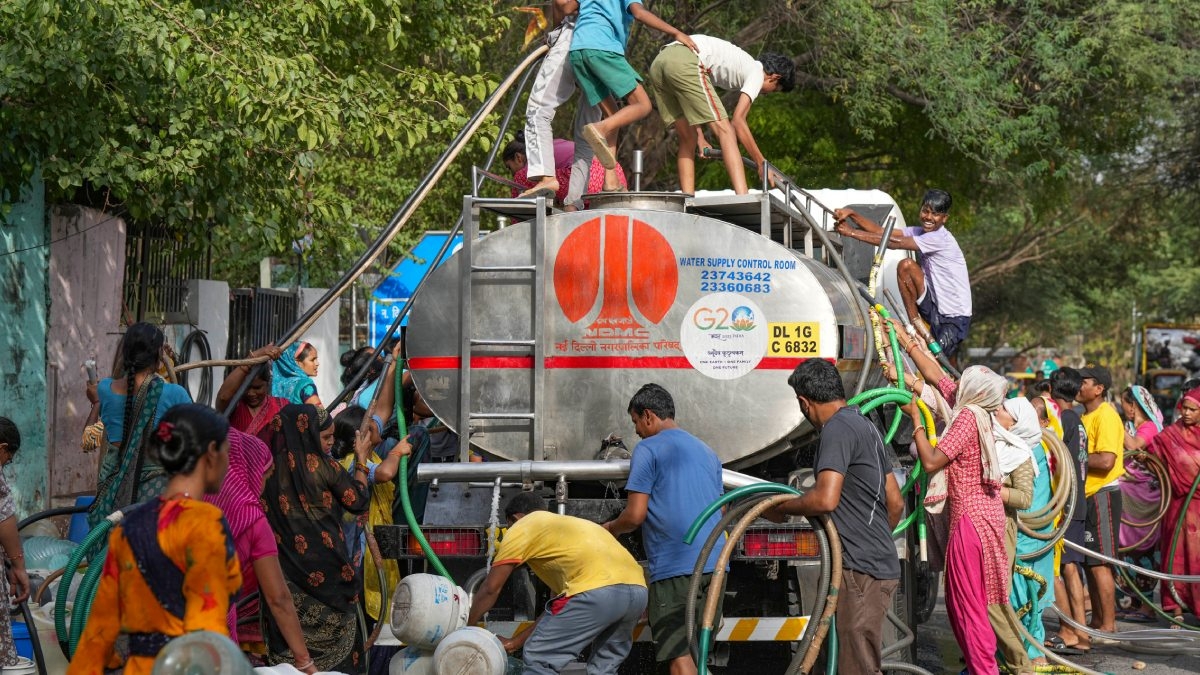
Delhi, India’s second most water-scarce city globally, grapples with a perennial water crisis exacerbated by a complex interplay of factors. With a burgeoning population and rapid urbanization outpacing infrastructural development, the city faces a staggering shortfall of approximately 290 million gallons per day (MGD) during peak summer months. This deficit compels the Delhi Jal Board (DJB) to rely heavily on neighboring states like Haryana and Uttar Pradesh for about 90% of its water supply, highlighting the city’s vulnerability to external water sources.
The root causes of Delhi’s water scarcity are multifaceted. High demand stemming from a population of nearly 20 million residents contrasts sharply with the DJB’s capacity to produce only 1,000 MGD against a requirement of 1,290 MGD. This shortfall forces the exploitation of groundwater reserves, exacerbating concerns over sustainability and quality.
Mismanagement and neglect of water resources further compound the crisis. Urbanization has encroached upon natural water bodies crucial for groundwater recharge, while inadequate sewage treatment exacerbates pollution and diminishes water quality. Moreover, the proliferation of the ‘tanker mafia’ underscores systemic failures in water distribution, perpetuating inequities in access and pricing. Climate change exacerbates Delhi’s water woes, with erratic rainfall patterns and rising temperatures straining existing water management strategies. Efforts to mitigate these challenges through upstream storage projects like the Renuka, Kishau, and Lakhwar-Vyasi dams face significant delays due to interstate disputes and funding issues, highlighting governance and policy hurdles.
Addressing these systemic challenges requires a multifaceted approach. Enhancing infrastructural resilience and efficiency, including upgrades to treatment plants and distribution networks, is critical. The adoption of cost-reflective water pricing schemes can incentivize conservation while funding essential infrastructural improvements. Policy reforms focusing on integrated water management and sustainable urban planning are imperative to ensure long-term water security.
As Delhi navigates its most severe water crisis in recent memory, stakeholders must prioritize collaborative interstate cooperation and community engagement. Rainwater harvesting initiatives, alongside stringent regulatory frameworks to curb groundwater depletion and pollution, offer promising avenues towards sustainable water management. By embracing these strategies, Delhi can chart a path towards resilience against future water challenges, ensuring equitable access to safe and reliable water resources for all its residents.
