


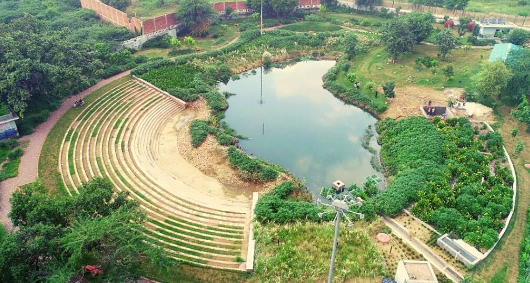
NEW DELHI: The Delhi government’s initiative to rejuvenate lakes using treated water has yielded significant results, especially in the South West district, where the groundwater levels have noticeably risen. According to a recent nationwide survey by the Centre for Science and Environment (CSE), the water table has increased by around 6 metres at Pappankalan, 4 metres at Nilothi, and 3 metres at Najafgarh due to the creation of artificial lakes in these areas.
The survey’s findings are detailed in a newly released book, Back from the Brink: Rejuvenating India’s Lakes, Ponds, and Tanks – A Compendium of Success Stories. This book, unveiled at a symposium on Wednesday, is based on a year-long survey conducted by a CSE team that reviewed 250 water bodies developed or restored under 22 state-level programmes and five central government schemes. CSE highlighted that under the Delhi government’s “City of Lakes” project, between 14 to 15 lakes were either artificially created or previously encroached lakes were restored by December last year. According to a report submitted by the Delhi Jal Board (DJB) to the National Green Tribunal, 155 water bodies have been earmarked for revival under this project.
At Pappankalan, the groundwater level, which was 21.8 metres below the surface in 2019, rose to just 6 metres following the revival of two lakes in the area. This increase was measured using piezometers installed at the sites, which assess groundwater pressure and track changes in the water table over time. To ensure that these lakes and water bodies remain filled year-round, despite Delhi experiencing only around 50 rainy days annually, the DJB connected the revived and newly created water bodies to nearby sewage treatment plants (STPs) wherever possible. The strategy involves filling these water bodies with treated effluent. Delhi’s government asserts that the city produces 500 million gallons per day (MGD) or 1,893 million litres per day (MLD) of recycled water from 37 operational STPs, with 21 MGD currently being wasted. This recycled water can be stored in the proposed lakes and water bodies, thus mitigating the city’s annual water deficit of 200 MGD (757 MLD).
A senior programme manager of the water programme at CSE described the initiative as a commendable example of water conservation. The project involves filling water bodies with treated wastewater, which otherwise would have been wasted by mixing with sewage in nearby drains. The resultant filled water bodies help recharge the groundwater in adjacent borewells. Piezometers, such as those near Najafgarh and Pappankalan, have recorded a 3 to 4 metre rise in groundwater levels within just one year. A CSE official emphasized the critical need, especially during times of water stress, to not only treat wastewater or sewage but also to recycle and reuse it. The protected water bodies in urban areas, including ponds and tanks used for rainwater harvesting, can be instrumental in channeling treated sewage and recharging groundwater. The success of the “City of Lakes” project highlights the potential of such initiatives in addressing urban water crises and underscores the importance of innovative water management strategies in achieving sustainable development.
