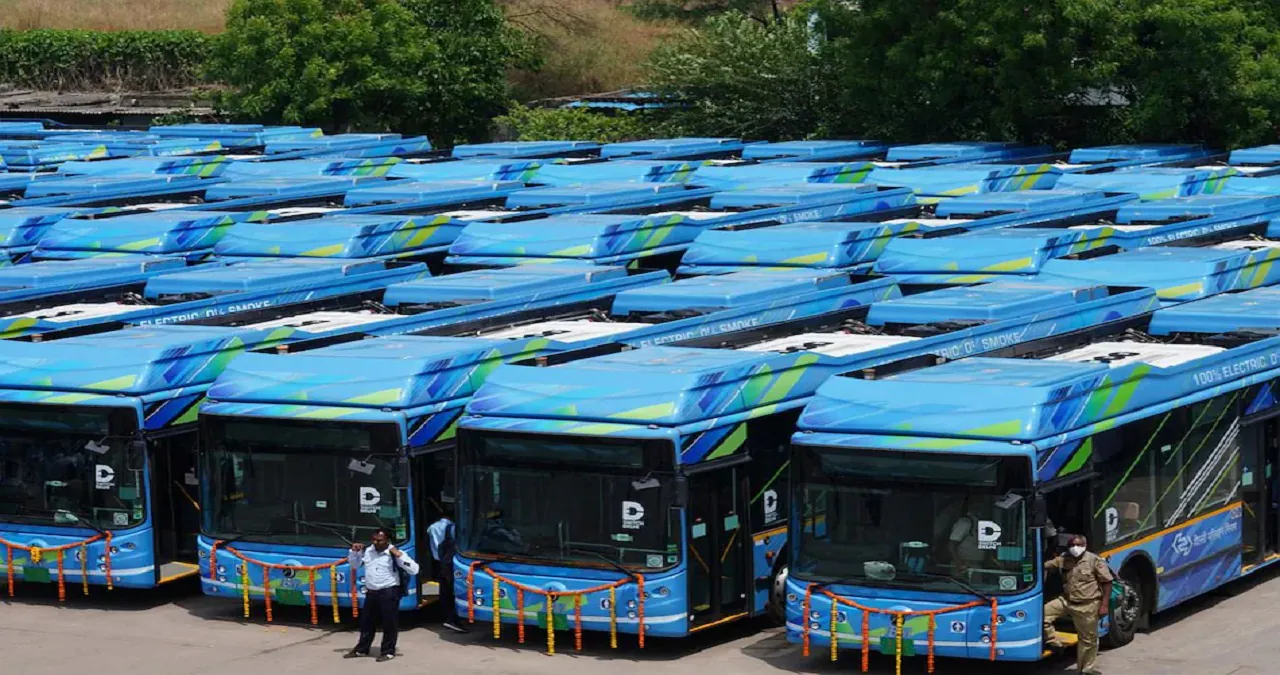
DELHI — The National Capital has emerged as the leader in India’s transition to electric public transport, boasting the country’s largest fleet of electric buses after recent additions pushed the total count beyond 4,000 vehicles.
This achievement not only reflects a rapid scale-up in green mobility infrastructure but also positions Delhi at the forefront of urban transport decarbonisation, with implications for air quality, traffic decongestion and sustainable city planning. The expanded fleet chiefly comprises low-floor electric buses operated by the Delhi Transport Corporation (DTC). In a recent mass induction event, 500 new electric buses were flagged off in a single batch — a milestone in the city’s clean mobility strategy and the first time such a large number has been introduced in one phase. With this push, Delhi surpassed Maharashtra and other major states to secure the top spot nationally in electric bus deployment.
Urban planners and transport specialists view the growth of Delhi’s electric bus fleet as a foundational pillar in rebalancing the city’s mobility ecosystem. Buses electrified at scale reduce reliance on fossil-fuel combustion in public transport, directly cutting tailpipe emissions of carbon dioxide and particulate matter — a significant benefit in a city that consistently ranks among India’s most polluted urban centres. Enhanced bus fleets also offer reliable alternatives to private vehicles, helping mitigate congestion on busy corridors such as Ring Road, Outer Ring Road and arterial routes leading to workplaces and commercial hubs.
Delhi’s trajectory in electric public transport is backed by ambitious targets. Authorities have articulated plans to grow the electric bus count further, with aspirations to reach roughly 7,500 vehicles by the end of 2026 and upwards of 14,000 by 2028. These projections signal that the city’s green transport vision extends beyond headline fleet numbers toward building a comprehensive low-emission mobility ecosystem. This prioritisation aligns with national clean mobility objectives under initiatives such as the Faster Adoption and Manufacturing of Electric Vehicles (FAME) scheme and the National Electric Mobility Mission. It also interacts with city-level sustainability strategies aimed at improving air quality, advancing climate resilience and enhancing public transport accessibility for residents across socio-economic segments.
Operational impacts extend beyond environmental indicators. An expanded electric bus network supports equity in urban mobility by offering affordable and accessible travel options for daily commuters, students and workers. Investing in feeder services, system electrification and digital ticketing integration also enhances the convenience and reliability of public transport — elements that are critical to shifting commuter preference away from private vehicles. Experts emphasise that further success will depend on complementary infrastructure investments, including charging depots, grid capacity upgrades, and maintenance facilities designed to support high utilisation. Integration with metro networks, last-mile solutions and pedestrian access will be essential to ensure electric buses are part of a seamless multimodal urban transport system rather than isolated assets.
For Delhi, leading the nation in electric bus deployment is both a milestone and a strategic inflection point, one that aligns urban transport with long-term goals of sustainability, resilience and inclusive mobility. As the city accelerates its transition to zero-emission transport, its experience offers a model for other Indian cities seeking to balance growth with environmental stewardship and service quality.