


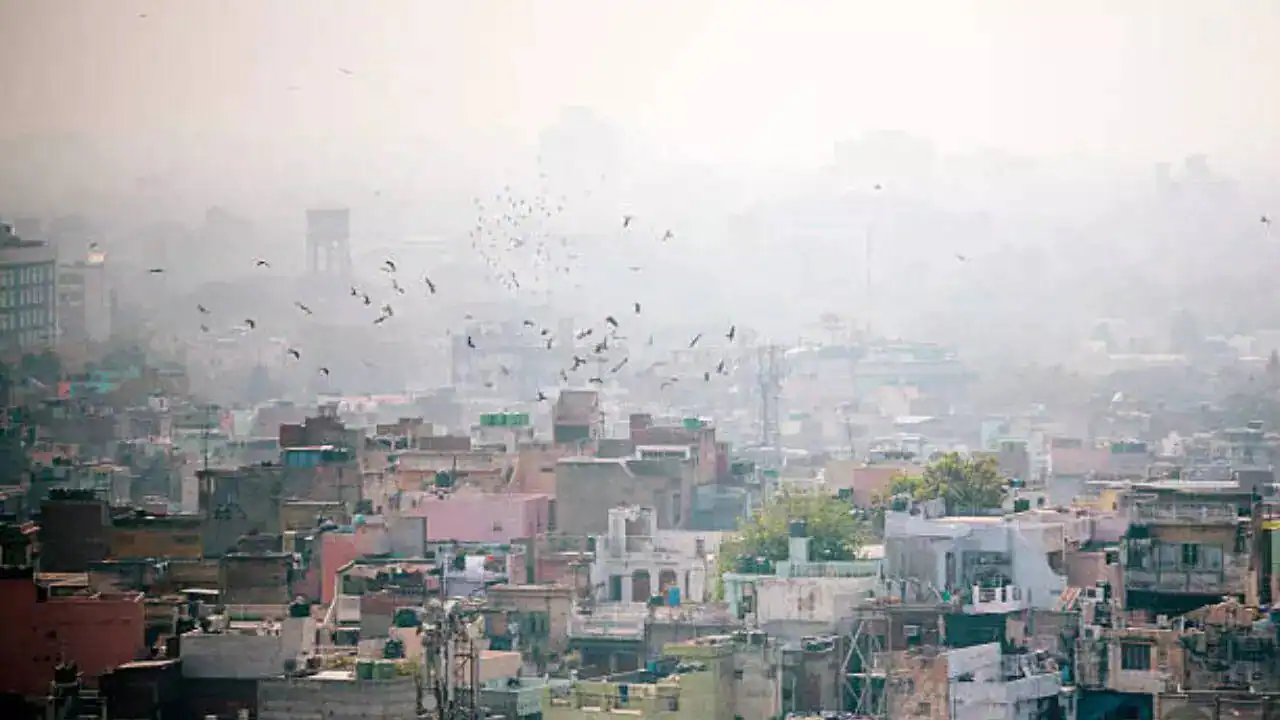
Delhi’s Anand Vihar has once again emerged as the city’s most polluted pocket, recording hazardous air quality levels even as the rest of the Capital enjoyed relatively cleaner skies in early October. Despite sporadic rains and temporary improvements across other areas, Anand Vihar remains an alarming example of hyper-local pollution fuelled by unchecked congestion, construction dust, and cross-border industrial emissions.
According to data from the Central Pollution Control Board (CPCB), while Delhi’s average Air Quality Index (AQI) hovered between the “moderate” and “poor” categories in mid-October, Anand Vihar consistently breached the “very poor” and “severe” limits. On 13 October, when Delhi’s average AQI stood at 189, Anand Vihar recorded a staggering 346. Within a week, the situation deteriorated further, reaching an AQI of 423 well into the “severe” range.
Environmental experts say Anand Vihar’s location at the intersection of a major railway station, an inter-state bus terminal (ISBT), and key arterial highways has created a microclimate of constant vehicular emissions and suspended dust. Continuous traffic snarls, heavy-duty diesel vehicles, and ongoing construction have turned the locality into a pollution vortex, impacting both commuters and residents.fficials familiar with the city’s pollution mapping acknowledge that Anand Vihar’s challenge is structural rather than seasonal. The area’s road network was never designed to accommodate its current load of buses, cars, and freight vehicles. Industrial zones on the Uttar Pradesh border including Sahibabad and emissions from nearby landfills like Ghazipur further aggravate the situation.
Real-time monitoring by the Delhi Pollution Control Committee (DPCC) revealed that PM10 concentrations in Anand Vihar shot up to 655 micrograms per cubic metre over six times the national standard of 100 µg/m³. The highest hourly peak reached an alarming 1,824 µg/m³, a level that health experts say can cause acute respiratory distress and cardiovascular strain, particularly among children and the elderly.Air quality gaps also persist due to inconsistent data reporting. Between 20 and 24 October, Anand Vihar’s monitoring station failed to log complete PM2.5 readings a critical pollutant linked to chronic lung disease. Experts warn that such lapses undermine the credibility of pollution control systems and delay emergency response measures.
Environmental analysts have called for a localised clean-air action plan, involving tighter traffic regulation, stricter construction controls, and real-time dust suppression mechanisms. Some officials suggest decentralising intercity transport hubs to reduce concentrated emissions in the area.The locality was first identified as one of Delhi’s 13 critical “pollution hotspots” in a joint CPCB-DPCC report in 2018. Yet, six years later, limited progress has been made. Despite repeated assurances of traffic management and dust control, residents say that the situation worsens every winter. With the onset of cooler weather, pollutants now remain trapped closer to the surface, turning Anand Vihar into a visible grey haze.For a city already battling alarming pollution levels, Anand Vihar’s continuing struggle highlights a deeper urban planning failure. Without integrated mobility design, stricter enforcement, and cross-border coordination, Delhi’s promise of cleaner air will remain elusive especially in its most vulnerable neighbourhoods.
Also Read : Delhi launches 58 special trains to ease Chhath Puja rush
Delhi’s Anand Vihar records severe pollution levels amid rising smog crisis
